Est. 1797 · Federal-Style Architecture · Notable 1860 House Move · Library of Congress HABS RI-179 Survey · RISD Campus Property
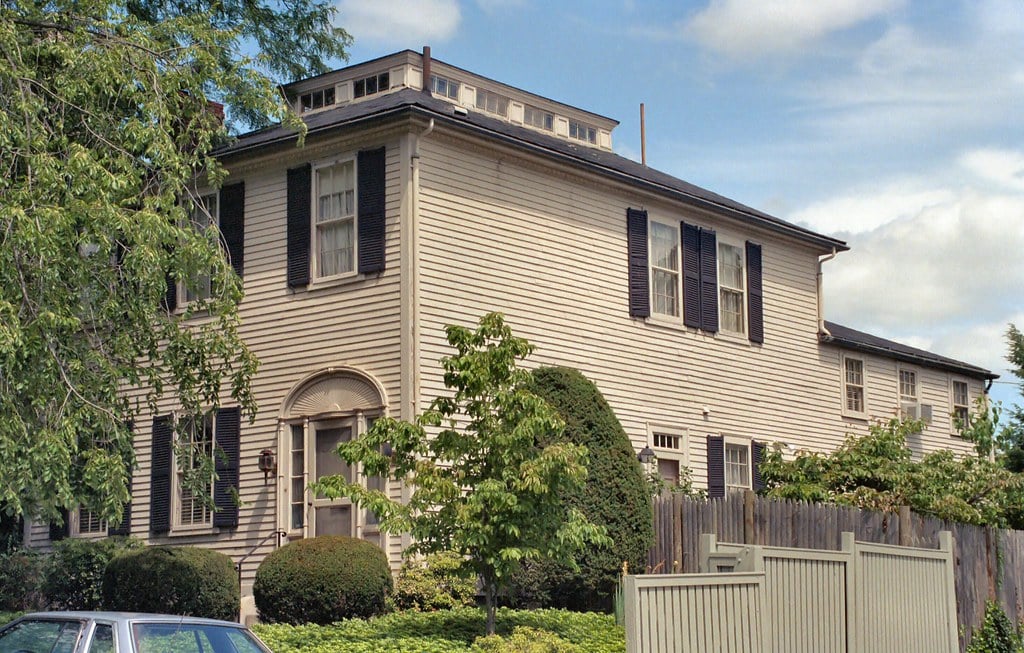
The Edward Dexter House was built between 1795 and 1797 for merchant Edward Dexter as a two-and-a-half-story Federal-style wood-frame residence with a hip roof topped by a distinctive square monitor — an unusual feature for the period and style. The house originally stood at the corner of George and Prospect Streets on College Hill.
In 1860 the entire structure was sawed in half and moved in two sections to its present location at 72 Waterman Street, a feat of 19th-century house-moving that is documented in the Library of Congress HABS survey. The relocation preserved the building's original architectural character while making way for development on the original site.
The Dexter House was acquired by the Rhode Island School of Design and has been used for both administrative and dormitory purposes over the decades. The Library of Congress Historic American Buildings Survey (HABS RI-179) documents the property in detail. The Wikipedia entry confirms the current address at 72 Waterman Street.
Sources
- https://en.wikipedia.org/wiki/Edward_Dexter_House
- https://www.loc.gov/item/ri0179/
- https://usghostadventures.com/providence-ghost-tour/
- https://www.hauntedplaces.org/item/rhode-island-school-of-design/
Disembodied whispersSensation of someone sitting on bed edgeForlorn woman apparition (tour lore)Cold spots
According to the US Ghost Adventures Providence Ghost Tour and HauntedPlaces.org, the Dexter House's reputation rests on a claim that the building was used as a morgue in the 18th century — leading to reports of disembodied whispers and the sensation of someone sitting on the foot of dormitory beds. We note the building was completed in 1797 (the very end of the 18th century) and that the 'morgue' tradition has not been corroborated in primary historical sources we examined; we present it as ghost-tour lore rather than documented fact.
Residents and tour participants have reported feeling 'menacing, spine-tingling energy' in the home's halls. FrightFind and similar paranormal-tour sites add accounts of a 'forlorn woman' figure inside the home and unexplained cold spots. These reports trace to a small number of overlapping tour-narrative sources rather than independent investigations, and we treat them as single-source lore.
This venue is RISD-owned and not open to the public — appreciate from the public sidewalk only.
Notable Entities
Unidentified woman figure (tour tradition)
Media Appearances
- Featured on the US Ghost Adventures Providence Ghost Tour
- Featured on FrightFind 'Providence Ghosts'