Dinner
Dine in the Former Merchant Hotel Lobby
Order at the original 1880 hotel reception desk and dine in the lobby; ask staff to point out the brick wall where 'Nina' is reportedly carved.
- Duration:
- 1.5 hr
HauntBound archive · catalog record
Reported phenomena, as catalogued
A pizzeria in the 1880 lobby of the former Merchant Hotel above Portland's Shanghai Tunnels, said to be haunted by Nina, a young woman from the building's brothel era.
226 NW Davis St, Portland, OR 97209
Research updated June 2026
Age
All Ages
Cost
$$
Standard pizzeria/brewery pricing.
Access
Wheelchair OK
Flat sidewalk; historic building with ground-floor dining.
Equipment
Photos OK
Est. 1880 · Former Merchant Hotel; among Portland's oldest standing commercial buildings · Located in the Old Town/Chinatown historic district · Sits atop sections of Portland's Underground (Shanghai Tunnels) · Continuously operated as Old Town Pizza since 1974
The structure at 226 NW Davis Street was built around 1880 as the Merchant Hotel, one of the earliest commercial buildings in Portland's Old Town/Chinatown neighborhood. The hotel served travelers and laborers passing through the Willamette River port district during the late nineteenth century, when Old Town was a dense waterfront of saloons, lodgings, and small businesses serving sailors and migrant workers.
Like many Old Town buildings, the Merchant Hotel sits atop sections of Portland's Underground, a network of basements, passageways, and brick-walled storage rooms commonly known today as the Shanghai Tunnels. Local lore connects these passages to the historical practice of crimping (the involuntary conscription of sailors), though Portland historians generally caution that archaeological evidence for systematic shanghaiing through the tunnels is limited.
The Accuardi family opened Old Town Pizza in the former hotel lobby in 1974, preserving original architectural elements including the lobby's decorative cast-iron beam posts and the front service window, which served as the hotel's original reception desk. The pizzeria has continuously operated in the space for more than five decades and now functions as Old Town Pizza & Brewing, producing house beers alongside its pizza menu.
The building remains a recognizable landmark of late-nineteenth-century Portland commercial architecture and a regular stop on walking tours of Old Town, the Shanghai Tunnels, and the city's haunted-history circuit.
Sources
The signature ghost story of Old Town Pizza centers on Nina, described by venue history pages and ghost-tour operators as a young 'working woman' sold into the white-slavery trade that historically operated through Old Town's hotels and saloons. According to the legend reported by Old Town Brewing's own 'Haunted Past' page, traveling missionaries persuaded Nina to share information about the trade in exchange for help escaping it. Shortly afterward she was found dead, said by the lore to have been thrown down the Merchant Hotel's elevator shaft (Old Town Brewing, otbrewing.com).
Staff and patrons reportedly see a young woman in a long, dark dress drifting through the dining room, sometimes accompanied by the scent of rose-like perfume. Whispered voices and faint laughter are described in the basement, particularly in passages connecting to the Portland Underground (Portland Ghosts; Puzzle Box Horror). A booth along an interior brick wall, where the original elevator shaft is said to have stood, is reported to bear the name 'Nina' scratched into the brick.
Multiple ghost-walking-tour operators feature Old Town Pizza as a regular stop, and the venue is frequently included in regional 'most haunted restaurants' coverage. Skeptical accounts, including reporting by The Ghost In My Machine, note that no independent historical record of Nina has been located, and several Portland historians treat the broader Shanghai-tunnel/white-slavery framing as part of the city's folkloric tradition rather than documented biography. Old Town Pizza presents the story openly as legend, with the Accuardi family's site framing Nina as a long-standing oral tradition of the building rather than a verified historical figure.
Notable Entities
Order at the original 1880 hotel reception desk and dine in the lobby; ask staff to point out the brick wall where 'Nina' is reportedly carved.
A guided tour of more than 14,000 square feet of the Portland Underground at the Haunted Merchant Hotel, directly below Old Town Pizza & Brewing. Learn about Portland's dark history and hear stories about the resident ghost, Nina, then finish with 3 tasters and 1 pint of the brewery's beer.
Some links on this page may earn HauntBound a small commission when you book, at no extra cost to you. Our editorial picks are independent. Full disclosure
This Portland tour includes Old Town Pizza & Brewing on its route.
Every HauntBound history is researched from documented sources. We clearly separate verified historical fact from paranormal folklore.
Free Guide
11 verified stops, rated for families, mapped in order. Free.
One email to confirm, then the guide link. Unsubscribe anytime.
Milwaukee, WI
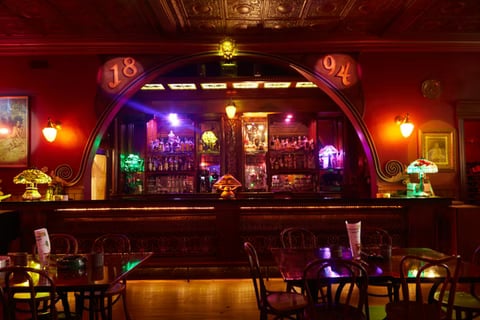
Shaker's Cigar Bar occupies an 1894 Walker's Point building originally constructed as a cooperage for the Schlitz Brewing Company. During Prohibition the structure operated as a speakeasy reportedly tied to the Capone family, with a brothel on the upper floors. Bob Weiss converted it to its current cigar-bar configuration in 1986.
Portland, OR
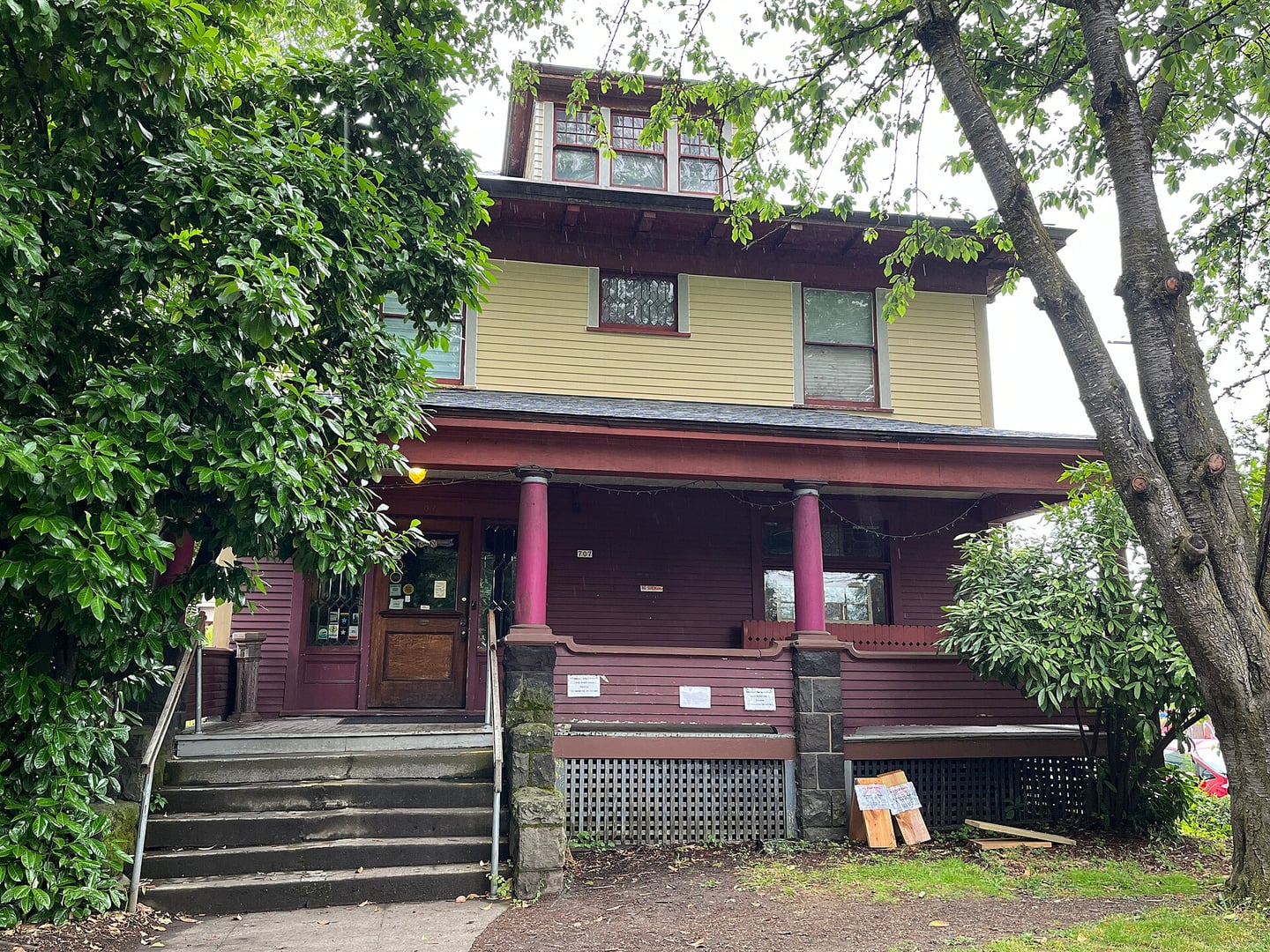
Owner Goody Cable opened Rimsky-Korsakoffee House in 1980 inside an existing 1902 Craftsman-style home she had been using to host classical-music gatherings. The dessert-and-coffee house is named for Russian composer Nikolai Rimsky-Korsakov and has continuously operated in the same building in the Buckman neighborhood.
Portland, OR
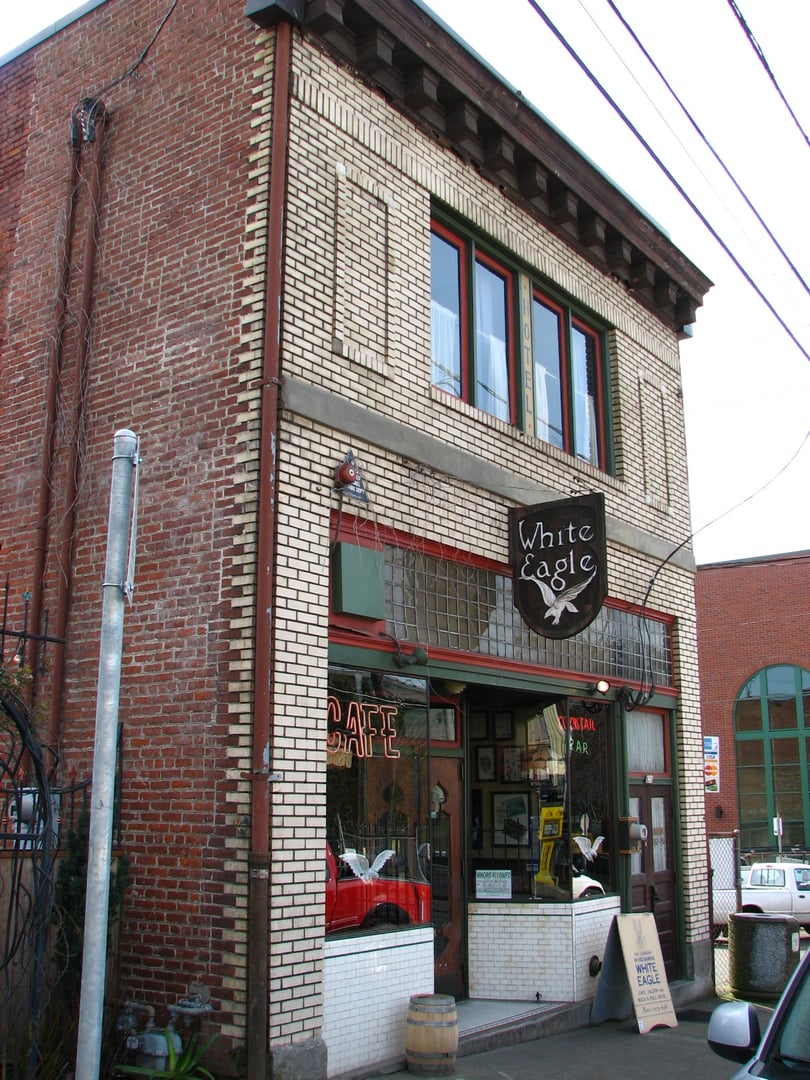
The building at 836 N Russell Street was constructed in 1899, with the saloon opened in 1905 by Polish immigrants Bronislaw 'Barney' Soboleski and William Hryszko, who named it for the white eagle on the Polish flag. It served as a rough-and-tumble working-class bar with rooms upstairs and was nicknamed the 'Bucket of Blood.' McMenamins purchased and rehabilitated the property in 1997, and it now operates as a bar and hotel.