Overnight Stay Booking Required
Stay Overnight in a Former Classroom
Spend the night in one of 57 hotel rooms converted from the school's classrooms, with original chalkboards and cloakrooms preserved.
- Duration:
- 12 hr
HauntBound archive · catalog record
Reported phenomena, as catalogued
A 1915 northeast Portland elementary school converted by McMenamins into a hotel, restaurant, and brewpub, widely reputed to be haunted by a young boy seen in the former women's restroom.
5736 NE 33rd Ave, Portland, OR 97211
Research updated June 2026
Age
All Ages
Cost
$$$
Hotel rooms moderately priced for Portland; restaurants, theater, and soaking pool at standard McMenamins rates.
Access
Wheelchair OK
Largely flat campus; renovated school building with elevator access to upper floors.
Equipment
Photos OK
Est. 1915 · Operated as a Portland Public Schools elementary 1915-1975 · Adaptive reuse by McMenamins beginning in 1997 · Neighborhood landmark in Concordia; site of community preservation effort
The Kennedy School building at 5736 NE 33rd Avenue was constructed in 1915 to serve the rapidly growing Concordia neighborhood of northeast Portland, on land sold to Portland Public Schools by John Daniel Kennedy in 1913. Designed in a brick Mission Revival style typical of early-twentieth-century Portland school construction, the building included classrooms, a gymnasium, a cafeteria, and an auditorium.
The school served as a neighborhood elementary for sixty years, finally closing in 1975 amid district consolidations. The building stood largely vacant and at risk of demolition through the late 1970s and 1980s; a community effort kept it from being torn down while uses for the property were debated.
In 1997, the McMenamins brothers purchased the building and led an adaptive-reuse renovation that converted classrooms into 57 hotel rooms (preserving original chalkboards, cloakrooms, and transom windows), turned the gymnasium into the Gym pub, the cafeteria into the Courtyard Restaurant, and the auditorium into a movie theater. The brewers also added a brewery on site and constructed a heated outdoor soaking pool in the former kindergarten play yard. McMenamins reopened the building to the public on October 22, 1997, with the original principal's bell ringing the start of its new life.
The property has operated continuously since as a hotel, gathering place, and neighborhood landmark, and in 2025 it marked 110 years since the building's original opening.
Sources
The Kennedy School's most-cited ghost story centers on a young boy reported in what is now the women's restroom (the former girls' restroom). According to McMenamins staff accounts collected on the company's 'Seen a Ghost?' blog, multiple guests and employees over the years have reported seeing a transparent boy walking in slow circles, occasionally described as dripping wet (McMenamins).
In hotel rooms, guests have reported waking in the early-morning hours, often around 2 a.m., to what sounds like a small child crying with the murmur of adult voices apparently trying to console him; other guests describe the unmistakable physical sensation of a small body jumping on the bed near the foot (VICE; Haunted Honeymoon). Most accounts collected by McMenamins describe the activity as gentle and child-like rather than threatening.
A second, less-prominent thread of lore involves an older female figure, sometimes described as a former teacher, reportedly seen in classrooms now converted to hotel rooms. Both threads are presented by McMenamins as collected staff and guest reports rather than verified history. Kennedy School appears on most Portland 'most haunted' lists and is a regular subject of regional ghost-tourism coverage, including VICE's 2018 feature on the property.
Notable Entities
Media Appearances
Spend the night in one of 57 hotel rooms converted from the school's classrooms, with original chalkboards and cloakrooms preserved.
Eat in the school's restored dining hall and walk the converted gymnasium-turned-theater.
Some links on this page may earn HauntBound a small commission when you book, at no extra cost to you. Our editorial picks are independent. Full disclosure
Every HauntBound history is researched from documented sources. We clearly separate verified historical fact from paranormal folklore.
Free Guide
11 verified stops, rated for families, mapped in order. Free.
One email to confirm, then the guide link. Unsubscribe anytime.
Astoria, OR
Pier 39 is the oldest surviving cannery pier on the Columbia River. Opened in 1875 by tinsmith-turned-cannery-operator J.O. Hanthorn, the Hanthorn Cannery operated continuously through the late-19th-century salmon boom and was later absorbed into the Bumble Bee Seafoods operation. Today the 150-year-old, 84,800-square-foot pier complex houses the Hanthorn Cannery Museum, Rogue Pier 39 Public House, Coffee Girl coffee shop, the Vineside wine bar, the Fisherman's Suites lodging, and artist studios.
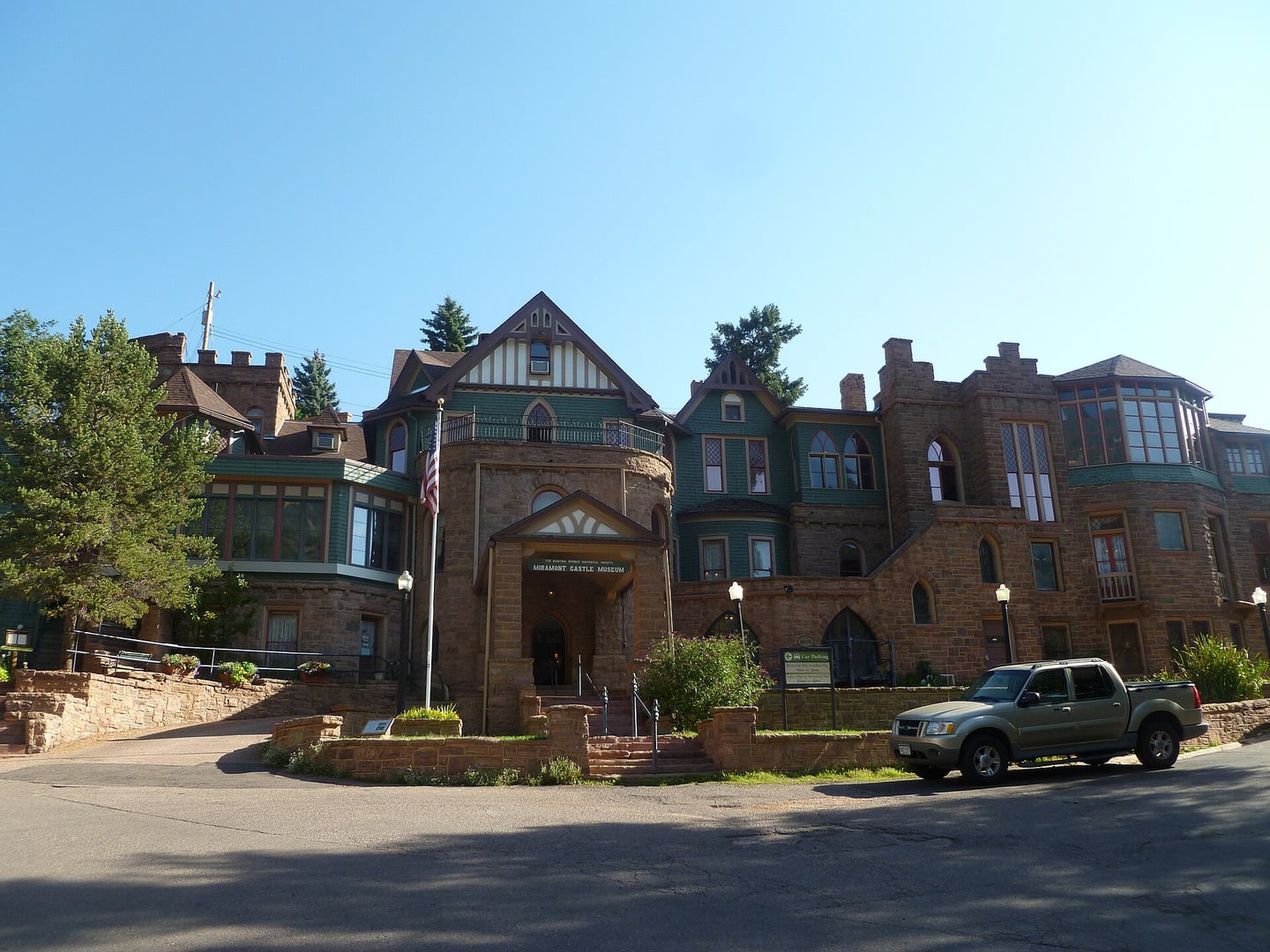
Manitou Springs, CO
Miramont Castle was built in 1895 as a private home for French-born Catholic priest Jean Baptist Francolon. It combines nine architectural styles across forty rooms and 14,000 square feet. The Sisters of Mercy purchased it in 1904 for use as a tuberculosis sanatorium. The Manitou Springs Historical Society acquired the property in 1975 and opened it as a museum in 1977.
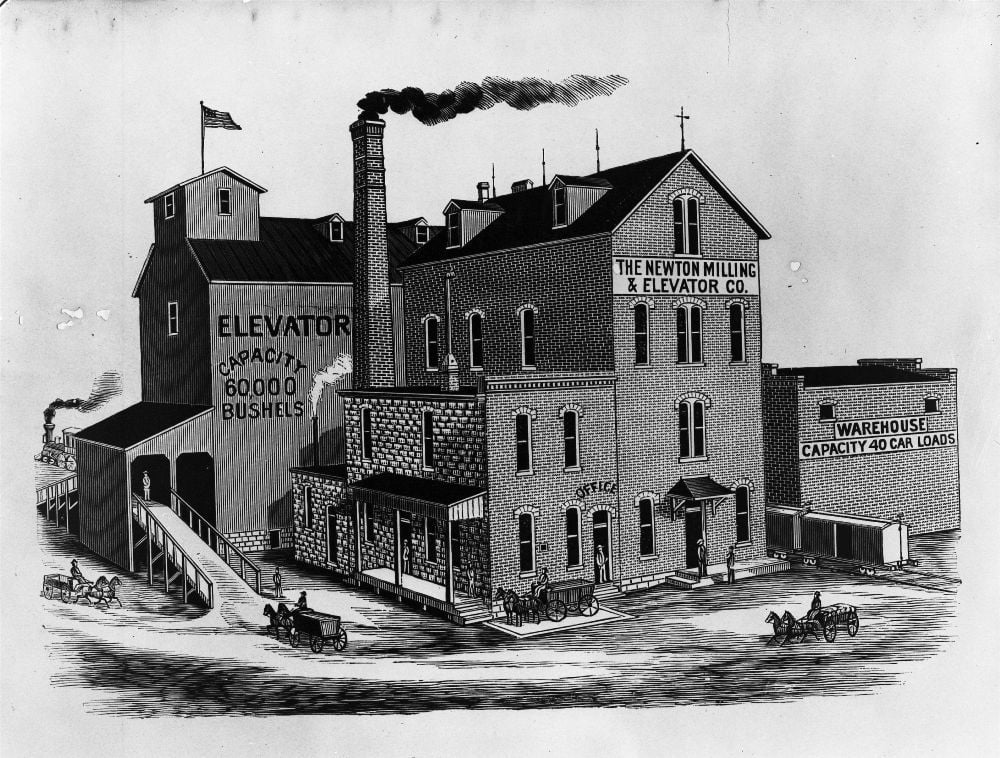
Newton, KS
The Old Mill Plaza in Newton, Kansas was built in 1879 as the Monarch Steam Mill. Bernhard Warkentin purchased the mill in 1886 to grind Turkey Red hard winter wheat, the variety that transformed Kansas grain agriculture. The mill ceased flour production in 1964 and was scheduled for demolition in 1973 before Lloyd and Jacqueline Smith bought it the night before to begin a multi-decade restoration.