Est. 1959 · Once the largest community theatre in the United States · Over 100 years of continuous community theatre programming · Training ground for professional actors under WWII-era Broadway director Arthur Sircom · Elizabeth Hartman developed her acting career here
Several local drama organizations merged on February 16, 1924 to form the Youngstown Players. The group operated initially from a renovated 19th-century barn. In 1940, supporters raised $30,000 to convert a vacant movie theater, and the renamed Youngstown Playhouse opened at that location with a production of Camille of Roaring Camp in 1942.
During World War II, Broadway director Arthur Sircom led the organization, using it as a training ground for professional actors. Elizabeth Hartman, who went on to a film career, was among those who developed their craft here.
In 1959, the organization relocated to a new two-theatre building on Glenwood Avenue — the current location at 600 Playhouse Lane. At its height, this community theatre was recognized as the largest of its kind in the United States. Today it operates a full season of productions and has celebrated more than 100 years of continuous performance in Youngstown, making it one of the longest-running community theatres in the country.
The box office operates from the DeYor Performing Arts Center at 260 W. Federal Street, Youngstown.
Sources
- https://en.wikipedia.org/wiki/Youngstown_Playhouse
- http://www.youngstownplayhouse.org
- https://panicd.com/youngstown-playhouse.html
Shadow figure in the balcony during rehearsals and performancesHalf-seen face appearing in the empty light boothWhite entity moving through closed doorsCold spots throughout the buildingUnexplained whisperingGhostly music heard by patrons and staffSecurity guard reported entity following him to his car
The paranormal reputation of the Youngstown Playhouse has built over the entire lifespan of the current building. Staff and performers describe an overall sense of unease when entering certain sections of the theatre — not a single dramatic incident but an accumulated weight of reported experiences over eight decades.
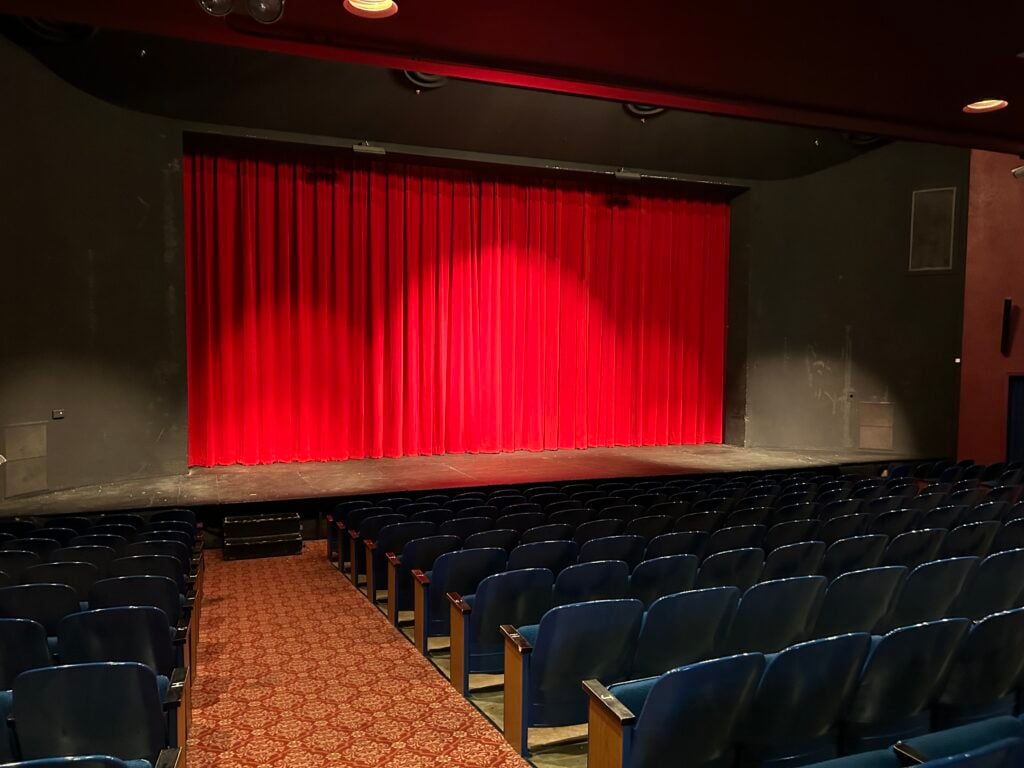
The most-cited accounts involve a shadow figure that has been observed sitting in the balcony during rehearsals and performances, visible from the stage and from audience seating. A second recurring report involves a half-seen face appearing in the light booth — a figure that appears when the booth is dark and empty, briefly visible before resolving into nothing. Witnesses also describe a white entity that appears to slide through a closed door, cold spots throughout the building, and episodes of unexplained whispering and ghostly music.
A former security guard provided one of the more specific accounts: he reported an overwhelming sensation of being watched during his rounds, and came to believe that a presence from the playhouse had followed him to his car, sensing what he described as knees pressed against the back of his seat on the drive home.
No identity has been attached to any of the reported entities, and no formal paranormal investigation has published findings on this site beyond the PANICd database entry documenting witness reports.