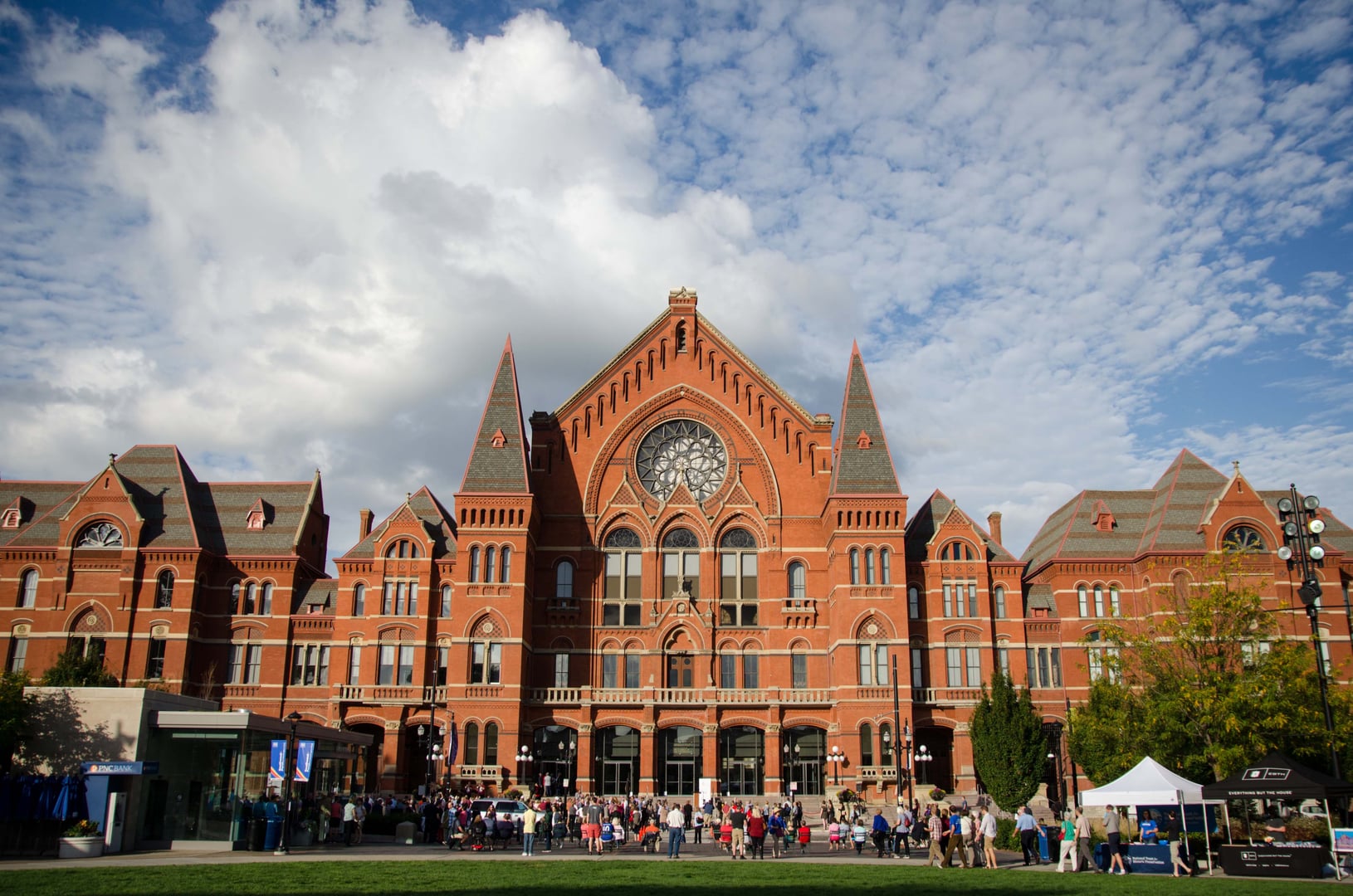
Est. 1895 · Opened Christmas Day 1895 · Designed by Toledo architect E.O. Fallis · Once the largest-stage venue in the United States · Restored and reopened 1999 as a nonprofit performing arts center · Listed on the National Register of Historic Places
The Valentine Theatre opened on Christmas Day 1895 with a production of The Erin-Go-Bragh and immediately established itself as Toledo's premier performance venue. Toledo architect E.O. Fallis designed the Romanesque Revival building with a main stage that was, at the time of its opening, the largest in the country — a distinction that drew touring companies and headliners throughout the late 19th and early 20th centuries.
During the Prohibition years, the building's lower levels reportedly hosted a speakeasy operation, an arrangement not uncommon in large downtown commercial buildings of the era. The theater continued producing shows through the first decades of the 20th century but fell into decline as the entertainment landscape shifted, eventually closing.
A major restoration effort brought the Valentine back to operational status in 1999. The project received significant community support and the building, listed on the National Register of Historic Places, was returned to performance use as a nonprofit arts venue. Today it hosts local theater companies, concerts, galas, and community events across its multiple performance and event spaces.
Wikipedia confirms the 1895 opening date and documents the theater's historical significance, including its status as a Toledo cultural landmark.
Sources
- https://en.wikipedia.org/wiki/Valentine_Theatre
- https://valentinetheatre.com/
- https://toledocitypaper.com/the-city/the-spooky-city-discover-toledos-most-haunted-places/
Disembodied woman's singing voice in empty hallwaysUnexplained flickering lightsUnexplained footsteps in upper balcony
The haunted reputation of the Valentine Theatre derives not from a single traumatic event but from accumulated reports by people who work the building regularly. Staff and performers describe lights flickering in controlled, isolated patterns — not the electrical variance expected in a century-old building — and the experience of hearing what sounds like a woman singing in empty sections of the house.
The upper balcony area is cited most frequently. Reports describe a clear, melodic voice carrying through the space in the minutes after a performance when the house is being cleared. The backstage corridors — a warren of historic passageways behind the main stage — produce similar accounts. No specific identity has been attached to the figure.
Toledo City Paper included the Valentine in its comprehensive survey of Toledo's most haunted locations, noting the singing-voice reports as the most consistent and independently corroborated of the phenomena associated with the building.