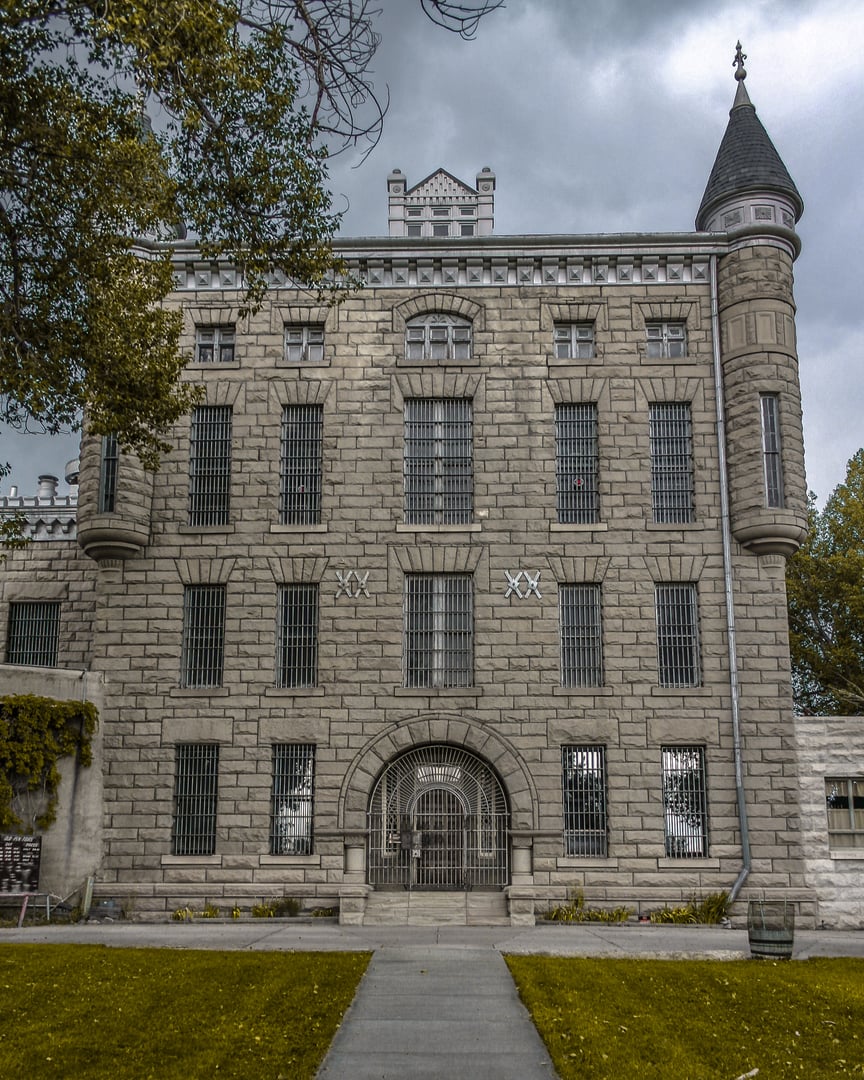
Est. 1862 · Nevada's First Territorial Prison · World's First Gas Chamber Execution (Gee Jon, February 8, 1924) · First Nevada Execution by Firing Squad (Andriza Mircovich, 1913) · 51 Executions Across Four Methods · Closed 2012; Now a Preservation Museum
Nevada Territory established its first prison in Carson City in 1862, two years before statehood. The facility occupied a site on the eastern edge of the capital and grew incrementally over the following century and a half as Nevada's population and criminal justice system expanded. The first documented execution at the facility was John Hancock, hanged on September 8, 1905.
The prison's most consequential moment in American legal history came on February 8, 1924. Nevada had passed legislation in 1921 authorizing execution by lethal gas, seeking a method considered more humane than hanging. The facility retrofitted a former barbershop as the first gas chamber in American penal history. The first subject was Gee Jon, a 28-year-old Chinese immigrant and member of a San Francisco-based Tong organization, convicted of the 1921 murder of Tom Quong Kee in Mina, Nevada during a gang dispute.
The execution proceeded with complications. Hydrocyanic acid becomes lethal gas only above approximately 79 degrees Fahrenheit, and the morning of February 8 was cold. The chamber's heating equipment malfunctioned, resulting in a difficult and prolonged execution. The warden reportedly recommended the method not be repeated. Despite the troubled inaugural use, gas chamber execution was subsequently adopted by eleven other states, making the Nevada State Prison's February 1924 event a pivot point in American capital punishment history.
The prison went on to conduct 51 executions across four methods — hanging (1905-1906), firing squad (1913), lethal gas (1924-1979), and lethal injection (1983-2006). Notable executions included Andriza Mircovich by firing squad in 1913 — the only execution by gunfire in Nevada's history — and Carroll Cole in 1985, the first lethal injection execution in the state. The prison closed on May 18, 2012 due to budgetary constraints. The Nevada State Prison Preservation Society now operates the site as a museum offering tours and evening investigation programs on Saturdays from May through October.
Sources
- https://en.wikipedia.org/wiki/Nevada_State_Prison
- https://nevadastateprison.org/pages/visit
- https://nevadastateprison.org/pages/executions
- https://deathpenaltyinfo.org/past-to-present-100-years-since-the-united-states-first-lethal-gas-execution-a-recently-renewed-practice
- https://matadornetwork.com/read/nevada-state-prison-tour-ghosts/
- https://mynews4.com/news/knowing-nevada/knowing-nevada-the-paranormal-at-the-nevada-state-prison
- https://amyscrypt.com/nevada-state-prison-beyond-the-cell-bars/
- https://www.nevadaappeal.com/news/2023/oct/21/most-haunted-place-draws-ghost-hunters-to-east-carson-city/
ApparitionsCold spotsEVPPhantom soundsShadow figures
The Nevada State Prison's institutional history provides the factual substrate for its paranormal reputation, and the site makes little effort to separate the two. The execution chamber — a converted barbershop that hosted 32 lethal gas executions between 1924 and 1979, beginning with the world's first gas chamber death — is included on both the historic day tour and the paranormal investigation programs.
A facility that conducted 51 documented executions and held a general population for 150 years generates its own residue in the institutional imagination. The preservation society's ghost walk programs describe the activity as concentrated in the cell blocks, the execution chamber, and the areas associated with long-term solitary confinement. The specific reports circulating in paranormal-tourism media center on the execution chamber and the isolation areas rather than the general housing wings.
The inmate casino called the Bullpen — an unusual feature that operated within the prison for roughly 30 years before its 1967 closure — adds a further unusual layer to the site's history. Inmates gambling under institutional supervision in a maximum-security prison produced a documented social environment without obvious parallel in American corrections history.
The preservation society has operated the site as a heritage and paranormal-tourism destination since the 2012 closure. Investigation events are framed explicitly as introductory paranormal programming rather than sensationalized attraction content.
Where this legend is told