Est. 1876 · Boston Saloon Archaeological Site (1864-1875) · William Brown — Black Saloon Owner · Comstock Lode Boom Era · 1997 and 2000 Archaeological Excavations · Nevada State Historic Preservation Office Marker (2007)
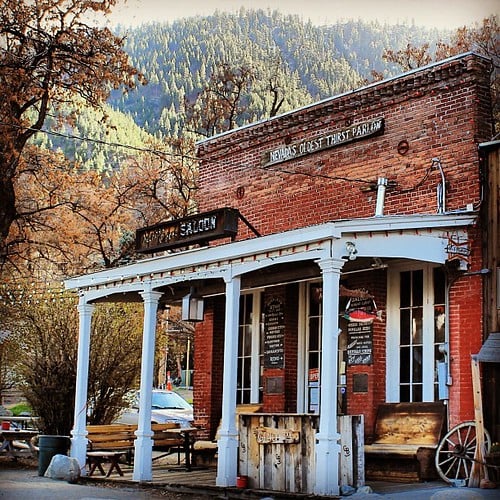
The structure visible on the corner of South C Street today was built in 1876, the year after the Great Fire of October 1875 destroyed most of Virginia City's commercial district. Some of the masonry walls on the property predate the fire, giving the current building a foundation in the original boom-era construction. The saloon has operated more or less continuously since 1876, surviving the long decline of the Comstock and Virginia City's transformation into a heritage-tourism destination.
The name Bucket of Blood is attributed to the 1870s period of maximum population density, when fights, shootings, and stabbings were common enough that sawdust soaked with blood had to be removed in buckets at closing time. Virginia City's saloon culture during the boom was documented in the Virginia City Territorial Enterprise, the newspaper where Samuel Clemens wrote as Mark Twain, and the frequency of barroom violence was a routine subject of coverage.
In 1997, archaeologists identified that the Boston Saloon site lay under an asphalt cap to the rear of the building, according to the venue; state tourism instead describes the current building as built over the Boston Saloon, which operated at a nearby D and Union Street address from 1864 until it burned in the 1875 fire. The Boston Saloon was owned by William Brown, a man originally from Massachusetts who had worked as a bootblack in Virginia City from around 1861 before establishing the saloon. The Boston Saloon catered primarily to Black clientele and is described in subsequent academic and historical literature as the only Black-owned saloon documented in the 19th-century Old West.
The site was formally excavated in September 2000 by the Comstock Archaeology Center, recovering pipes, coins, glassware, bottles, and food remains that archaeologists described as evidence of a well-provisioned establishment serving customers quality cuts of meat. A historical marker erected in 2007 by the Nevada State Historic Preservation Office, the NAACP Reno-Sparks Branch, and the saloon owner marks the Boston Saloon site outside the modern building.
Sources
- https://bucketofbloodsaloon.com/history/
- https://blackpast.org/african-american-history/boston-saloon-1864-1875/
- https://www.hmdb.org/m.asp?m=21830
- https://travelnevada.com/bars/bucket-of-blood-saloon/
- https://visitvirginiacitynv.com/virginia-city-saloons/
ApparitionsPhantom presenceCold spots
The Bucket of Blood Saloon's paranormal reputation rests primarily on its accumulated history of violence during Virginia City's boom decades. The name itself is a compression of that history — a building where bloodshed was common enough to enter the naming record. Regional paranormal and dark-tourism sources list it among Virginia City's most active sites, though specific documented incidents are less detailed here than at buildings with single concentrated tragedies.
Regional haunted-sites sources identify a figure called Donald as a presence associated with the building — described as a former owner whose attachment to the saloon has persisted after death. Staff and visitor reports describe him as a quiet, non-threatening presence rather than an aggressive one.
The Boston Saloon's archaeological site, described by the venue as to the rear and by state tourism as beneath the current building, adds a dimension to the site's dark history that operates independently of the paranormal claims. The violence experienced by Black residents in the Comstock era — including the burning that destroyed William Brown's enterprise in 1875 — represents a documented historical harm for which the site stands as archaeological record. The 2007 historical marker addresses this layer directly.
The saloon continues to operate as a bar and Virginia City landmark, regularly appearing on regional haunted-Virginia-City itineraries and on ghost-tour routes that move along C Street.
Notable Entities
Donald (former owner)
Where this legend is told