Early-19th-century burial ground for New Brunswick's Baptist and Presbyterian churches · Burial place of Rutgers student Taro Kusakabe (1845-1870) · Burial place of John Munroe, military governor of New Mexico · Contributing property to the Livingston Avenue Historic District (1996)
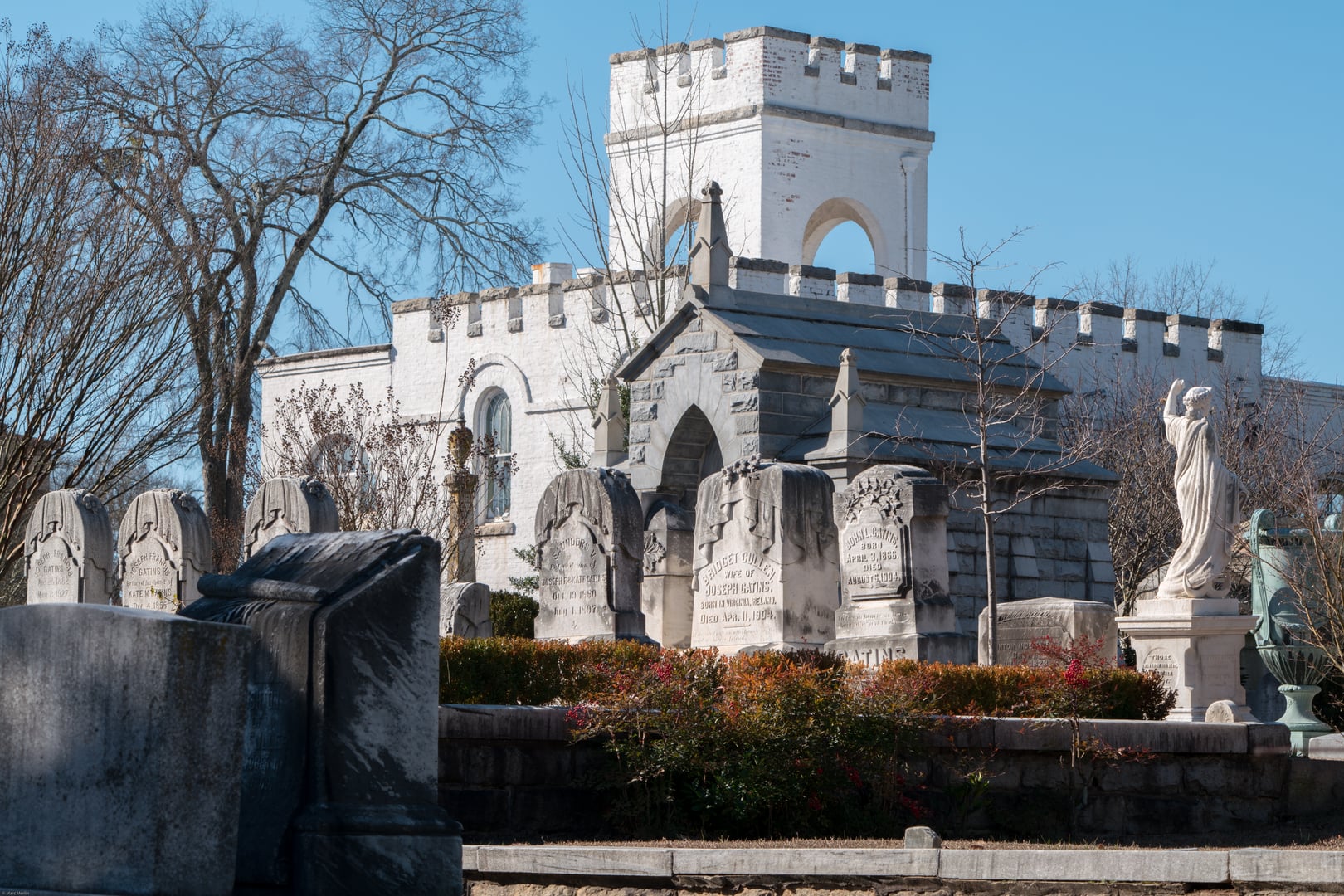
Willow Grove Cemetery occupies a block on Morris Street in downtown New Brunswick, running from Livingston Avenue to George Street, behind the city's Free Public Library and the Henry Guest House. It began in the early nineteenth century as a graveyard for the town's Baptist and Presbyterian congregations, and it remains one of the oldest surviving burial grounds in the city center.
The cemetery holds several figures of note. Taro Kusakabe (1845-1870), a samurai from Fukui, Japan, came to study at Rutgers and died of tuberculosis at twenty-five; he is remembered as one of the first Japanese students at the college and is buried here. John Munroe (1796-1861), who served as the military governor of New Mexico, is also interred at Willow Grove. The grounds include the grave of William I. Van Arsdale, recorded as the first known New Brunswick police officer to die in the line of duty, who drowned in the Delaware and Raritan Canal in December 1856.
Willow Grove is a contributing property to the Livingston Avenue Historic District, designated in 1996. Its age, its mix of notable and ordinary dead, and its position directly behind the eighteenth-century Henry Guest House have made it a fixture of New Brunswick's local history — and the anchor of the city's evening ghost walk.
Sources
- https://en.wikipedia.org/wiki/Willow_Grove_Cemetery,_New_Brunswick
- http://www.hiddennj.com/2013/10/deciphering-dead-new-brunswicks-willow.html
- https://njmonthly.com/articles/arts-entertainment/13-haunting-ghost-tales-and-trails/
Atmosphere of an early-19th-century downtown burial groundStories of the city's past dead told on the ghost walk
Willow Grove's place in New Brunswick's ghost lore comes from its age, its downtown setting, and its pairing with the Henry Guest House at its back. The Spirits of New Brunswick walking tour lists it as a featured stop, promising stories of people from the city's past — some, the tour suggests, who continue to haunt its most-visited sites.
The cemetery itself carries the diffuse atmosphere of any older urban burial ground rather than a single famous apparition. Guides draw on the documented dead — the young samurai student who died far from home, the territorial governor, the policeman lost in the canal — to give the visit weight, letting the real history do the work. Local writers who have documented the cemetery focus more on deciphering its weathered stones than on cataloging hauntings.
No specific named ghost is firmly tied to Willow Grove in the documented sources. Its role in the city's paranormal reputation is as a setting: an early-nineteenth-century graveyard tucked behind a colonial house, dark and quiet at the center of a modern downtown, which is reason enough for it to anchor the evening tour.
Where this legend is told