Est. 1787 · Founding 1666 congregation of Newark · Listed on the National Register of Historic Places (November 2, 1972) · Anchor of the Four Corners Historic District · Source congregation for the 2005 'Newark mummies' discovery
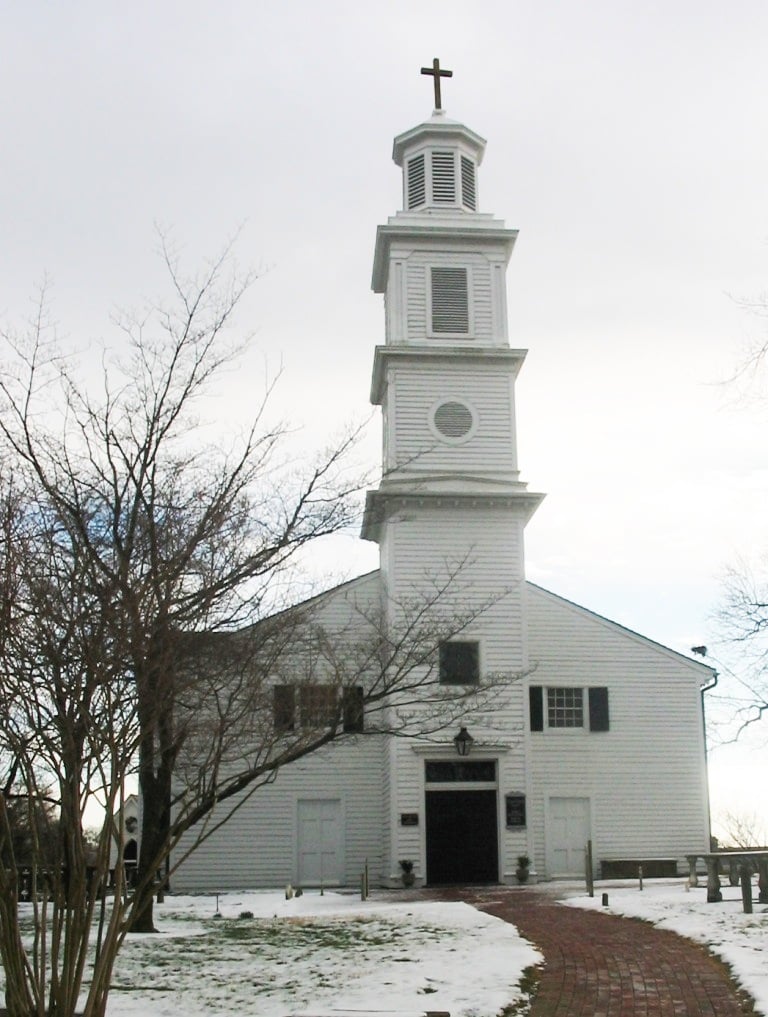
First Presbyterian Church was organized in 1666 alongside the founding of Newark by Puritan settlers from Connecticut led by Robert Treat. It is the city's oldest continuously active congregation. The current building at 820 Broad Street, in what is now the Four Corners Historic District, was completed in 1787 by architect Eleazer Ball in a Georgian Colonial style featuring a 204-foot steeple.
The church and its adjacent burying ground were added to the New Jersey Register of Historic Places on August 2, 1972, and to the National Register of Historic Places on November 2, 1972. Notable burials in the surviving graveyard include William Burnet (1730-1791, Continental Congress delegate), U.S. Representative Silas Condit (1778-1861), and U.S. Representative Thomas Ward (1759-1842).
In 2005, during construction of the Prudential Center hockey arena a few blocks south on the site of the church's former Mulberry Street cemetery, forensic archaeologist Scott Warnasch and his team uncovered two intact cast-iron Fisk Metallic Burial Cases. One contained the remains of Captain William A. Pollard (died September 5, 1854). The other belonged to Mary Camp Roberts (died May 26, 1852, age 88). Both were members of the First Presbyterian congregation, whose Mulberry Street burial ground had been displaced when its land was sold in the 19th century. The discoveries received extensive coverage in New Jersey Monthly and Weird NJ and became known as the 'Newark mummies.'
Sources
- https://en.wikipedia.org/wiki/Old_First_Presbyterian_Church_(Newark,_New_Jersey)
- https://njmonthly.com/articles/historic-jersey/newarks-mummies-raise-many-grave-questions/
- https://weirdnj.com/stories/mystery-history/mummies-of-newark/
- https://ironcoffinmummy.com/mummies/mary-camp-roberts/
- https://ironcoffinmummy.com/mummies/captain-william-a-pollard/
- https://pcusa.org/congregation/old-first-church-newark-nj
Restless burials and 'unsettled ground' folkloreAnniversary-style sightings tied to displaced burialsCultural haunting tied to the 'Newark mummies' Prudential Center discovery
Newark ghost-tour narratives circulated by US Ghost Adventures treat the burying ground at 820 Broad Street as a focal point for unresolved congregational dead. According to these accounts, when the church's former Mulberry Street cemetery was sold in the 19th century, not all bodies were properly relocated, and the surviving Old First grounds inherited the spiritual unfinished business of the displaced.
This folklore intensified after 2005, when excavation for the Prudential Center hockey arena exposed two unbroken cast-iron Fisk Metallic Burial Cases from the former Mulberry Street site. Forensic archaeologist Scott Warnasch identified one as Captain William A. Pollard (died September 5, 1854) by the engraved nameplate; the other, after extensive investigation, as Mary Camp Roberts (died May 26, 1852, age 88). Both were members of the First Presbyterian congregation. Coverage in New Jersey Monthly, Weird NJ, and the Jerusalem Post repeatedly framed the find as 'Newark's mummies,' and a subsequent string of injuries to the New Jersey Devils hockey team produced years of half-serious 'are the mummies cursed?' coverage.
First-person ghost reports at Old First itself are limited in published sources; the legend's strength comes from the documented displacement history and the visceral image of intact 19th-century bodies surfacing under a modern arena.
Notable Entities
Captain William A. Pollard (d. September 5, 1854)Mary Camp Roberts (d. May 26, 1852)
Media Appearances
- New Jersey Monthly - 'Newark's Mummies Raise Many Grave Questions'
- Weird NJ - 'The Mummies of Newark'
- Jerusalem Post - Devils 'mummy curse' coverage