Est. 1756 · National Historic Landmark · First and largest colonial building in North America at completion · Battle of Princeton (1777) · Continental Congress seat (1783) · Princeton University founding building
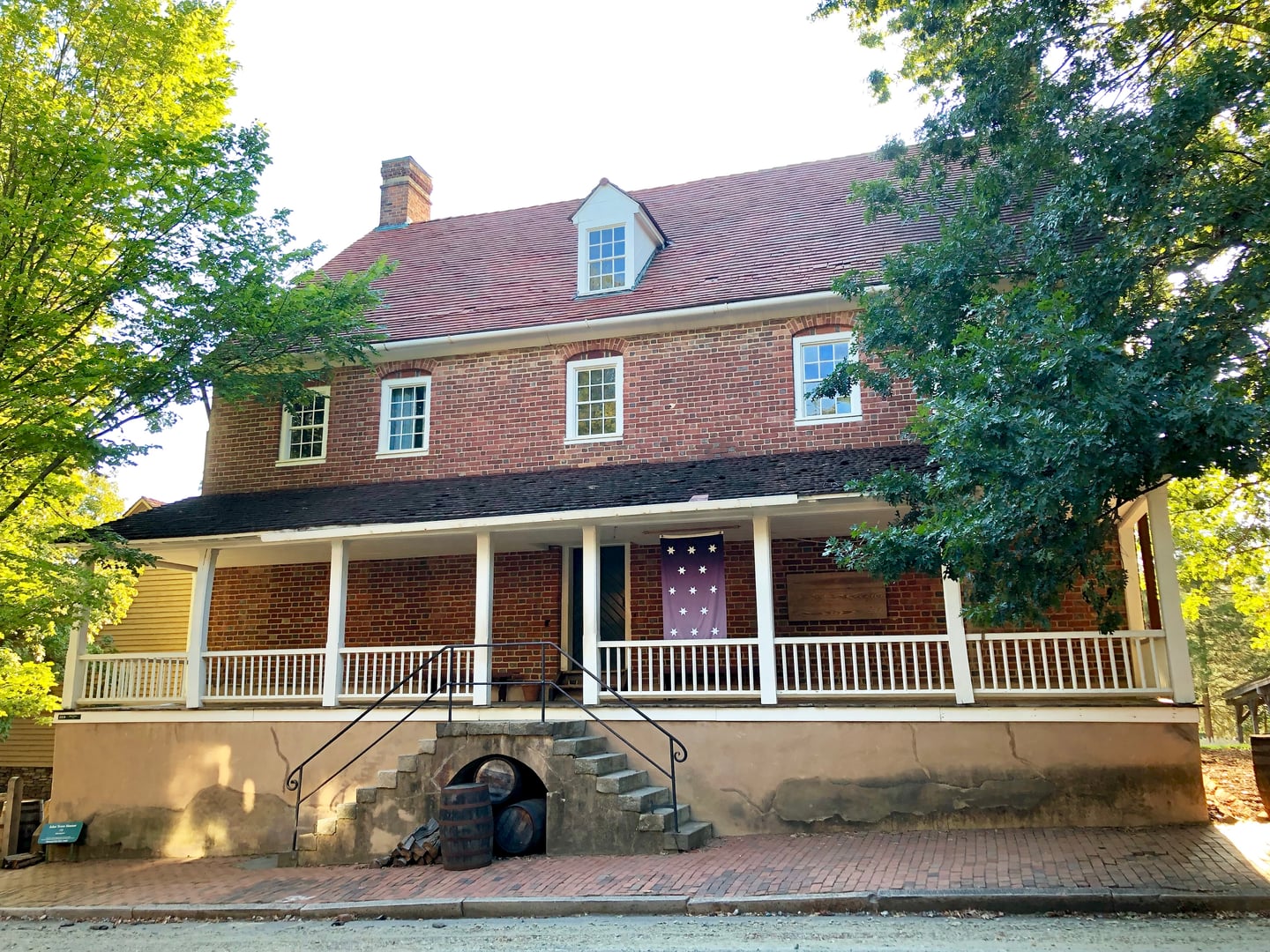
Nassau Hall was completed in 1756 to a design by Robert Smith, then subsequently remodeled by Benjamin Latrobe and John Notman. At the time of its completion it was the largest academic building in British North America. The College of New Jersey, which would later become Princeton University, moved its operations there from Newark, and the building housed the entire institution — classrooms, dormitories, dining hall, and library — under one roof for its first several decades.
The building's role in the Revolution was direct. British forces occupied Nassau Hall and used it as barracks during their occupation of Princeton. On January 3, 1777, General Washington's forces attacked. Alexander Hamilton's New York artillery battery trained on the building, and a cannonball passed through a window in the prayer hall and destroyed a portrait of King George II. Roughly 200 British regulars surrendered. The impact site on the south wall is marked today by groundskeepers who maintain a trimmed circle in the ivy — a tradition Princeton tour guides describe as continuous.
In the summer of 1783, following the Newburgh Crisis, the Continental Congress convened in Nassau Hall for approximately four months, making Princeton briefly the effective capital of the new republic. Aaron Burr Jr., who graduated from the College of New Jersey in 1772 and whose funeral was held at Nassau Hall in September 1836, is associated with the building's ghost tradition, though the more precisely documented tradition involves his father, Aaron Burr Sr., the college's second president.
Sources
- https://en.wikipedia.org/wiki/Nassau_Hall
- https://paw.princeton.edu/article/ghosts-princeton
- https://www.battlefields.org/visit/heritage-sites/nassau-hall
- https://universityarchives.princeton.edu/2015/06/a-brief-history-of-the-architecture-of-nassau-hall/
Presence in presidential officeApparition during exam periods
The ghost tradition at Nassau Hall centers on Aaron Burr Sr., the college's second president, who moved the institution from Newark to Princeton and administered it from Nassau Hall. The Princeton Alumni Weekly documents the tradition this way: Burr is said to haunt his old office, 'checking up on the progress of his beloved college.' The locus is his administrative office inside the building rather than the broader structure.
A student account published in the Nassau Literary Review in 1892 describes an encounter with what is presented as Burr's ghost on campus, with the spirit explaining its presence by saying it 'is always in Princeton for a while before examinations and during them.' The account reads as a piece of literary wit, but its publication in the university's oldest student literary journal in 1892 makes it the earliest documented written record of the Burr haunting tradition.
A separate but related tradition ran through the late 19th century: each fall, on the first rainy night of term, upperclassmen would lead the incoming class down Witherspoon Street to Princeton Cemetery to witness Aaron Burr Jr. — the vice president and duelist, Class of 1772 — rise from his grave. Burr Jr.'s funeral was held in Nassau Hall in 1836, binding him to the building in ceremony if not in the specific haunting tradition, which attaches to his father.
Notable Entities
Aaron Burr Sr. (second president, College of New Jersey; reported haunting)Aaron Burr Jr. (Class of 1772, vice president; associated by funeral and tradition)
Where this legend is told