Est. 1742 · Birthplace of Captain James Lawrence · Origin of the U.S. Navy motto 'Don't give up the ship' · Burlington County Historical Society campus · Armed Forces Heritage Museum headquarters
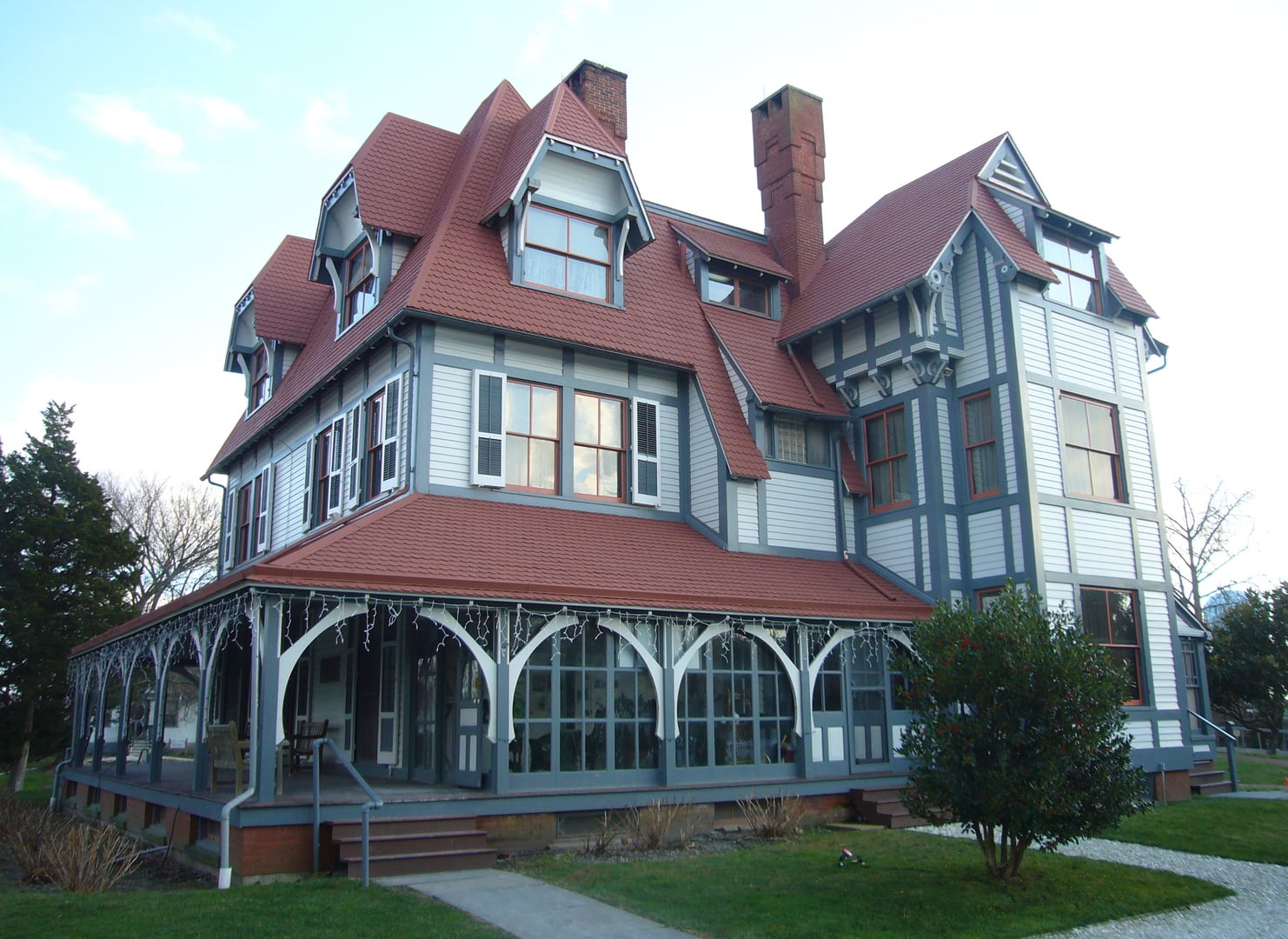
The house at 459 High Street, sometimes recorded as the Cooper-Lawrence House for its early owners, dates to about 1742. It is a brick dwelling in Burlington's colonial core, today part of the campus of the Burlington County Historical Society.
James Lawrence was born in the house in 1781, the youngest of a large family. He entered the United States Navy and advanced through the officer ranks during the early-republic conflicts at sea, including the Barbary campaigns. By the War of 1812 he held the rank of captain.
In June 1813 Lawrence commanded the frigate USS Chesapeake out of Boston when he engaged the British frigate HMS Shannon. The action was brief and bloody. Lawrence was mortally wounded as the British boarded his ship and, according to the accounts that fixed his place in naval memory, ordered his crew, 'Don't give up the ship. Fight her till she sinks.' The Chesapeake was nonetheless captured, and Lawrence died of his wounds days later. His dying command was stitched onto a battle flag by his friend Oliver Hazard Perry and carried at the Battle of Lake Erie; it remains one of the U.S. Navy's defining phrases.
The Burlington County Historical Society has long preserved the house. The Armed Forces Heritage Museum opened its headquarters in the Lawrence House, presenting exhibits, interactive displays, and documentaries spanning the Revolutionary War, the War of 1812, and the World Wars.
Sources
- https://www.afhmus.org/the-james-lawrence-house/
- https://revolutionarynj.org/sites/captain-james-lawrence-house/
- https://www.loc.gov/item/nj0319/
The Captain James Lawrence House is interpreted as a memorial and museum, not as a heavily reported haunting. Its association with mortality is direct and historical: the man born in this house died of wounds taken in a frigate action against the Royal Navy, and his last order entered American naval tradition.
For visitors drawn to dark and military history, the appeal is the continuity between an 18th-century brick house in a quiet Burlington street and one of the most-quoted death scenes in the early U.S. Navy. The Armed Forces Heritage Museum presents that history through artifacts and documentaries rather than through ghost narratives.
No substantial body of paranormal investigation is associated with the building in the available record. The house is best understood as a place where a documented war death is commemorated, set within Burlington's broader concentration of Revolutionary and early-republic sites along High and Wood Streets.
Notable Entities
Captain James Lawrence (1781-1813)
Where this legend is told