Est. 1837 · One of Michigan's oldest extant rural Quaker burial grounds, established 1837 · Contains interments of Revolutionary War soldiers (Quick family) · Historical marker installed by Barry County historical society · Sole survivor of a lost 19th-century Quaker farming settlement
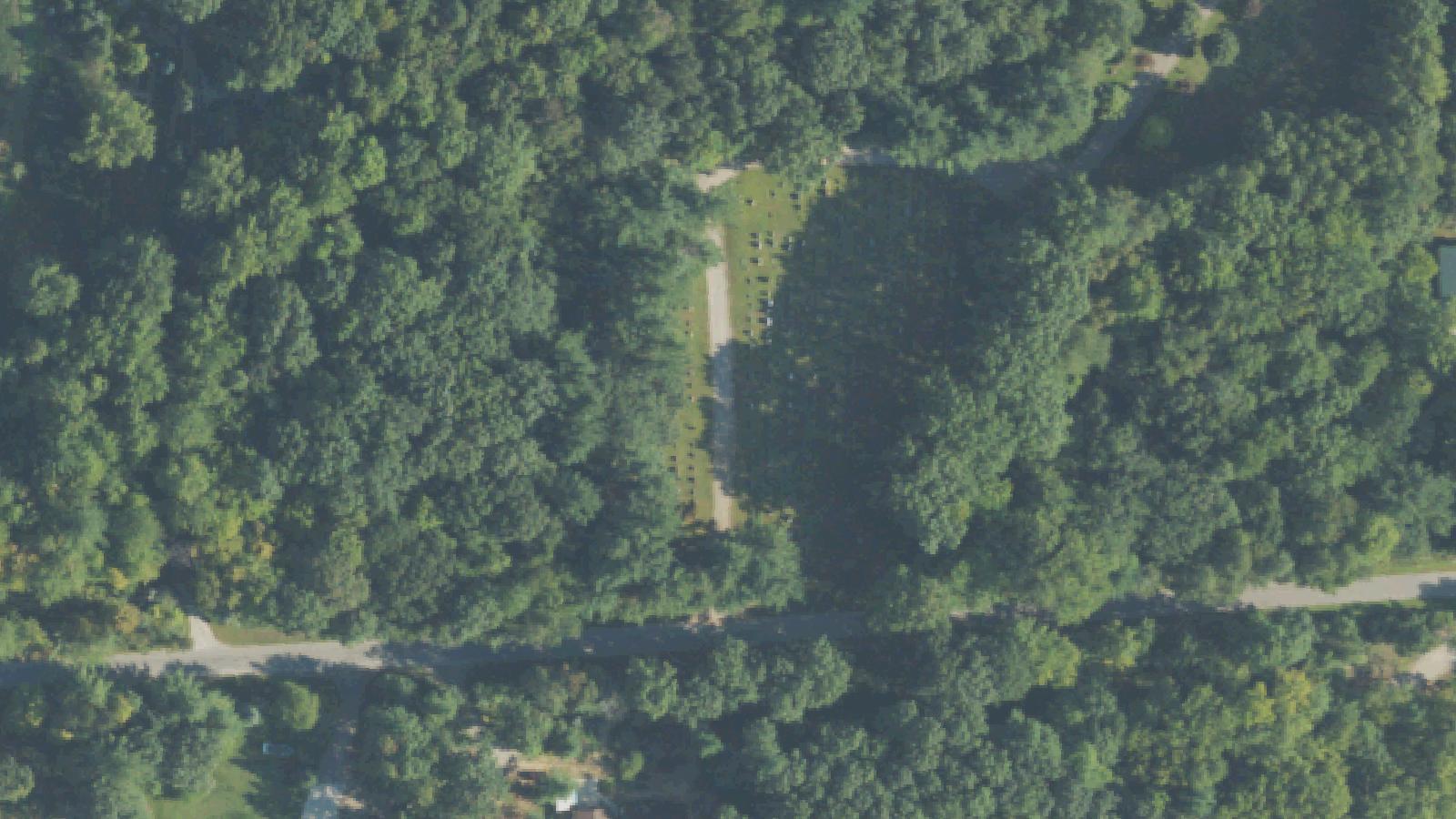
Old Quaker Cemetery—also known as Lapham Cemetery or the Old Quaker Settlement Cemetery—sits hidden in woodland several miles south of Nashville, Michigan, accessed via a narrow two-track dirt trail off Guy Road in Maple Grove Township, Barry County. The graveyard was established around 1837 by Quaker settlers who sought to farm the region but found the swampy terrain inhospitable.
Eli Lapham, a Quaker minister, arrived as the township's first settler in 1837 and is the eponymous source of the alternate cemetery name. John Mott, a prominent Jackson-area Quaker, had patented 1,520 acres in the region a year earlier in 1836–1837, and his sons-in-law William Sutton and Abram Quick followed shortly after. The Quick family connection is particularly significant: at least one member of the Quick family buried here served in the Revolutionary War, making this one of the few Michigan cemeteries with confirmed 18th-century military interments.
The cemetery contains 61 documented Quaker burials, the majority from the 19th century with the earliest remains from the 1700s. Many headstones have suffered weathering and vandalism over the decades, though the local historical society has maintained the site with mowing and installed a historical marker at the entrance. After the farming community dispersed—unable to make a viable livelihood on the boggy land—the cemetery was largely forgotten, surrounded by the returning forest. Today, only the graveyard and Quaker Brook remain from the original settlement.
Sources
- https://99wfmk.com/quaker-cemetery-nashville/
- https://lostinmichigan.net/the-spirits-of-quaker-cemetery-2/
- https://www.waymarking.com/waymarks/wm16868_Old_Quaker_Settlement_and_Cemetery_Nashville_MI
Overwhelming sinking and nausea sensation on entryUnexplained lights on hilltop at nightMale apparition appearing to point or aim a firearm at visitorsSense of being watched from surrounding woodsWandering shadow figures at dusk
Old Quaker Cemetery has accumulated a persistent paranormal reputation among residents of rural Barry County and visitors who seek it out. According to accounts documented by 99WFMK and Lost in Michigan, multiple independent witnesses have reported an intense physiological reaction upon entering through the cemetery gate — described as a heavy sinking or nauseating feeling, distinct from ordinary unease and noted even by skeptics.
Odd lights have been observed moving on the cemetery hill after dark, with no identifiable source such as passing vehicles or nearby structures. The most dramatic reported phenomenon is the apparition of a male figure who appears atop the hill and appears to aim or point what witnesses describe as a firearm directly at them, before disappearing. This account is consistent across multiple visits documented online.
Local tradition and the 99WFMK account speculate that this figure may be a member of the Quick family — specifically a Revolutionary War soldier whose grave is among the 61 interments here — though no documented death record or specific historical event is attached to this attribution. The Lost in Michigan author, visiting in person, noted that the cemetery's well-maintained condition in recent years seemed to have quieted some of the activity, though the general sense of being watched in the surrounding woods remained. No real-person cause-of-death claims are attached to any of the named buried individuals in these accounts.
Notable Entities
Unidentified male apparition (locally attributed to Quick family Revolutionary War soldier)