Dinner
Belgian Dinner + Feather Bowling
Steamed mussels, Belgian beer flights, and the chance to roll feather-stuffed wooden discs down the cafe's century-old indoor lanes. Staff frequently share Devos ghost stories on request.
- Duration:
- 2 hr
HauntBound archive · catalog record
Reported phenomena, as catalogued
+ 2 further entries on record
Belgian-American Detroit cafe and former Prohibition speakeasy famed for steamed mussels, feather bowling, and the lingering presence of longtime owners Yvonne and Robert Devos.
4300 Cadieux Rd, Detroit, MI 48224
Research updated May 2026
Age
All Ages
Cost
$$
Feather bowling lane rental: $35 per hour per lane Monday/Tuesday; $55 per hour per lane Wednesday–Sunday. League play is September–April, Tuesday–Thursday 7–10pm; remaining nights are open for public rental, with reservations recommended. Early opening for large groups requires both lanes at $75/hr each.
Access
Wheelchair OK
Flat urban sidewalk; street parking.
Equipment
Photos OK
Est. 1933 · Prohibition-era Belgian-American speakeasy · One of four venues outside Belgium with a feather-bowling league · 56-year continuous Devos family ownership (1962-2018) · Hub of Detroit's Belgian and Flemish cultural community
The Cadieux Cafe sits at 4300 Cadieux Road on Detroit's east side, in the heart of what was once a thriving Belgian immigrant neighborhood. The building opened as a cafe in 1933 — the year Prohibition ended — though local accounts hold that it operated quietly as a speakeasy through the late 1920s and early 1930s, serving the surrounding Belgian-American community in the years before legal liquor sales resumed. The cafe became a gathering place for Flemish immigrants who organized around pastimes carried from the old country: pigeon racing, archery, darts, and feather bowling.
In 1962 the cafe was purchased by Belgian immigrants Robert and Yvonne Devos, who would shape its identity for the next half-century. The Devos family installed and protected the cafe's pair of clay feather-bowling lanes — making Cadieux one of only four venues outside Belgium to host a feather-bowling league — and built a kitchen reputation on steamed mussels, Belgian frites, and a deep beer list. Live music in the back room grew under their stewardship into a regular booking schedule.
The Devos family operated the Cadieux Cafe for 56 years before selling in November 2018 to Cliff Bell's co-owner Paul Howard and musician John Rutherford. The new ownership pledged to preserve the bar's Belgian programming and feather-bowling lanes, and the cafe has remained continuously open through the transition.
Robert and Yvonne Devos both predeceased their son Ronald Robert Devos, who died in September 2023 at age 65. The Devos parents are referenced as 'preceded in death' in Ronald's published obituary, confirming both died before that date.
Sources
The Cadieux Cafe's paranormal reputation is anchored in its 56 years of Devos family stewardship. According to WWJ Newsradio 950 and the Great Lakes Ghost Hunters of Michigan investigation report (December 2018), staff most often describe seeing Yvonne Devos seated in a blue dress at her favorite table near the entrance to the feather-bowling room — a spot she reportedly occupied during her decades behind the bar. Robert Devos's presence is most often reported in the basement, where he worked stocking and maintaining the bar's beer cellar.
The most frequently catalogued phenomena, per Michigan Haunted Houses and WWJ's interviews with staff, are mundane disturbances rather than full apparitions: doors closing on their own, objects falling from shelves with no apparent trigger, and items disappearing from one spot only to be found later somewhere else in the building. The phenomena are described by staff as warm and protective rather than threatening — the Devoses, the lore holds, are still watching over their bar.
A secondary local legend, recounted in audacy.com's WWJ coverage, describes a man struck and killed by a car outside the building who is sometimes seen darting across Cadieux Road toward the entrance before vanishing at the door. This account is single-sourced and is presented here as folklore rather than verified history.
The Cadieux Cafe was investigated on December 16, 2018 by the Great Lakes Ghost Hunters of Michigan, whose published report documents staff interviews and EVP attempts during the all-night session.
Notable Entities
Media Appearances
Steamed mussels, Belgian beer flights, and the chance to roll feather-stuffed wooden discs down the cafe's century-old indoor lanes. Staff frequently share Devos ghost stories on request.
Some links on this page may earn HauntBound a small commission when you book, at no extra cost to you. Our editorial picks are independent. Full disclosure
Every HauntBound history is researched from documented sources. We clearly separate verified historical fact from paranormal folklore.
Free Guide
10 verified stops, rated for families, mapped in order. Free.
One email to confirm, then the guide link. Unsubscribe anytime.
Detroit, MI
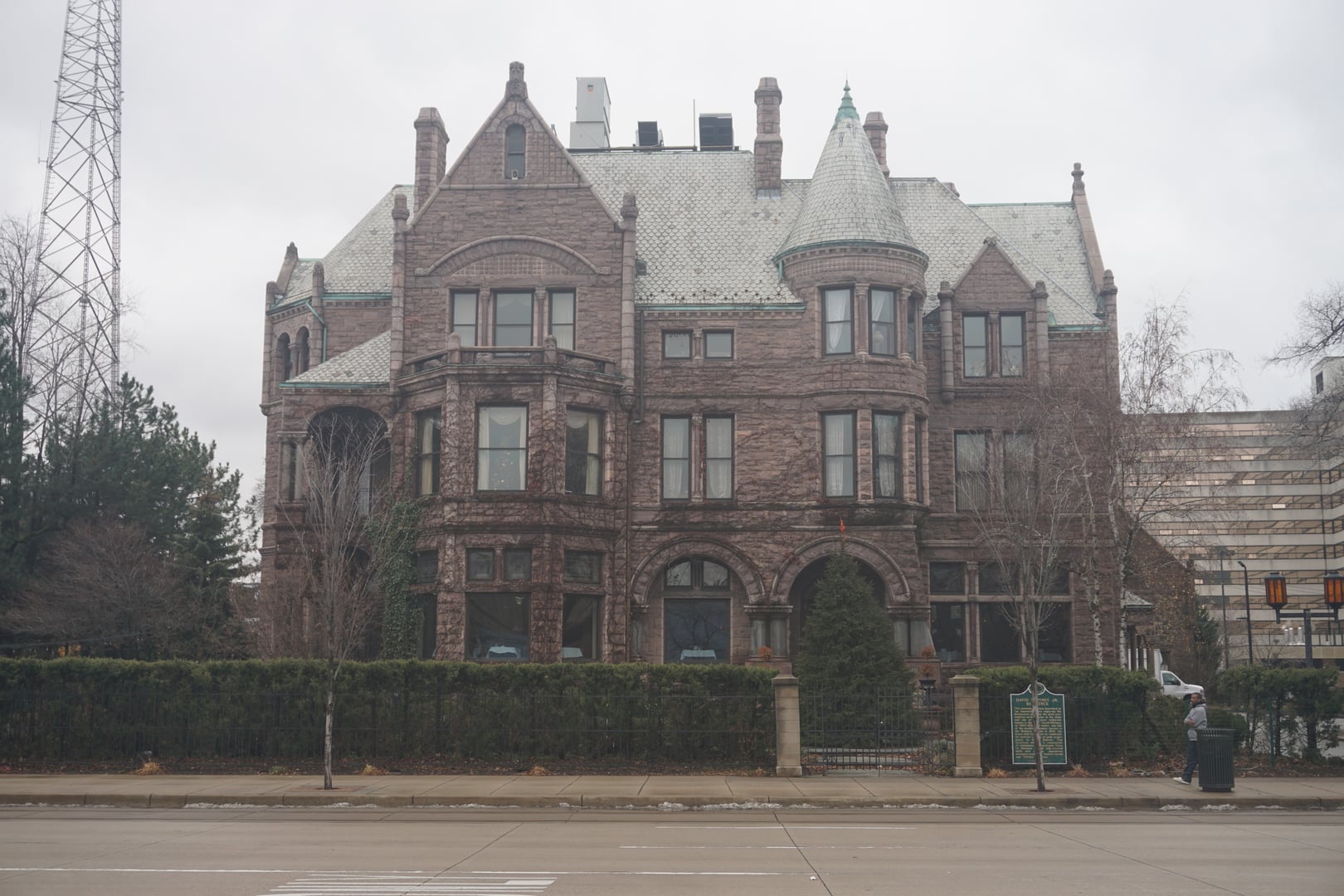
Completed in 1894 for Detroit lumber baron David Whitney Jr. — then the city's wealthiest citizen — the 22,000 sq-ft Romanesque Revival mansion was designed by Gordon W. Lloyd at a cost of roughly $400,000. After Whitney's death in 1900, the home passed through his widow Sara, the Wayne County Medical Society (1932), and the Visiting Nurse Association before opening as a restaurant in 1986.
Kewadin, MI
The Oasis Red Bull Tavern sits at 7204 Cairn Highway in Kewadin, a small unincorporated community in Antrim County in northern Michigan. The building was constructed in 1932, during Prohibition and the Great Depression, and has operated as a tavern and grill for generations. It remains an operating local bar and a fixture of the small Kewadin community.
Milwaukee, WI
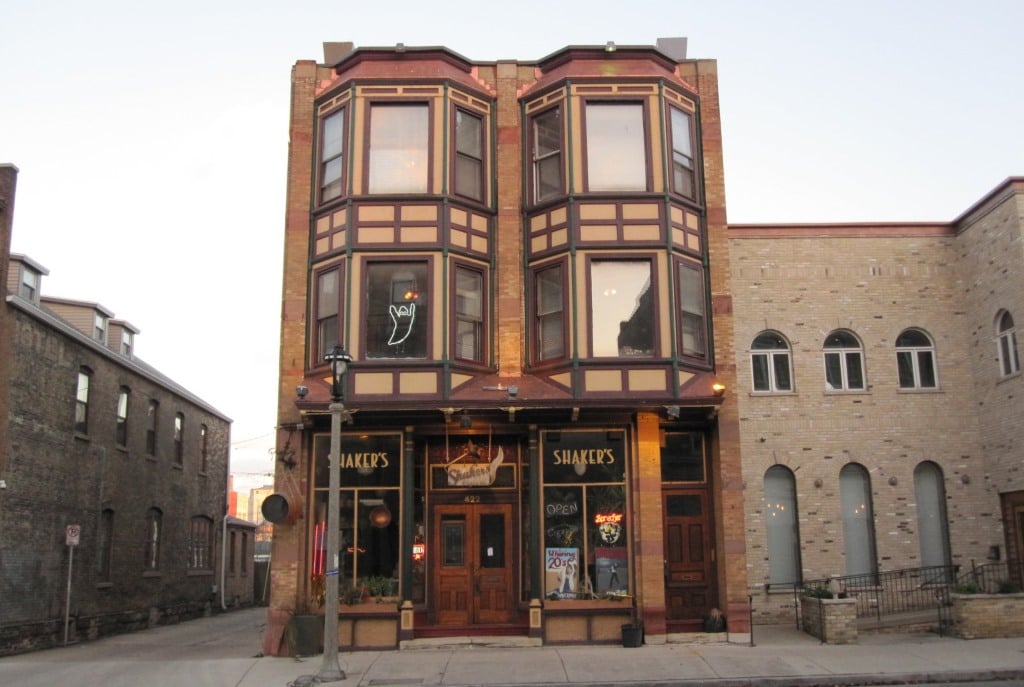
Shaker's Cigar Bar occupies an 1894 building in Milwaukee's Walker's Point neighborhood, built as a cooperage for the Schlitz Brewing Company. During Prohibition the building reportedly operated as a speakeasy associated with Frank and Al Capone, with rumored brothel use on its upper floors.