Drive-By
Exterior viewing of the 1904 Vogt Reel House
Stop on the public sidewalk to see the Jacobean Revival facade of Lexington's oldest operating firehouse, including the 'Phantom' engine livery when on station.
- Duration:
- 15 min
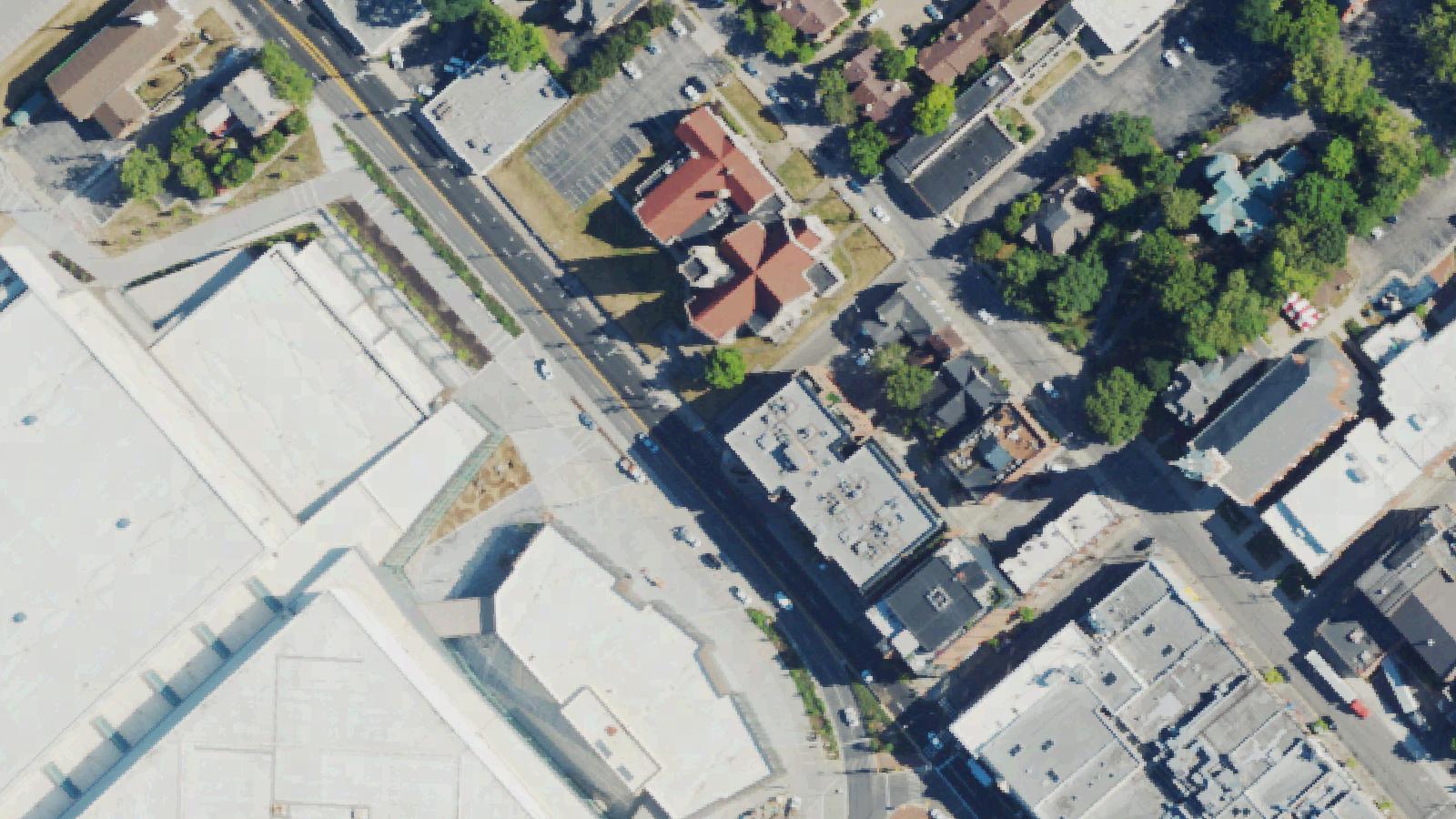 Aerial survey · USDA NAIP · public domain
Lexington's oldest operating firehouse, a 1904 Jacobean Revival station where firefighter Henry H. McDonald died in his bunk on Christmas Day 1945 and is now nicknamed 'The Captain' by his successors.
246 Jefferson Street, Lexington, KY 40508
Research updated September 2026
Age
All Ages
Cost
Free
Free to view from public sidewalk; interior closed to public.
Access
Wheelchair OK
Paved sidewalk; viewing only from exterior.
Equipment
Photos OK
Est. 1904 · Lexington's oldest fire station still in active operating use · Jacobean Revival-styled firehouse (1904) · Site of the Christmas Day 1945 line-of-duty death of Firefighter Henry H. McDonald · Featured in Firehouse magazine and FireRescue1's haunted firehouses roundup
Fire Station No. 4 — informally the 'Vogt Reel House' — opened in 1904 at 246 Jefferson Street as part of Lexington's early-20th-century professionalization of its fire service. The building is executed in Jacobean Revival idiom, an unusual style for an American firehouse, with brick and stone detailing that the city has carefully preserved through more than a century of continuous use. It is the oldest fire station in Lexington still in active operating service.
The station's defining biographical figure is Firefighter Henry H. McDonald. According to records compiled on the Supporting Heroes memorial site and confirmed by the Lexington Fire Department's annual line-of-duty-death observances, McDonald was 67 years old with 28 years of service when he died of a heart attack on December 25, 1945. He had been in good spirits that day, went to bed early in the station bunk room around 7:00 p.m., and was found unconscious roughly two hours later; he was pronounced deceased at St. Joseph Hospital. He was buried in Winchester Cemetery, in Clark County east of Lexington.
McDonald's death qualifies as a line-of-duty death and his name appears on the Kentucky Fallen Firefighter Memorial in Frankfort. Although McDonald died as a Firefighter, the crew of Station 4 informally 'promoted' him after his death and now refer to him as 'The Captain' — a posthumous honorific, not a rank he held in life. The station's current engine is nicknamed 'The Phantom' in tribute, with a skull-in-fire-helmet motif painted on the apparatus.
The station has been featured in Firehouse magazine on the centennial of its opening and in FireRescue1's roundup of 'America's Most Haunted Fire Stations.'
Sources
The station's ghost lore centers on Firefighter Henry H. McDonald — affectionately re-titled 'The Captain' after his 1945 death. According to a 2012 Smiley Pete Publishing feature and a Southern Spirit Guide write-up, retired Lexington Fire Department captain Lyndall Large kept track of two persistent phenomena during his time at the station.
The first centers on a cane-bottom rocking chair said to have been McDonald's favorite seat. Large told Smiley Pete the chair appears to rock on its own and to migrate between floors of the building — moved to one location at the end of a shift and found in another the next morning, even when the station has been locked overnight. Resident firefighters describe hearing the chair rocking in the attic when no one is upstairs.
The second phenomenon is auditory: heavy bootsteps on the building's cast-iron spiral staircase, typically between 1 a.m. and 4 a.m. Large additionally recounted answering a 3 a.m. phone call and seeing a ghostly figure near the phone before it vanished.
In keeping with firehouse tradition, the station crew has built McDonald into the station's identity rather than treated him as a frightening presence. The current engine is named 'The Phantom' and painted with a skull-in-fire-helmet motif. Lexington firefighter culture treats the haunting as a fond memorial to a 28-year veteran who died peacefully in his bunk on Christmas Day, and the building remains in active 24-hour operation by the Lexington Fire Department.
Notable Entities
Media Appearances
Stop on the public sidewalk to see the Jacobean Revival facade of Lexington's oldest operating firehouse, including the 'Phantom' engine livery when on station.
Some links on this page may earn HauntBound a small commission when you book, at no extra cost to you. Our editorial picks are independent. Full disclosure
Every HauntBound history is researched from documented sources. We clearly separate verified historical fact from paranormal folklore.
Free Guide
11 verified stops, rated for families, mapped in order. Free.
One email to confirm, then the guide link. Unsubscribe anytime.
Lexington, KY
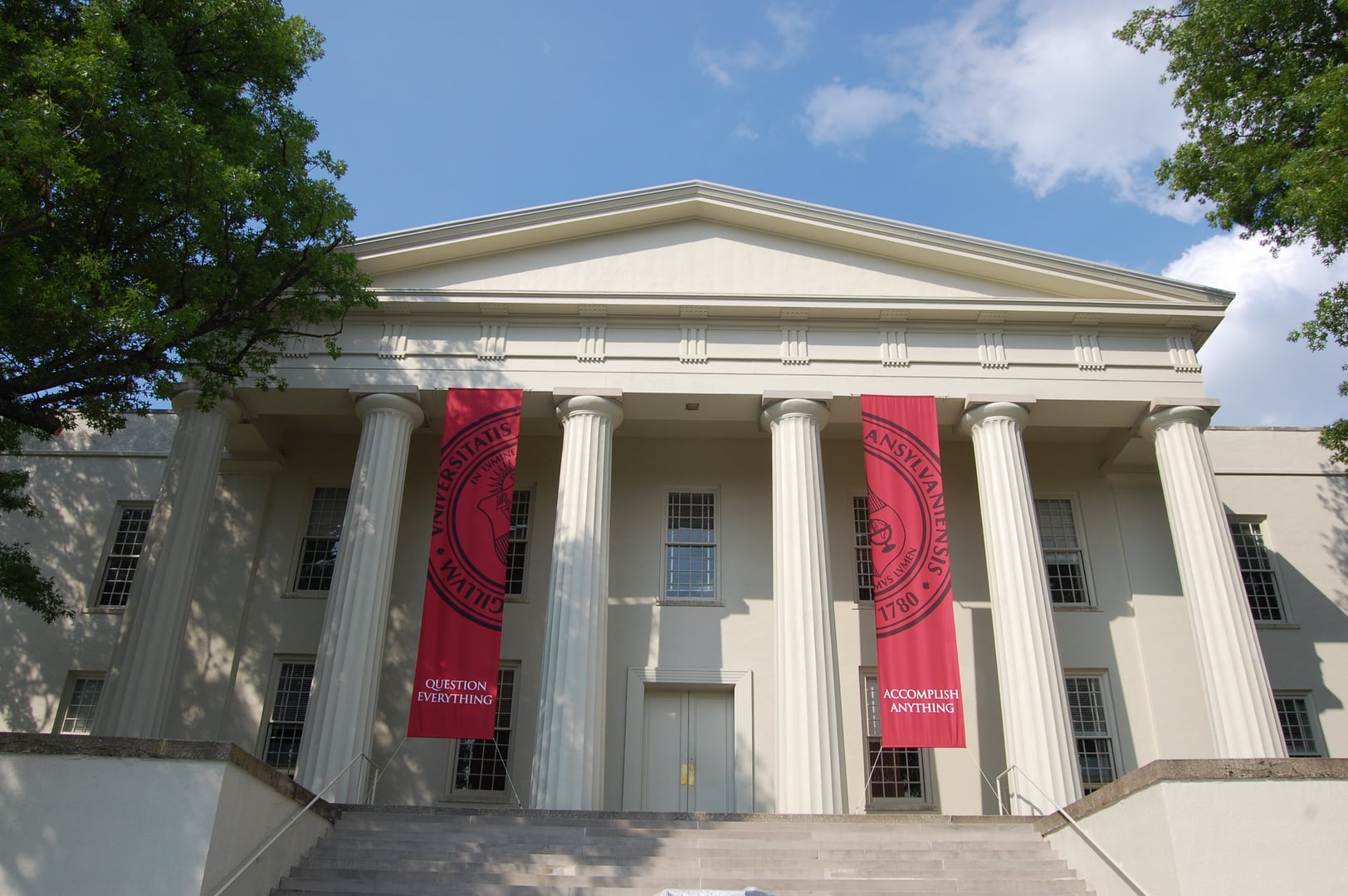
Old Morrison was completed in 1834 as the main building of Transylvania University, designed by Gideon Shryock in the Greek Revival style. It is named for benefactor Colonel James Morrison and was largely destroyed by a fire in May 1969 before being rebuilt and restored. A crypt at the north end holds remains attributed to 19th-century botanist Constantine Rafinesque.
Louisville, KY
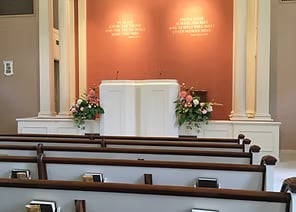
The First Church of Christ, Scientist in Old Louisville is a classical-revival Christian Science church on S. 3rd Street, distinguished by its columned front portico facing what was once Louisville's Millionaires Row. The congregation has occupied the building through the twentieth century and remains active today. Its location sits roughly two miles north of the former Camp Zachary Taylor, the largest U.S. WWI training cantonment, which figures heavily in the church's most famous local legend.
Richmond, KY
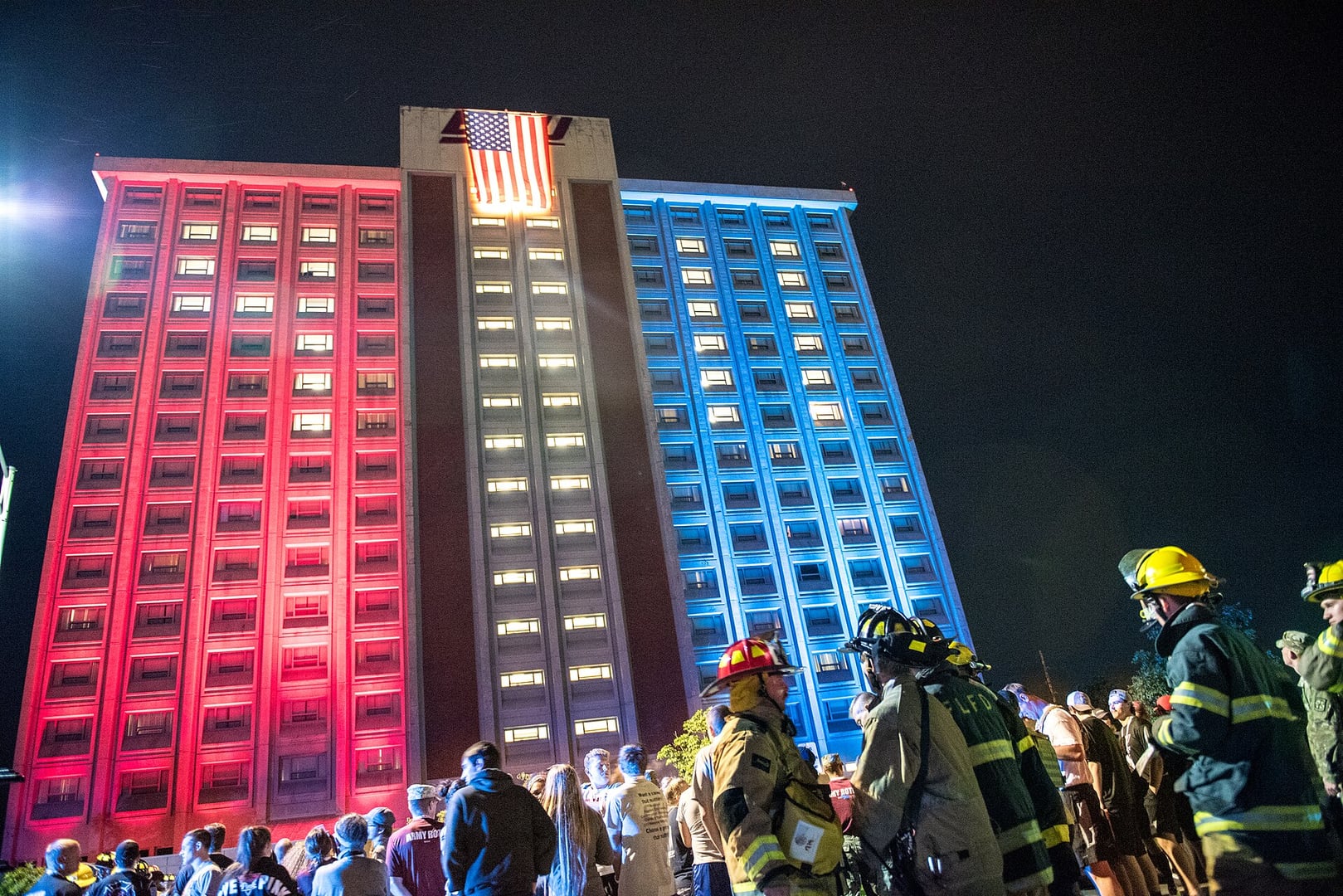
Keene Hall is a 16-story, 1969-built residence hall on the campus of Eastern Kentucky University in Richmond, Kentucky. It houses roughly 582 students across 308 rooms and reopened in August 2024 following an extensive renovation. The hall is named for William L. Keene, a longtime English professor who retired in 1965 after 39 years on the EKU faculty.