Drive-By
Exterior visit during a campus walk
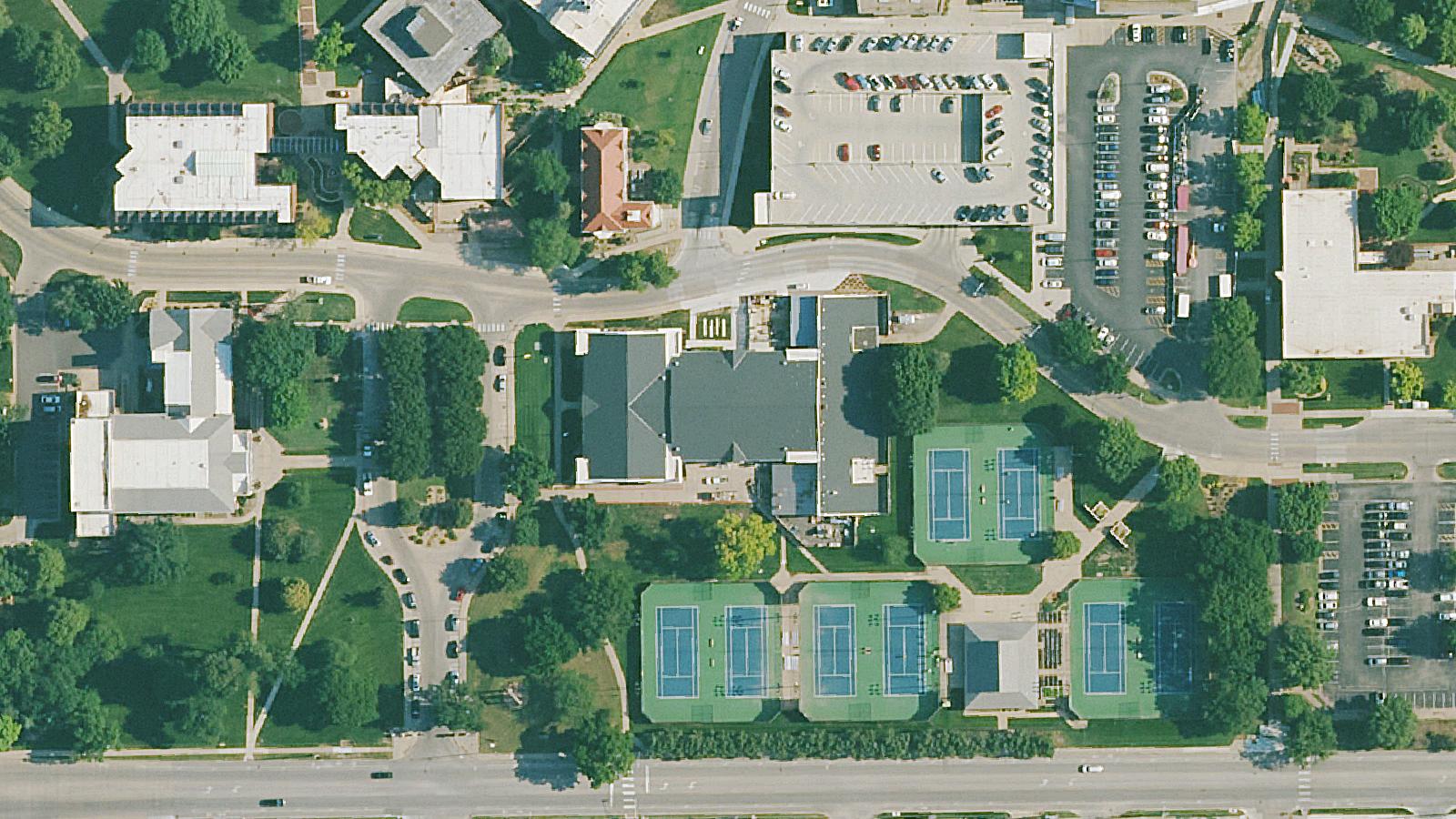
View Wilner Auditorium from the campus walkways; the interior is open during ticketed productions and box-office hours.
- Duration:
- 30 min
 Aerial survey · USDA NAIP · public domain
1938 PWA-built theater and commons named for longtime speech-and-theater chair George Wilner; campus lore frames the friendly Wilner ghost as the one keeping the lights on and the doors closing properly.
1845 Fairmount St, Wichita, KS 67260
Research updated May 2026
Age
All Ages
Cost
Free
Building exterior is free to visit; ticketed for productions through the WSU box office.
Access
Wheelchair OK
Paved campus walkways; auditorium has accessible seating.
Equipment
Photos OK
Est. 1938 · Funded by the federal Public Works Administration in the New Deal era · Original Auditorium and Commons Building of the University of Wichita · Named for longtime speech-and-theater chair George D. Wilner (1923-1959) · Active main-stage venue for WSU's School of Performing Arts
The building that is now Wilner Auditorium was constructed in 1938 with funding from the federal Public Works Administration as part of a wave of New Deal-era investment in the University of Wichita (which became Wichita State in 1964). It was originally the Auditorium and Commons Building, combining the campus's main performance space with student commons and dining functions, and it remains one of the signature New Deal-era buildings on the WSU campus.
The building was later renamed Wilner Auditorium to honor George D. Wilner, who joined Fairmount College in 1923 as head of speech and theater and served the program for nearly four decades until his retirement in 1959. Wilner directed major university productions, mentored student actors, and shaped the speech curriculum across a period that spanned the institution's transition from a private college into a municipal university and ultimately into Wichita State University. He died in 1976.
The Wilner stage continues to host the WSU School of Performing Arts' theater and musical-theater productions and serves as a community performance venue. The 553-seat auditorium retains many of its 1930s details and remains one of the most actively used historic theaters on campus.
Sources
The Sunflower, WSU's student newspaper, has run multiple features on Wilner Auditorium's ghost stories, both in a 2010s overview of Wichita State hauntings and in a 2020s update interviewing staff and faculty. Faculty and crew describe flickering lights, doors that close on their own, disembodied voices, and the occasional apparition, with the activity attributed to George Wilner himself as a 'friendly ghost' watching over the building.
In the Sunflower's reporting, Wilner's ghost is said to roam the halls 'to make sure the building is kept in tip-top condition, opening and closing doors, talking to himself, and checking the light bulbs.' Visit Wichita repeats the framing on its haunted-places page.
Not every account is gentle. The Sunflower has also reported that a campus police officer and a trainee both saw a shadowy figure in the balcony and the light-box area during a late-night shift, and that custodians have described disembodied red eyes in the shadows of the stage. These accounts are framed as witness-level testimony from staff and law-enforcement, and we treat them as well-attested workplace folklore rather than independently confirmed events.
Because George Wilner is the explicit named figure in the lore, we note the real-person attribution carefully: documented life dates (1923 start at Fairmount, retirement 1959, death 1976) match the chronology of the auditorium being named for him and of the post-death 'friendly ghost' framing, with no apparent biographical contradictions in the legend.
Notable Entities
View Wilner Auditorium from the campus walkways; the interior is open during ticketed productions and box-office hours.
Some links on this page may earn HauntBound a small commission when you book, at no extra cost to you. Our editorial picks are independent. Full disclosure
Every HauntBound history is researched from documented sources. We clearly separate verified historical fact from paranormal folklore.
Free Guide
11 verified stops, rated for families, mapped in order. Free.
One email to confirm, then the guide link. Unsubscribe anytime.
 Aerial survey · USDA NAIP
Lawrence, KS
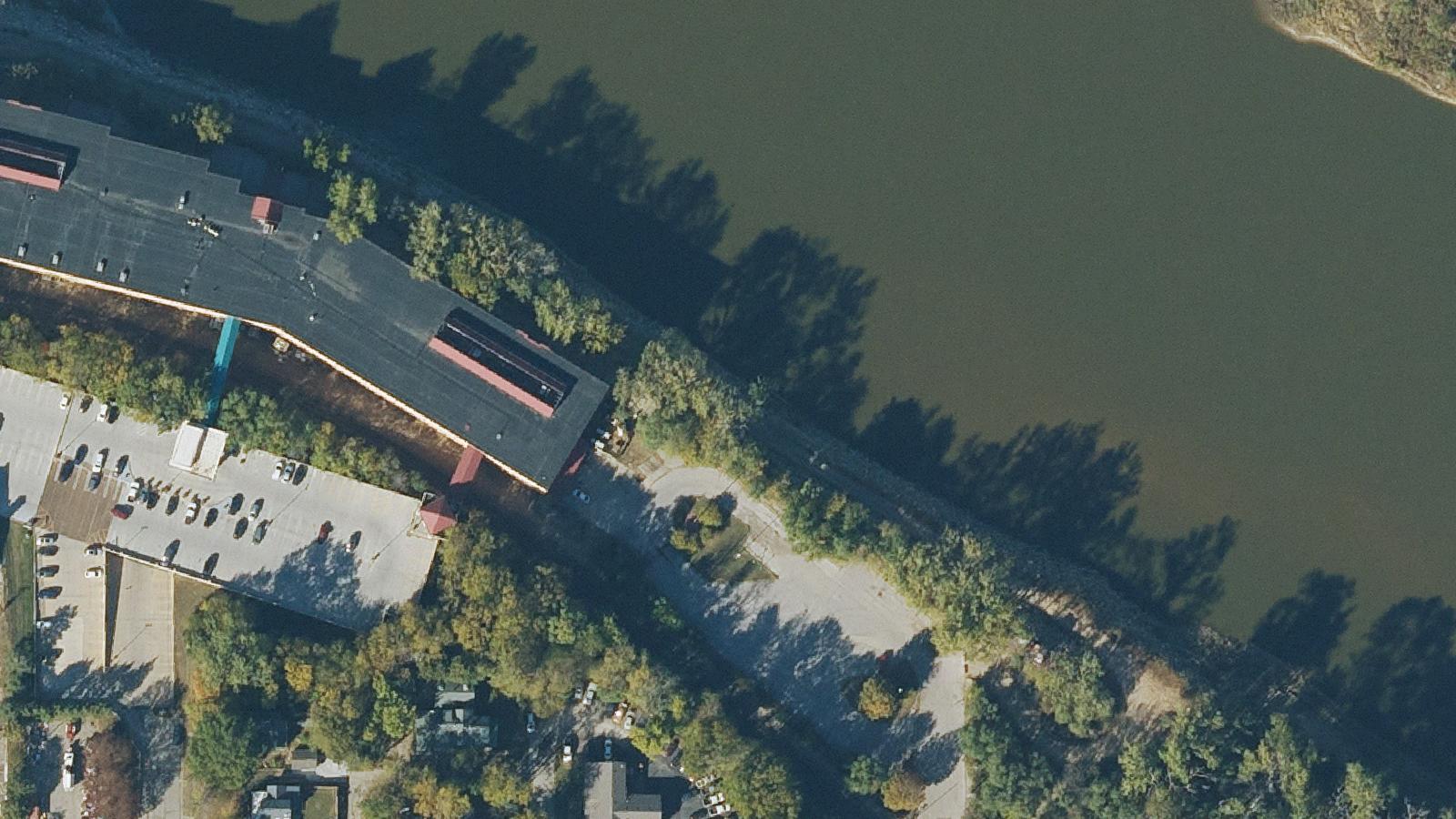
The building at 1501 New Hampshire Street in Lawrence began life in the 1950s as a church for the Full Gospel Christian Assembly. After the congregation dissolved, the Lawrence Community Theatre purchased the building in 1984 and converted it into a performing arts center, staging productions there until the company relocated to a new $7 million facility on Bauer Farm Drive in 2013. Since roughly 2014 the original building has been occupied by Vintage Church, which retained the stage and theater seating.
 Aerial survey · USDA NAIP
Wichita, KS
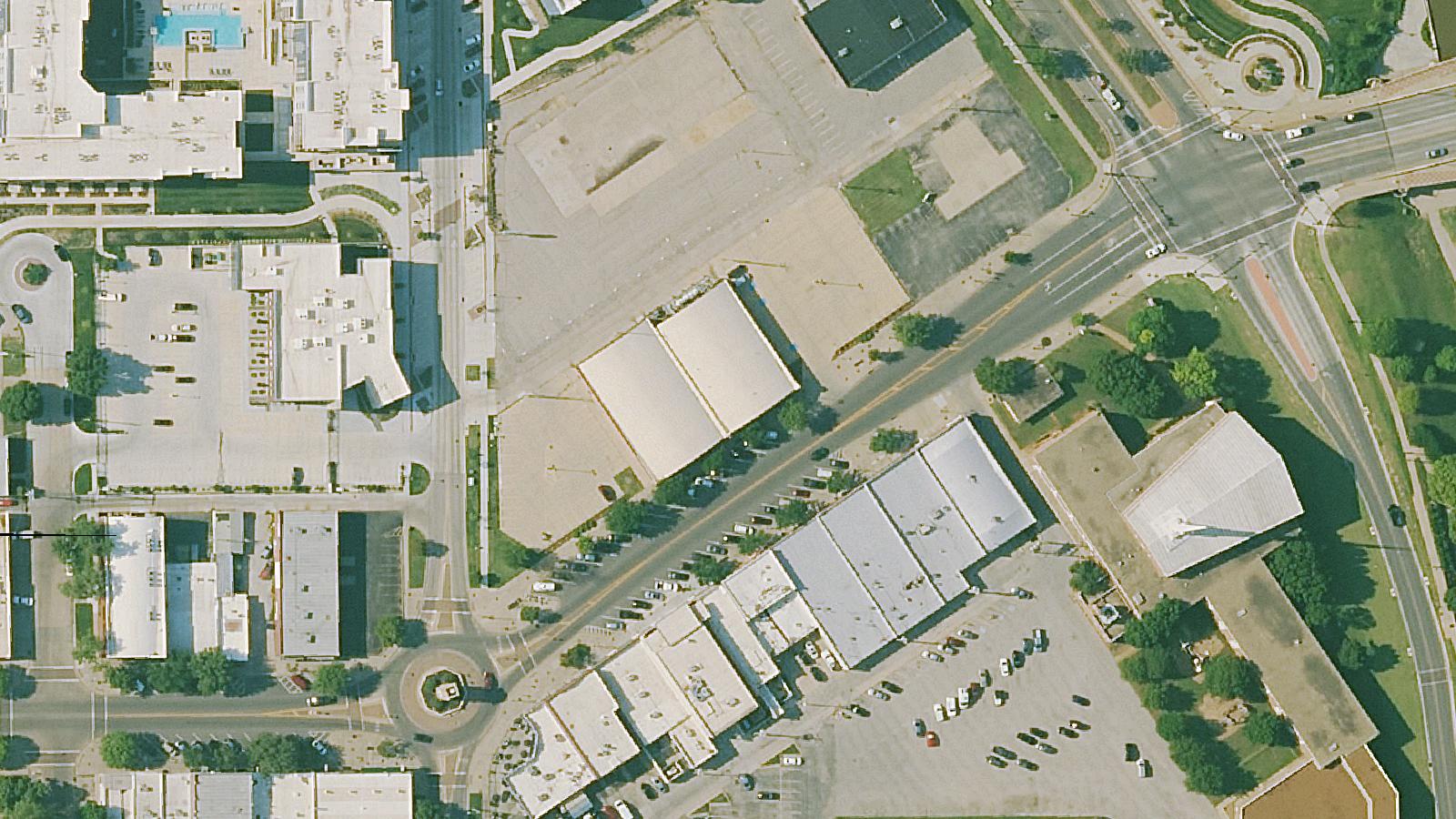
The building at 535 W Douglas Avenue is best known as the 1920s home of the Travel Air Manufacturing Company, founded in 1925 in Wichita by aviation pioneers Clyde Cessna, Walter Beech, and Lloyd Stearman. The building now houses Salon 5thirty5 (The Perfect Touch beauty salon), an active hair and nail salon.
 Aerial survey · USDA NAIP
Wichita, KS
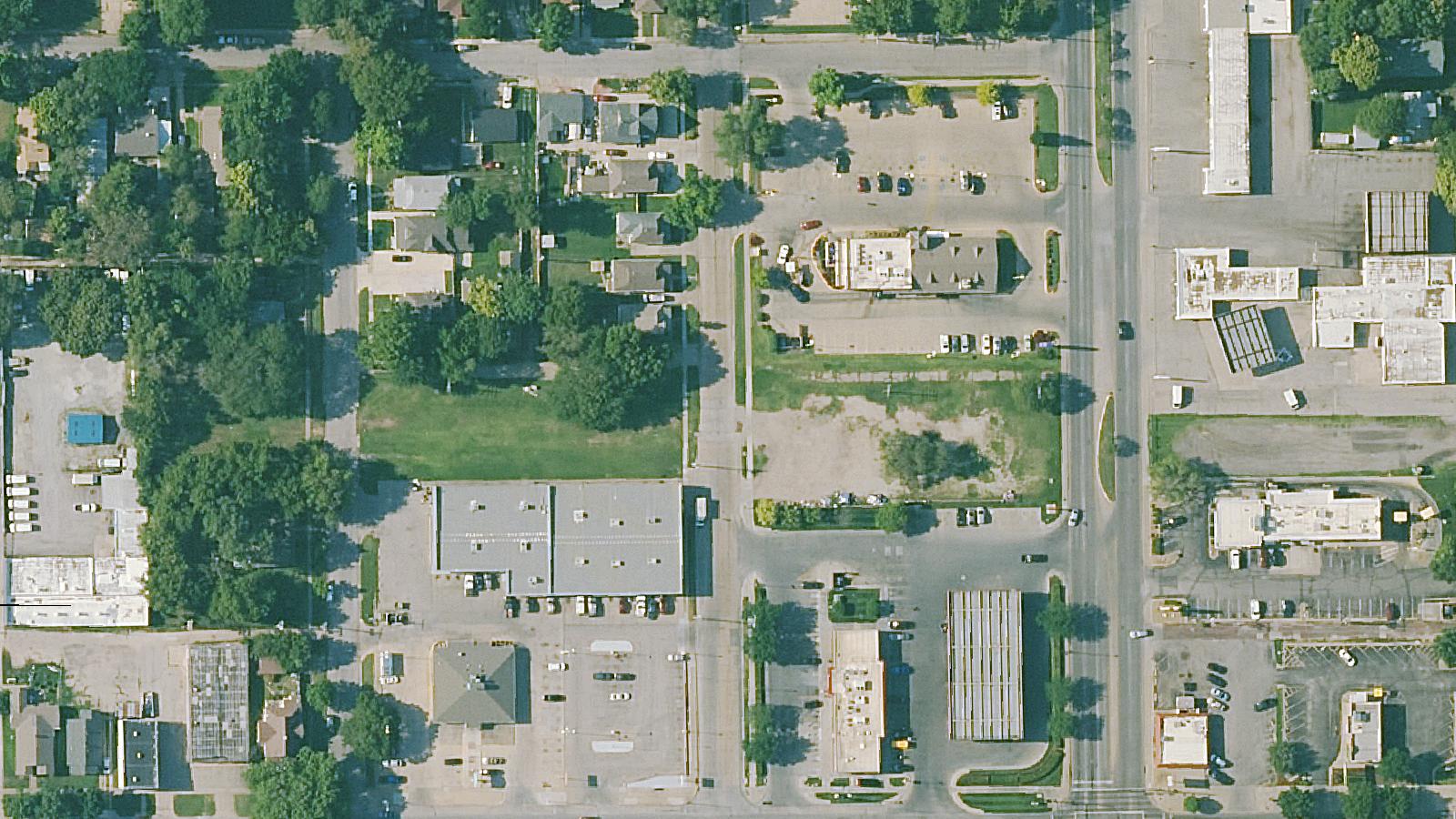
The building at 905 W Douglas Avenue is more than 120 years old and sits in Wichita's historic Delano district. For roughly six decades it housed Central Plains Novelty, a family-run costume and novelty store. Today the storefront is home to Spektrum Muzik, a record store and print shop selling vinyl, CDs, and tapes.