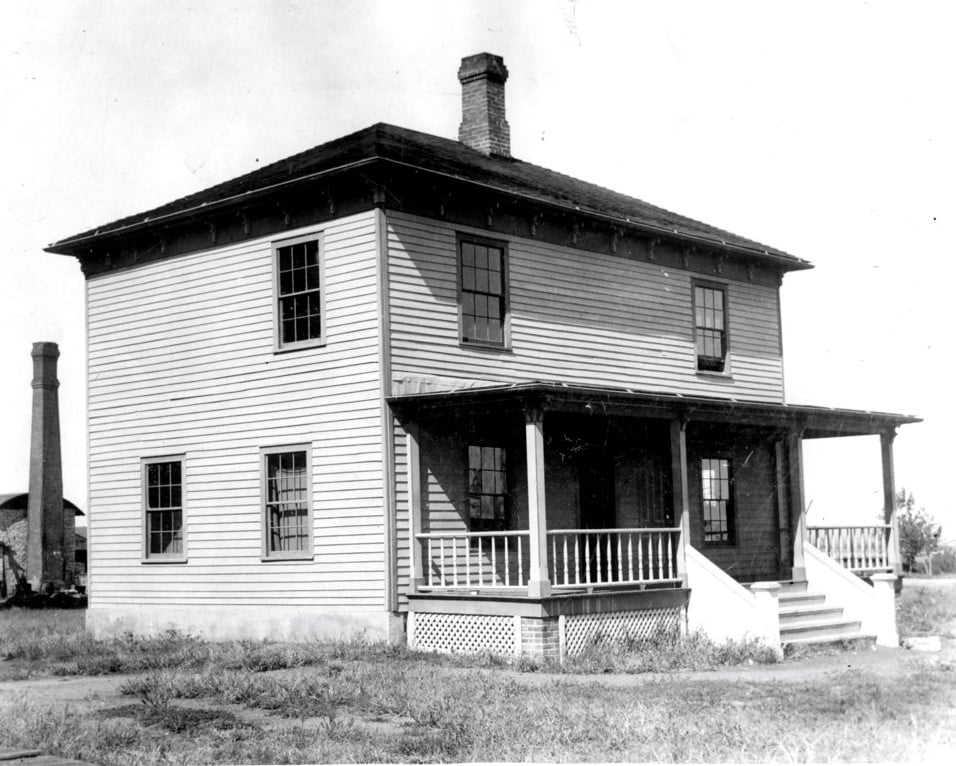
Est. 1872 · 19th-century Kansas state psychiatric institution · site associated with Kansas's 1913 eugenics-era forced sterilizations · 1,157-grave patient cemetery, nearly all unmarked
Topeka State Hospital was established in 1872 (admitting patients later that decade) to relieve overcrowding at the Osawatomie State Hospital, Kansas's first publicly funded asylum. Located on West 6th Street in Topeka, it grew over the following century into a large multi-building campus that at one point housed the state's facility for the criminally insane.
The institution became a national symbol of psychiatric abuse and systemic neglect. Investigative accounts from the twentieth century described patients held in restraints for extended periods, with one widely cited report of a patient restrained so long that skin had grown around the restraints. Under Kansas's 1913 eugenics law, patients were subjected to forced sterilizations, and treatments included hydrotherapy and other now-discredited interventions.
The hospital was selected for closure and ceased operations on May 17, 1997. The historic center building and several associated structures were demolished in June 2010, and much of the grounds has since been redeveloped.
The most enduring physical reminder of the institution is its cemetery, a 2.8-acre plot on the northeast corner of the former grounds. It holds 1,157 patient burials accumulated over roughly 75 years, of which only about sixteen have headstones. The cemetery is documented by the Kansas Historical Society, Find a Grave, and BillionGraves.
Sources
- https://en.wikipedia.org/wiki/Topeka_State_Hospital
- https://www.kansashistory.gov/p/topeka-state-hospital/11317
- https://www.findagrave.com/cemetery/2176965/topeka-state-hospital-cemetery
orbsapparitions in windowsdisembodied voicesunexplained music
According to multiple haunted-history accounts, including US Ghost Adventures and OnlyInYourState, the Topeka State Hospital campus developed a strong paranormal reputation tied to its grim institutional past. Reported phenomena have included orbs, shadowy apparitions glimpsed in the windows of the abandoned buildings before their demolition, and unexplained voices and music said to emanate from the structures on campus.
The cemetery, where more than a thousand former patients lie in largely unmarked graves, is a focal point of the lore. Visitors and ghost enthusiasts attribute a heavy, sorrowful atmosphere to the site, consistent with its history of institutional suffering. Some accounts report that local police who patrolled the area were reluctant to enter the grounds after dark.
These paranormal claims are anecdotal and unverified; the documented and contextualized facts are the institution's history of patient abuse and the existence of the patient cemetery, both of which ground the site's reputation in real tragedy rather than spectacle.
Notable Entities
former patients of the institution