Self-Guided Visit
Cemetery Walk
Visit Pioneer Cemetery on the KU campus, with graves dating to 1854 and a documented connection to Quantrill's Raid of August 1863. The site holds some of Lawrence's earliest settlers.
- Duration:
- 30 min
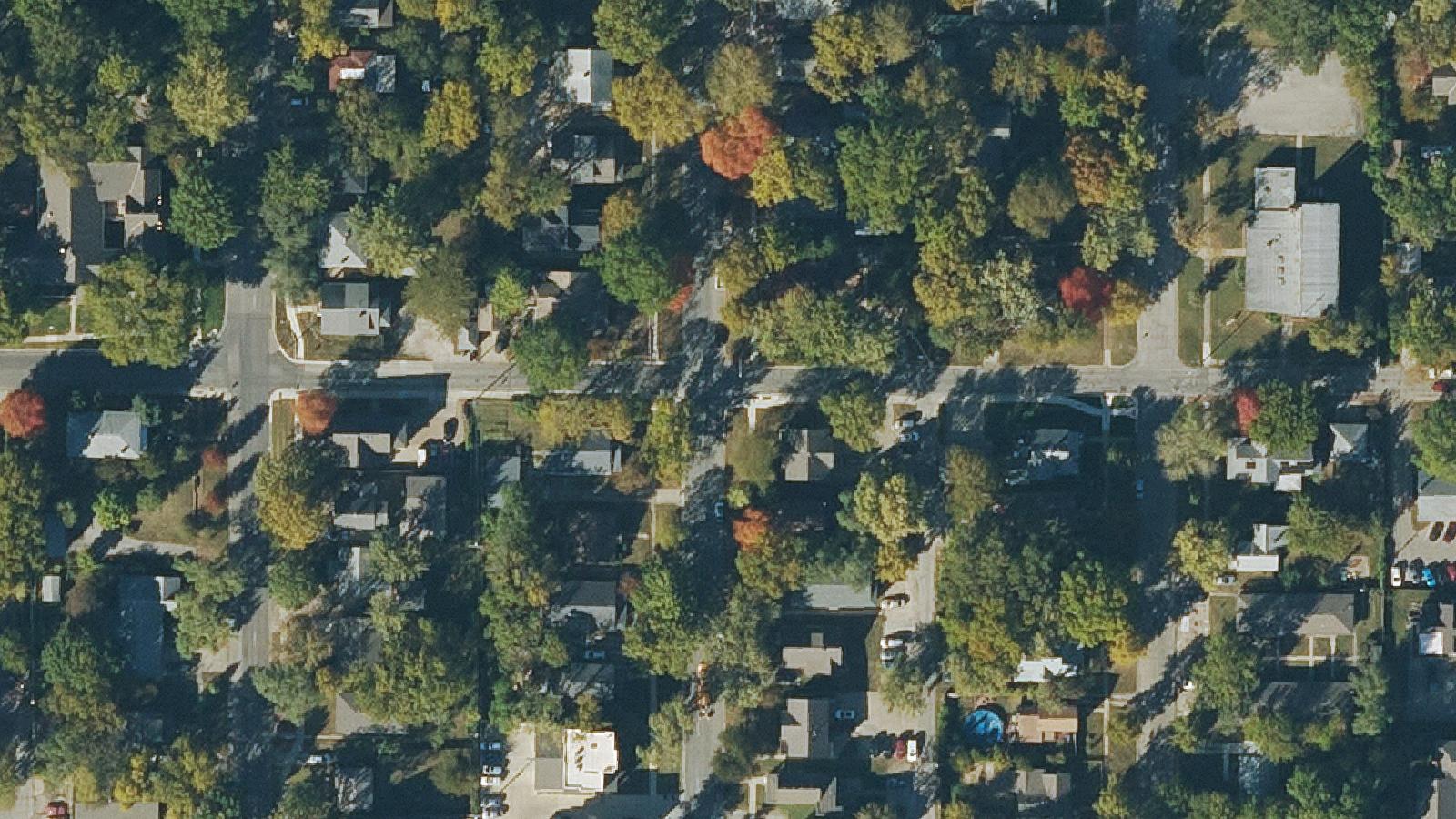 Aerial survey · USDA NAIP · public domain
Established in 1854 on what became the University of Kansas campus, this small cemetery received mass-grave burials from Quantrill's Raid of 1863 and remains one of Lawrence's most documented paranormal sites.
1700 block of Kentucky St, University of Kansas campus, Lawrence, KS 66045
Research updated June 2026
Age
All Ages
Cost
Free
The cemetery is on the University of Kansas campus and is publicly accessible at no charge. Ghost tour operators charge separately for organized visits.
Access
Limited Access
Small hilltop cemetery on KU campus with uneven ground and older grave markers.
Equipment
Photos OK
Est. 1854 · Lawrence's first formal cemetery, established 1854 · Received mass-grave burials from Quantrill's Raid, August 21, 1863 · Quantrill's Raid: approximately 150-200 men and boys killed in Lawrence · Incorporated into University of Kansas campus; some original burials remain
Pioneer Cemetery was laid out in 1854, the same year Lawrence was founded by New England Emigrant Aid Society settlers committed to establishing Kansas as a free state. The cemetery sat at the edge of the new town on a low hill near what is now the University of Kansas campus, and it received the burials of Lawrence's earliest residents — settlers, merchants, and families who arrived in the turbulent decade before the Civil War.
The cemetery's most consequential historical event occurred on August 21, 1863. William Clarke Quantrill led approximately 400 Confederate guerrillas out of Missouri and into Lawrence at dawn, executing one of the deadliest civilian massacres of the Civil War. In approximately four hours, the raiders killed somewhere between 150 and 200 men and boys — estimates vary in the historical record — burning much of the downtown and targeting men and boys specifically, leaving women and children alive.
Victims of the raid were buried in the days immediately following, in some cases in Pioneer Cemetery. The travelartsy.com account of the raid and its thirteen documented Lawrence historical sites places Pioneer Cemetery among the physical locations connected to the massacre. Most victims were subsequently reinterred at Oak Hill Cemetery on the east side of Lawrence, which now maintains the primary documented Quantrill's Raid memorial. However, some original burials at Pioneer Cemetery are believed to remain undisturbed.
As Lawrence grew and the University of Kansas developed its campus from 1866 onward, Pioneer Cemetery was incorporated into the university grounds. It remains a small, protected historic site within the campus.
Sources
Pioneer Cemetery is one of the stops on Lawrence's organized ghost tours, and its paranormal reputation draws almost entirely from the Quantrill's Raid connection. The August 1863 massacre produced a sudden, mass death event in a tight geographic area — an event sufficiently violent and unexpected that it left a permanent mark on the city's memory.
The KU student newspaper, the Daily Kansan, covered Lawrence ghost tours in a 2014 article that included an account from a tour guide describing a full-body apparition photographed at Pioneer Cemetery. The guide characterized the apparition as the clearest paranormal image he had encountered at any Lawrence site. The article did not independently verify the photograph or identify who took it, but its publication in a campus news context suggests at least some degree of documentation.
Explore Lawrence, the city's official tourism platform, includes Pioneer Cemetery among its listings for haunted and supernatural sites in Lawrence, noting the Quantrill's Raid connection explicitly. The cemetery sits close to the site of the violence — Quantrill's men moved through central Lawrence, which is near the campus — and the proximity gives the paranormal tradition a geographic specificity unusual for ghost lore.
The mass reinterment of most victims at Oak Hill Cemetery means Pioneer Cemetery's current burial population is not entirely clear from public records; the uncertainty about who remains buried at the original site adds to its uncanny character for visitors.
Notable Entities
Visit Pioneer Cemetery on the KU campus, with graves dating to 1854 and a documented connection to Quantrill's Raid of August 1863. The site holds some of Lawrence's earliest settlers.
Lawrence ghost tour operators include Pioneer Cemetery as a regular stop, recounting the Quantrill's Raid mass burials and reported apparitions. The Kansas University Daily Kansan documented a ghost tour guide's account of a full-body apparition photographed at the site.
Some links on this page may earn HauntBound a small commission when you book, at no extra cost to you. Our editorial picks are independent. Full disclosure
Every HauntBound history is researched from documented sources. We clearly separate verified historical fact from paranormal folklore.
Free Guide
11 verified stops, rated for families, mapped in order. Free.
One email to confirm, then the guide link. Unsubscribe anytime.
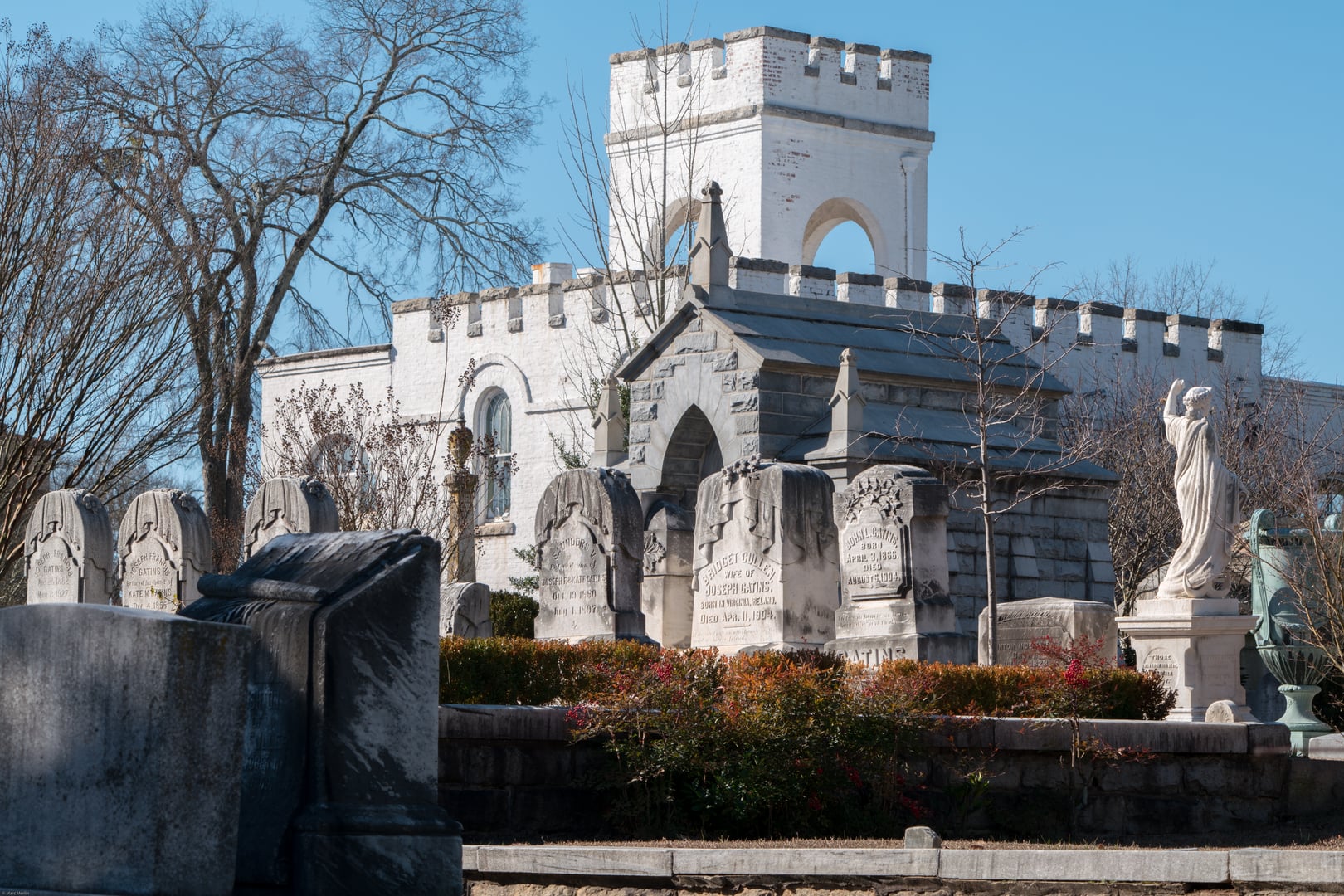
Atlanta, GA
Historic Oakland Cemetery was chartered in 1850 as the six-acre 'Atlanta Cemetery,' renamed Oakland in 1872, and expanded to 48 acres. Approximately 70,000 people are interred, including roughly 6,900 Confederate soldiers (3,000 unidentified), four Confederate generals, six Georgia governors, 27 Atlanta mayors, Margaret Mitchell, golfer Bobby Jones, and Maynard Jackson, Atlanta's first African American mayor. The cemetery was listed on the National Register of Historic Places on April 28, 1976.
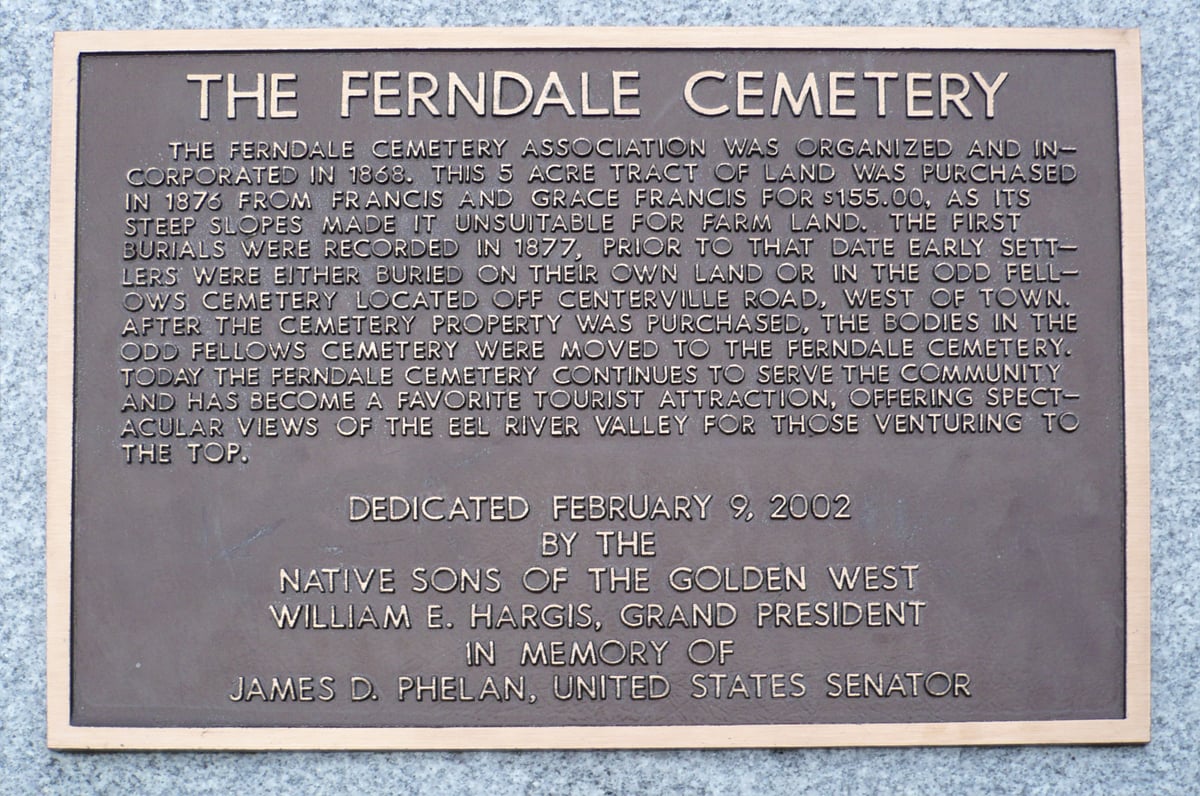
Ferndale, CA
Established in 1868 on a steep hillside above Ferndale's Eel River Valley, the cemetery served the Victorian dairy-farming and lumber community through its founding generations. Its moss-covered stonework and rhododendron canopy drew the production crew for Stephen King's 1979 Salem's Lot miniseries, which used the site as the fictional Harmony Hill Cemetery.
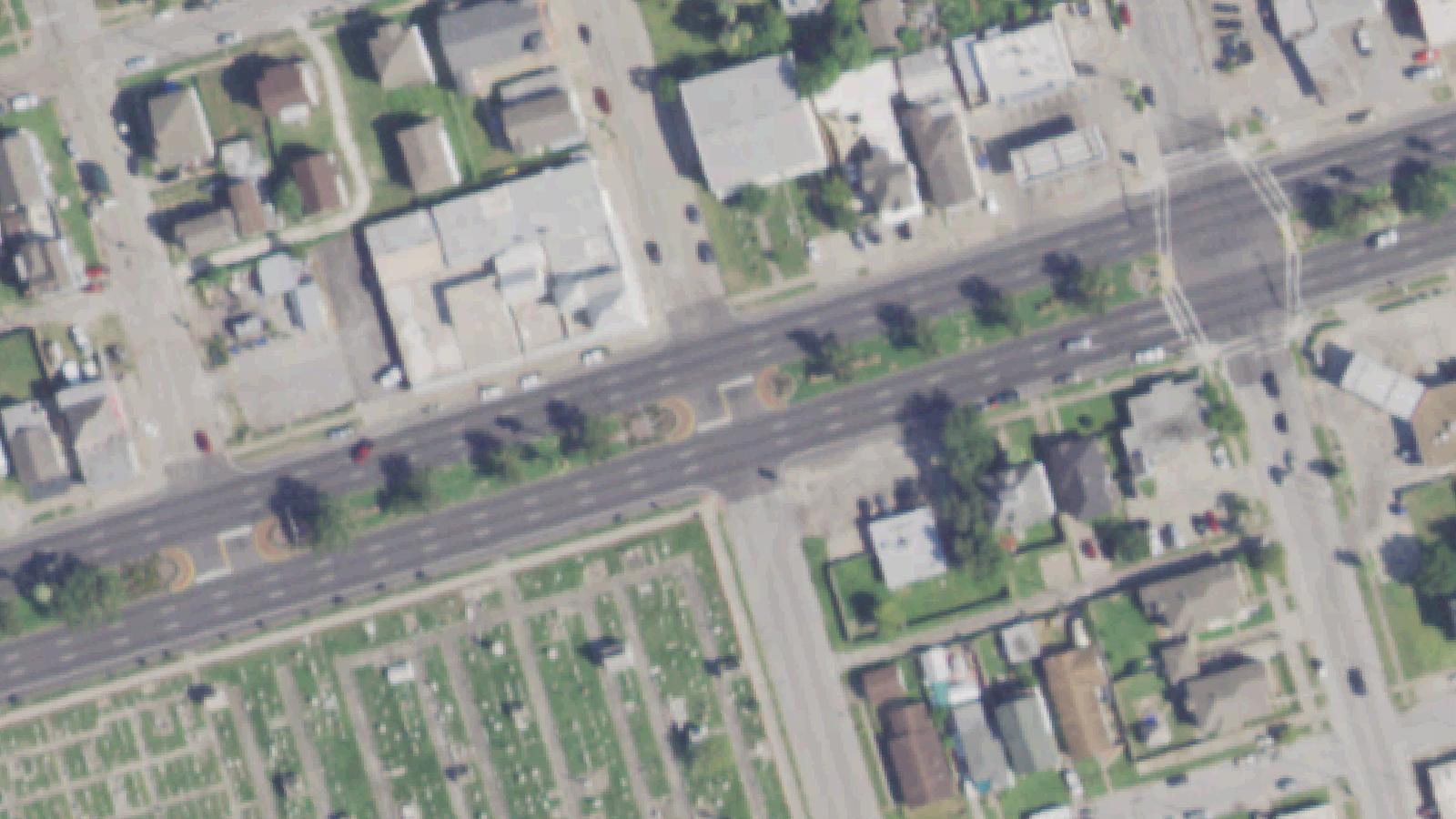 Aerial survey · USDA NAIP
Galveston, TX
The Broadway Cemetery complex in Galveston encompasses seven distinct historic burial grounds established between 1839 and 1939, collectively containing an estimated 36,000 or more burials. The complex includes sections dedicated to victims of the 1900 Great Storm — the deadliest natural disaster in U.S. history, which killed between 6,000 and 12,000 people in Galveston — as well as yellow fever epidemic victims, Confederate deserters executed by firing squad, and a documented 1894 murder case involving a woman who poisoned her four children.