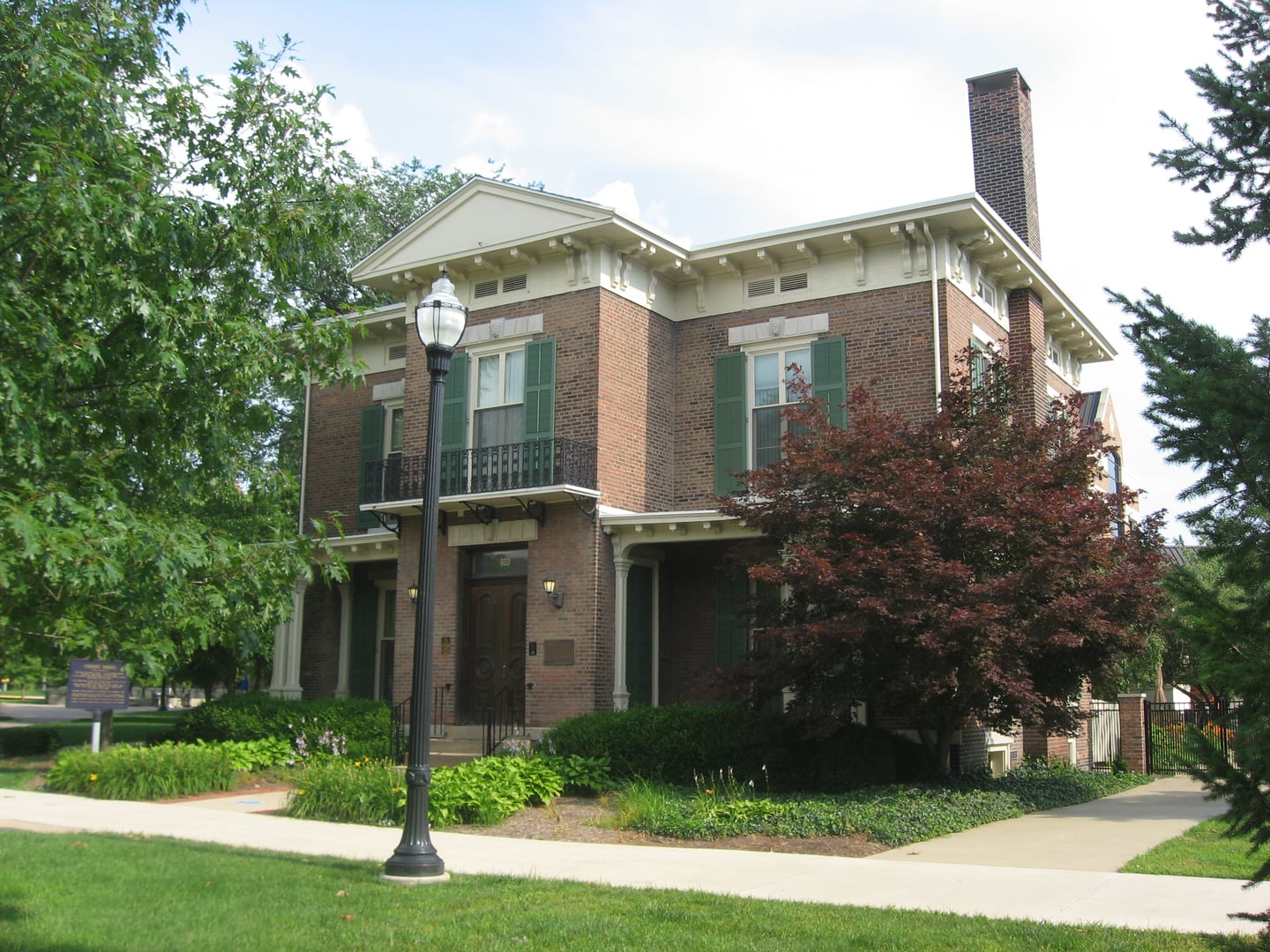
Est. 1868 · Civil War-era residential architecture · Riverside Historic District · Italianate style
Henry Gwathmey served in the Civil War before establishing himself in Evansville as city auditor. In 1868 he commissioned this two-story Italianate home at 619 SE 2nd Street, a few blocks from the Ohio River in what is now the Riverside Historic District. The house is a representative example of the ornate residential architecture that Evansville's prosperous post-war merchant and professional class favored: projecting bay window, decorative bracketed cornice, and a commanding entrance stair.
Mary Eliza Gwathmey lived in the finished home only briefly. She died not long after the family moved in, a loss that gave the house its longest-lasting story. Henry outlived her by many years and the property passed through several owners across the late nineteenth and twentieth centuries, each leaving the bones of the building mostly intact.
The Riverside District, where the Manor House sits, contains a concentration of Victorian-era homes that have survived Evansville's industrial development relatively intact. The block of SE 2nd Street between 6th and 7th Avenues retains much of its original residential character, which makes the Manor House legible as the period home it was.
Sources
- https://www.evansvilleliving.com/haunted-history/
- https://wkdq.com/ghosts-haunt-indiana-home/
Apparition in black clothingFigure near bay windowFigure on staircase
Residents of the Manor House over the decades have described encounters with a woman dressed in black who appears near the bay window on the first floor and on the interior staircases. Local tradition holds that the figure is Mary Eliza Gwathmey, who died shortly after Henry completed the home in 1868 — the implication being that she returned to inhabit a house she barely got to live in.
Evansville Living magazine documented the haunting accounts and traced the legend's origins to the Gwathmey family's brief and interrupted tenure. Radio coverage on WKDQ similarly reported the black-clad figure sightings. Neither source specifies a date of death for Mary Eliza Gwathmey from primary records, so her age and cause of death at time of publication were unverified; she is described only as having died soon after the house was finished.
Because the Manor House is a private residence with no public tours, the haunting exists primarily as neighborhood oral history and local journalism coverage rather than documented paranormal investigation.
Notable Entities
Mary Eliza Gwathmey (attributed)