Outdoor Exploration
Walk to the Pioneer Cemetery
Follow the wooded path from the soccer-field area east toward the Kitley-King family cemetery; listen for the harmonica tied to the John Kitley legend.
- Duration:
- 1 hr
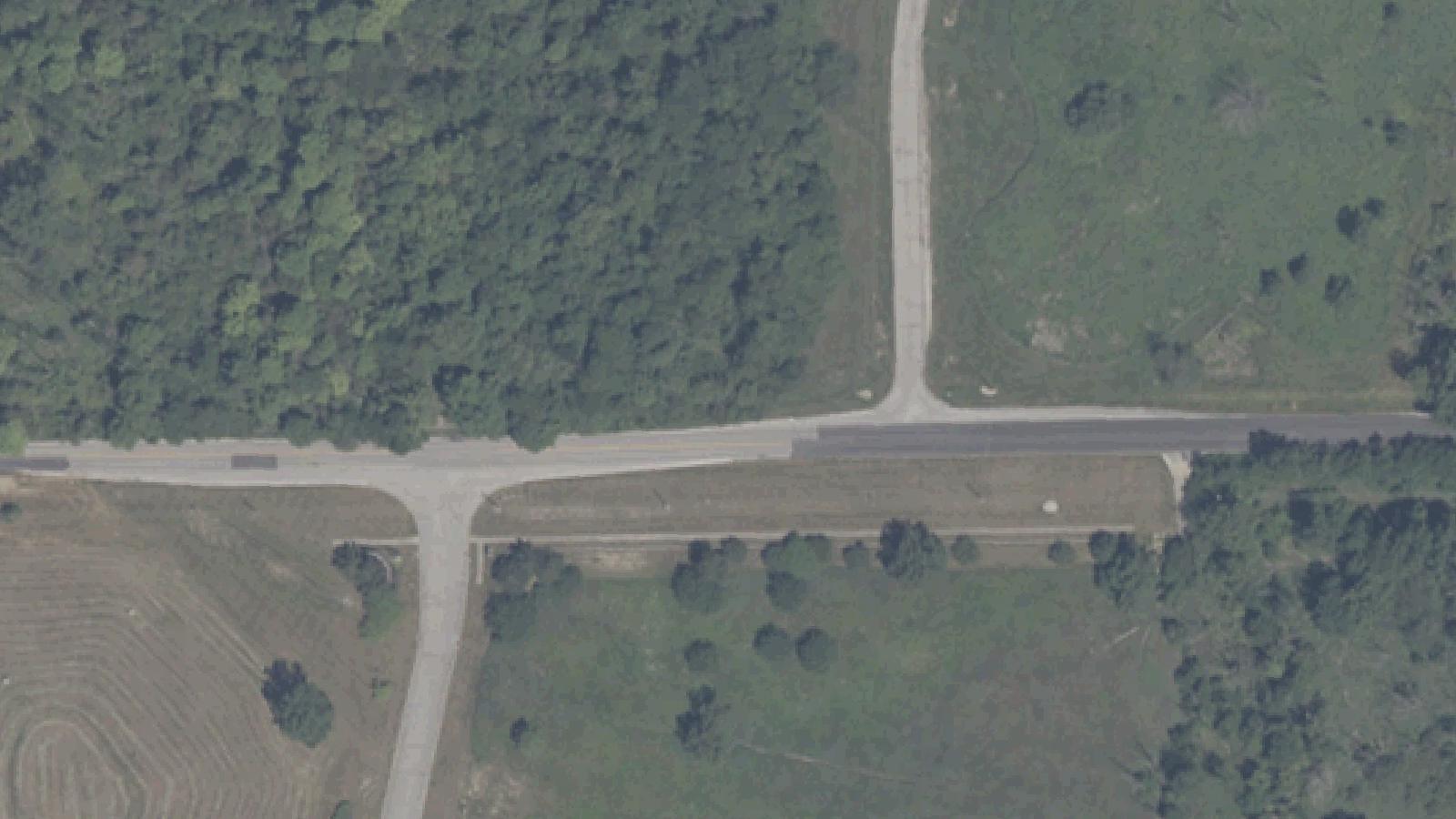 Aerial survey · USDA NAIP · public domain
A small pioneer cemetery within an Indy Parks property on Indianapolis's east side, where visitors report hearing harmonica music attributed to 12-year-old John Kitley, killed beside nearby train tracks in 1864.
11300 E Prospect St, Indianapolis, IN 46239
Research updated May 2026
Age
All Ages
Cost
Free
Free public park access during hours.
Access
Limited Access
Paved trails near soccer fields, but the cemetery itself sits in a wooded area with uneven ground.
Equipment
Photos OK
Est. 1864 · Pioneer-era family cemetery preserved within an active municipal park · Burials include John Kitley (d. April 12, 1864, age 12) · Located on the former Kitley family farm in eastern Marion County
Paul Ruster Park is an 82-acre Indy Parks property on the east side of Indianapolis, first acquired in 1970 and named in honor of Paul Ruster, a longtime east-side resident known for advocating for children's recreation. The park's land was previously farmland - the Kitley family farm was one of the parcels - and a small private burying ground from that era still survives within the woods.
The Kitley-King Cemetery sits in a wooded section along the southeastern edge of the modern soccer-field complex, just east of German Church Road. The cemetery contains the graves of several members of the Kitley and King families from the mid- to late-19th century. Among the dead recorded here is John Kitley, the young namesake son of the farm's owner, who died April 12, 1864 at age 12.
The park today offers paved trails, a fishing pond, dog park, playground, and covered shelters. The cemetery itself remains a quiet, partially overgrown pocket within the woods, accessible by an unpaved path from the soccer-field area. It is one of the few easily reachable pioneer-era cemeteries within the Indianapolis city limits.
Sources
The Paul Ruster harmonica-ghost legend is documented in the Weekly View community paper, the Alan E. Hunter folklore blog, Indy Ghost Hunters' field reports, and aggregator listings including HauntedPlaces.org and Indiana Haunted Houses. The dominant version of the story identifies the ghost as John Kitley, the 12-year-old son of the original farm owner, who died on April 12, 1864.
According to the legend, John was walking along the train tracks that once ran near the family farm, playing his harmonica, when he was struck and killed by a passing train. He is buried in the Kitley-King family cemetery in the woods along the southeast edge of the modern soccer complex.
Fishermen and walkers report two recurring phenomena. The first is the plaintive sound of a harmonica heard moving through the trees and around the perimeter of the small fishing pond located just west of Muessing Road. The second is a visual sighting of a young boy walking the road or path playing a harmonica, who disappears when approached. Indy Ghost Hunters has logged repeated EVP attempts at the cemetery itself.
The primary documentation of John Kitley's death is local folklore rather than a contemporaneous newspaper account, so we frame the historical anchor (a documented Kitley burial dated 1864) as established and the manner-of-death detail as folkloric tradition.
Notable Entities
Media Appearances
Follow the wooded path from the soccer-field area east toward the Kitley-King family cemetery; listen for the harmonica tied to the John Kitley legend.
Some links on this page may earn HauntBound a small commission when you book, at no extra cost to you. Our editorial picks are independent. Full disclosure
Every HauntBound history is researched from documented sources. We clearly separate verified historical fact from paranormal folklore.
Free Guide
11 verified stops, rated for families, mapped in order. Free.
One email to confirm, then the guide link. Unsubscribe anytime.
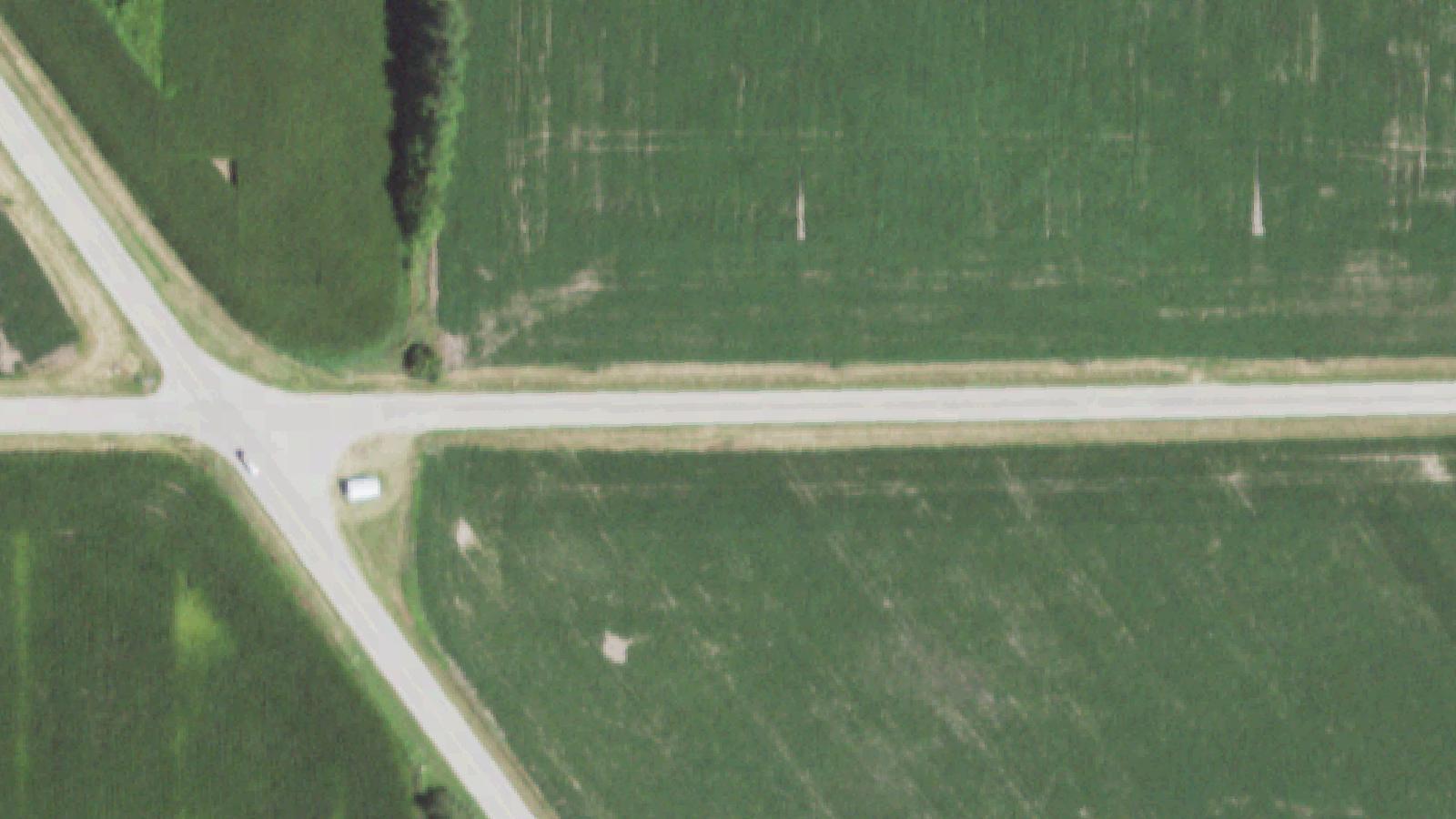 Aerial survey · USDA NAIP
Belvidere, IL
Bloods Point Cemetery was established in 1836 in Flora Township, Boone County, taking its name from Arthur Blood, an 1830s settler and the first European-American resident of the region. The cemetery serves as a burial ground for over two centuries of local residents.
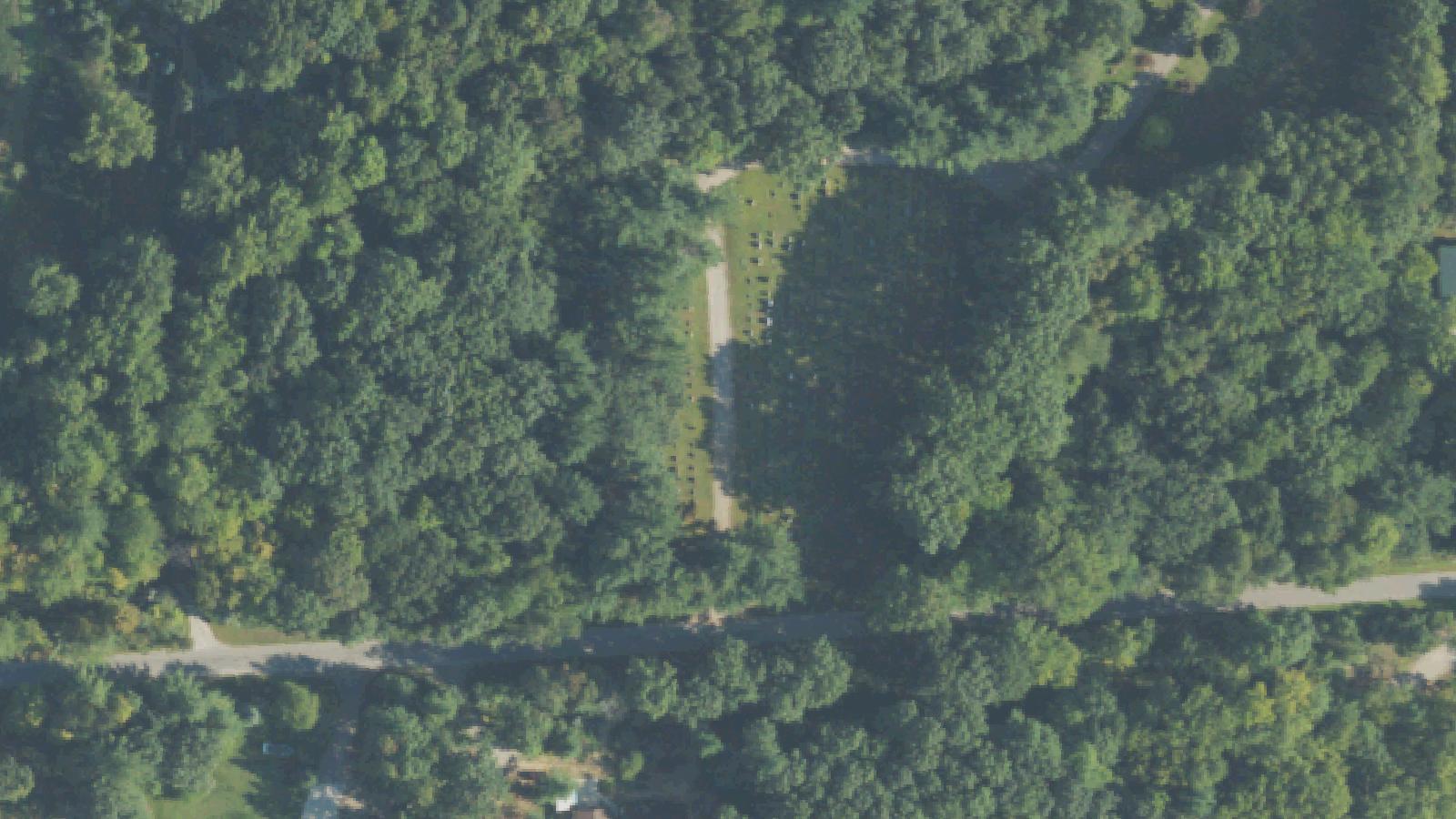 Aerial survey · USDA NAIP
Hemlock, MI
Richland Lutheran Cemetery is located in Richfield Township, Saginaw County, on Dice Road approximately a quarter mile east of Hemlock Road. The cemetery records 953 burials and dates to the 19th century. The broader Dice Road corridor gained regional notoriety in the 1970s through documented paranormal investigation of a nearby farmhouse.

Los Angeles, CA
Hollywood Forever Cemetery is a 62-acre cemetery at 6000 Santa Monica Boulevard in Hollywood, California, founded in 1899 as Hollywood Cemetery on a 100-acre tract of former farmland. Paramount Pictures' studios occupy 40 acres of the original cemetery property. The cemetery was renamed Hollywood Memorial Park in 1939 and Hollywood Forever in 1998 after a 1990s bankruptcy and revival. The property is listed on the National Register of Historic Places.