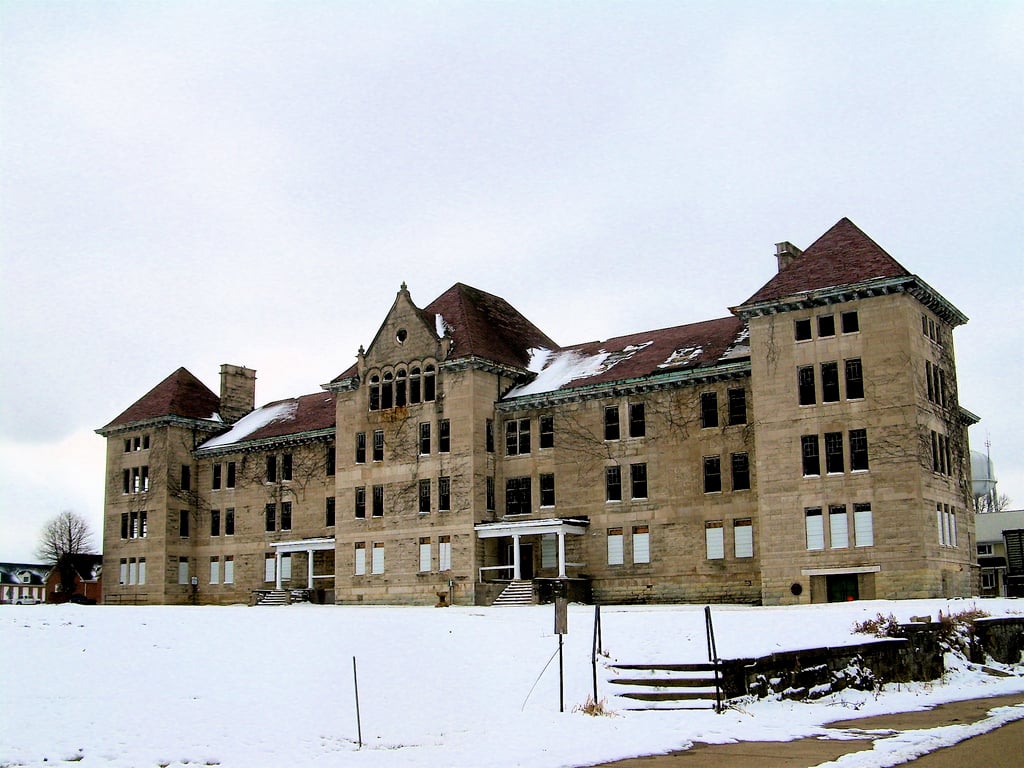
Woodbury County's historic poor farm and later mental care institution · County Board formally approved paranormal investigation in September 2021 · One of Iowa's surviving examples of the county institution era
The Woodbury County Home, later known as Prairie Hills Facility, is one of Iowa's surviving examples of the county institution era — a class of public buildings constructed across the Midwest in the late 1800s to house residents deemed dependent on public support. In Woodbury County, that meant individuals living in poverty, the elderly without family support, and, as county responsibilities shifted through the twentieth century, people with mental illness.
The institution predates modern social services by decades. Poor farms were a common rural solution to indigence before federal welfare programs: the county provided housing, food, and basic care in exchange for farm labor from residents who were able. As the agricultural character faded and mental health care became a greater county function, the Woodbury County Home took on that population as well.
By September 2021, the Woodbury County Board of Supervisors voted to allow the paranormal investigation group Para911 to inspect the facility. According to coverage in the Sioux City Journal and KSCJ radio, county sheriff's deputies who worked the building had reported unexplained events over the years, including figures appearing in third-floor windows and an elevator that operated on its own without anyone pressing the call button.
The county board's approval of the investigation was unusual — institutional facilities rarely grant formal access for paranormal research — and it drew local media attention. The facility remained county-owned as of 2021.
Sources
- https://siouxcityjournal.com/news/local/paranormal-investigators-tackle-prairie-hills-facility/article_70c6aedb-24f4-5f20-8da8-3cd599da54ae.html
- https://kscj.com/2021/09/08/paranormal-investigators-to-inspect-prairie-hills-site/
Figures appearing at third-floor windowsElevator calling itself to floors without being summoned
The paranormal claims at Prairie Hills do not come from ghost-tour operators or online legend collectors — they originate with county sheriff's deputies who were assigned to the facility. According to reporting by the Sioux City Journal and corroborated by KSCJ radio, deputies described two recurring phenomena: figures appearing at third-floor windows when no one should have been in that section, and an elevator that would call itself to floors unprompted.
Those accounts carried enough weight that the Woodbury County Board of Supervisors entertained a formal request in September 2021. The board voted to allow the paranormal investigation group Para911 — a regional team with experience at institutional sites — to conduct an inspection. Local radio news noted that the board's approval was required because the facility is county property.
Kiwa Radio also covered the investigation, confirming the Para911 access and the specific claims from deputies. No results of the investigation were reported in the sources available for this listing.