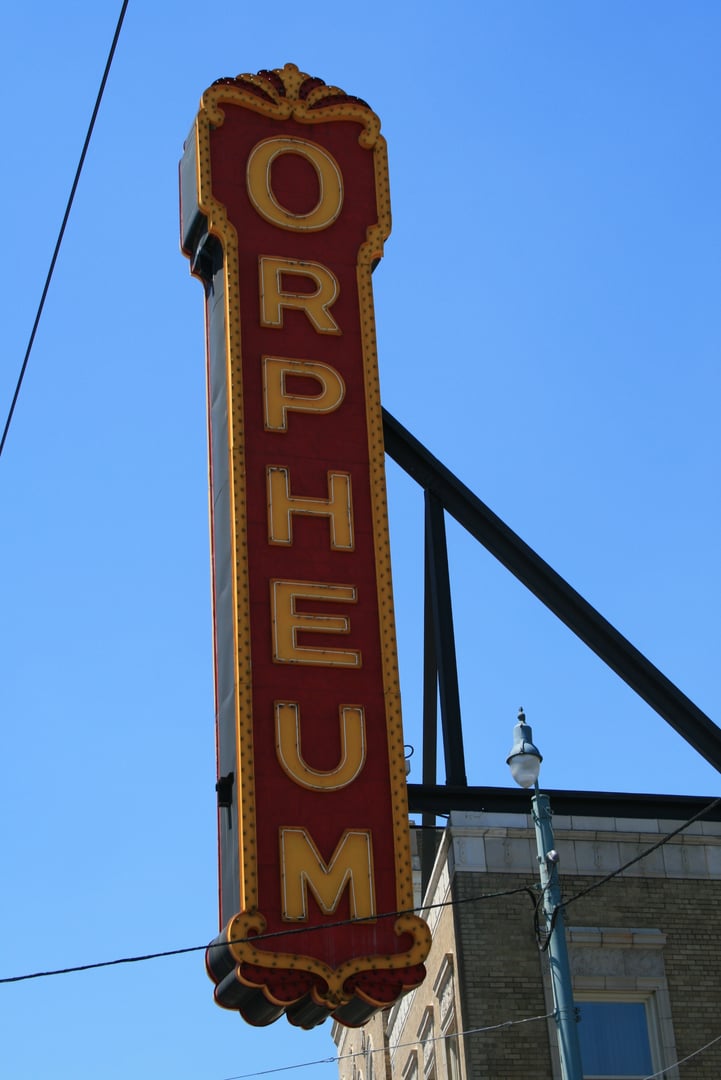
Est. 1927 · Original Orpheum Circuit vaudeville and cinema palace · Significant 1920s commercial architecture in Sioux City · Restored 2001; active performance venue
The Orpheum Theatre opened in 1927 at 528 Pierce Street in downtown Sioux City, one of hundreds of theaters in the Orpheum Circuit — a national entertainment chain that had dominated vaudeville touring since the 1880s and successfully transitioned into motion picture exhibition. The Sioux City Orpheum was designed in the ornate style of the circuit's major houses, with decorative interior work suited to its role as the city's premier entertainment destination.
Vaudeville's decline through the late 1920s and 1930s forced the Orpheum Circuit, like all competing chains, to adapt. The Sioux City theater transitioned to motion pictures while retaining its original stage infrastructure, including the rigging systems and overhead fly-space typical of legitimate theater construction. That stage machinery — the counterweights, sandbag rigging, and rope systems of a working theatrical fly system — became relevant to the building's later paranormal reputation.
The theater continued operating through decades of downtown retail and entertainment change, surviving urban renewal pressures that claimed comparable venues in smaller Iowa cities. A substantial restoration project completed in 2001 returned the Orpheum closer to its original appearance, and it has continued as an active live performance venue in the years since.
The theater is listed with local historic preservation entities and is recognized as one of Sioux City's significant surviving examples of 1920s commercial architecture.
Sources
- https://en.wikipedia.org/wiki/Orpheum_Theatre_(Sioux_City,_Iowa)
- https://www.theodysseyonline.com/7-haunted-locations-sioux-city
Electrical fuse failures during performancesSandbags dropping from fly-loft riggingGeneral presence attributed to former stagehand
The Orpheum's ghost carries a specific name — Larry — and a general identity as a former performer or stagehand whose connection to the building predates the living memory of current staff. Reports of Larry's presence began circulating around 1960, giving the tradition a timeline of more than six decades.
What distinguishes Larry from the typical theatrical ghost is the specificity of his methods. Electrical fuse failures at inopportune moments — during performances, in isolated parts of the building, with no identifiable technical cause — have been attributed to him repeatedly. More dramatically, sandbags from the fly-loft rigging system have been reported dropping to the stage in circumstances that workers found difficult to explain through mechanical failure alone.
The sandbag incidents carry particular weight because they implicate the theater's original rigging infrastructure — the same counterweight and rope systems used by stagehands throughout the vaudeville era. The suggestion embedded in the legend is that whoever Larry was during his life, he understood the theater's technical operation and continues to interact with it from whatever position he currently occupies.
The Sioux City paranormal community documents the Orpheum as a significant local site, and the venue's active performance calendar means that whatever activity occurs does so in a living, working theater rather than a museum or abandoned building.
Notable Entities
Larry (named ghost; former actor or stagehand, identity unverified)