Est. 1902 · National Register of Historic Places · Mission-style design by William Ralph Emerson · Built for steel magnate Charles S. Guthrie as Meadow Court
Charles S. Guthrie, an heir to a steel fortune, commissioned the house in 1902 as a summer residence on a bluff above Long Island Sound. The architect William Ralph Emerson designed it in the Mission style, and Guthrie named the estate Meadow Court for the wildflower fields that surrounded it.
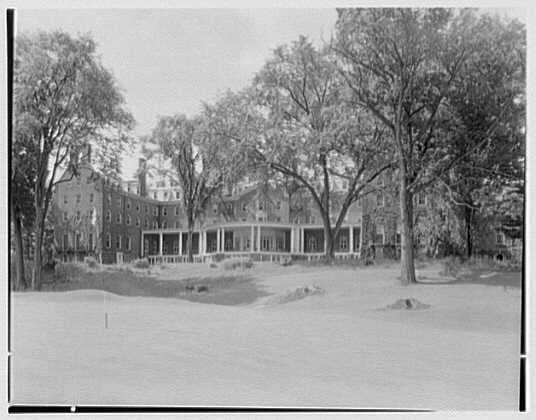
The main house was converted into an inn in 1927 and operated under the name Lighthouse Inn for much of the twentieth century, becoming a well-known New London hotel, restaurant, and wedding venue. The building was listed on the National Register of Historic Places in 1996.
The inn's fortunes declined, and the property closed. The city of New London listed it for sale in February 2014 with historic-preservation restrictions attached. New owners purchased it for restoration in 2016, and after extensive work the 1902 Tavern and event spaces reopened in 2022.
Today the restored mansion functions primarily as a dining and event venue. Visitors are advised to confirm current hours, dining service, and whether overnight lodging is available, since the building's offerings have changed across its long history.
Sources
- https://en.wikipedia.org/wiki/Lighthouse_Inn_(New_London,_Connecticut)
- https://www.theday.com/local-columns/20141031/lighthouse-inn-still-empty-but-haunted/
- https://www.lighthouseinn.us/about/
- https://www.imdb.com/title/tt0983465/
- http://bluemountainroad.blogspot.com/2011/10/lighthouse-inn-new-london-connecticut.html
Apparition on the staircase (debunked bride legend)Phantom perfumeDoors opening on their ownReports of two women in Victorian dress
For decades the Lighthouse Inn's central ghost story has been the bride who died on the staircase. In the most repeated version, a young bride fell down the mansion's winding center stairs during her wedding, broke her neck, and died, with the event dated to about 1930. Guests and staff later reported the scent of her perfume, doors opening on their own, and a figure on the stairs.
The story does not survive scrutiny. When The New York Times ran a piece on the ghost bride, a local historian set the record straight, stating plainly that there had been no such bride and no wedding-day death at the inn. As recounted in The Day, residents who grew up near the property likewise rejected both the bride story and a related claim that children had died there in a hurricane. The bride is best understood as folklore that attached itself to a grand and aging building rather than a documented event.
Beyond the debunked bride, the inn's lore includes reports of two women in Victorian dress seen in the house. These accounts are thinner and less verifiable, and the property is best approached as a restored historic mansion with a colorful but largely legendary haunting tradition rather than a site of confirmed paranormal history.