Est. 1675 · One of Connecticut's Oldest Standing Structures · Colonial-Era Tavern · Revolutionary War Meeting Place · National Register of Historic Places
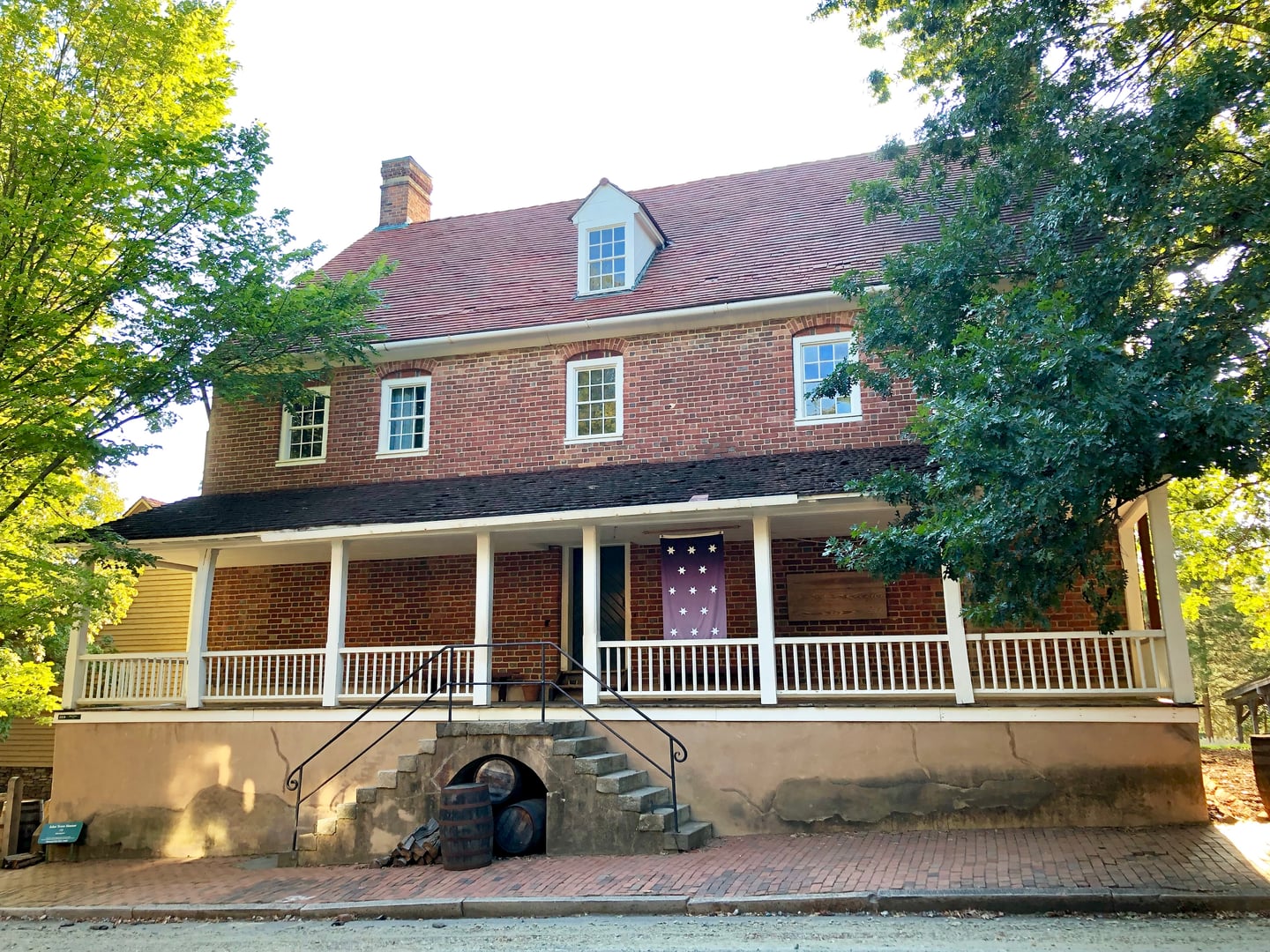
The oldest part of the Leffingwell House dates to 1675, when Stephen Backus built a two-room dwelling at what is now 348 Washington Street in Norwichtown. Thomas Leffingwell 2nd, son of one of the original founders of Norwich, took over the property and operated it as a licensed tavern beginning around 1701, serving travelers along the colonial roads of eastern Connecticut.
The building grew through the 1700s under Benajah and later Christopher Leffingwell. Christopher was among Norwich's more enterprising figures: in addition to running the inn, he established the town's first paper mill and a stocking factory. By the Revolutionary era the house functioned as a gathering place for the local patriot community, and town tradition holds that George Washington conducted business there during the war, though that connection is recorded in local accounts rather than confirmed in the building's own documentary record.
The Society of the Founders of Norwich purchased the house and opened it as a museum in 1960 to interpret the history of Norwich from its 1659 founding through the Civil War. It was listed on the National Register of Historic Places in 1970. Today interpreters use period artifacts to walk visitors through the tavern room and living quarters, and the museum supplements its daytime programming with occasional after-dark history and paranormal events.
Sources
- https://en.wikipedia.org/wiki/Leffingwell_Inn
- https://www.leffingwellhousemuseum.org/
- https://www.norwichct.gov/facilities/facility/details/Leffingwell-House-Museum-109
Unexplained knockingPhantom footstepsDoors closing on their ownShadow figure
The Leffingwell House entered the regional paranormal record largely through a televised investigation by The Atlantic Paranormal Society (TAPS), the Rhode Island group founded by Jason Hawes and Grant Wilson. According to a WTNH account, investigators reported unexplained knocking inside the house that appeared to respond to their questions and requests, footsteps moving across the main floor and down in the basement, and the handle on the front door rattling and turning with no one near it. One investigator described a dark figure darting in front of a window in the tavern room. TAPS characterized the site as active, citing audio they interpreted as a spirit voice.
Museum guides give their own accounts independent of the television visit. Several have described doors swinging shut on them as they led tours, and visitors stumbling on flat, even floors with no obvious cause. None of the reports attach a name or a documented death to the activity; the stories stay general, tied to the age of the house rather than to any specific tragedy.
The museum has leaned into this reputation with periodic Haunted History and paranormal-investigation events, including programming run with TAPS, that let ticketed guests explore the rooms after closing.
Media Appearances
- TAPS Presents: Leffingwell Ghost Investigation (paranormal investigation event, 2015)