Guided Tour
Historic Theater Tour
Self-guided and docent-led tours of the restored Victorian opera house, including the basement dressing rooms and balcony where paranormal activity has been reported.
- Duration:
- 45 min
HauntBound archive · catalog record
Reported phenomena, as catalogued
+ 1 further entry on record
A fully restored 1896 Victorian opera house and California State Historic Park in Woodland, said to be haunted by firefighter William W. Porter, killed when a wall collapsed on him during the catastrophic 1892 fire.
340 2nd Street, Woodland, CA 95695
Research updated June 2026
Age
All Ages
Cost
$
Performance tickets vary by show; building tours available at low or no cost during open hours
Access
Wheelchair OK
Flat urban block, paved access
Equipment
Photos OK
Est. 1896 · National Register of Historic Places (NRHP #71000212, listed 1971) · California Historical Landmark No. 851 · California State Historic Park · One of four fully functioning 19th-century opera houses in California · Site of Woodland's only firefighter line-of-duty death (1892)
The Woodland Opera House was conceived in 1885 when Thomas J. Welsh, a prominent San Francisco architect, designed the building at a cost of $28,000 for the growing agricultural community of Woodland in Yolo County. Upon opening it became the first opera house to serve the Sacramento Valley, drawing hundreds of touring companies and performing arts troupes over its first decades of operation.
On July 1, 1892, a catastrophic fire broke out in Dead Cat Alley behind the opera house, quickly consuming much of what is now Woodland's Downtown Historic District. The opera house was lost in the blaze. During the firefighting effort, Woodland Fire Department volunteer William Wallace Porter (born February 23, 1838) was attempting to free a stuck fire hose from the building when the north wall of the opera house collapsed. Struck by falling bricks, Porter was killed instantly — the only Woodland firefighter ever to die in the line of duty. He was given an elaborate funeral, one of the largest the city had seen.
The opera house was rebuilt on the same site using surviving foundations and brickwork, reopening in 1896 at a cost of $8,990. By 1913, over 300 touring companies had performed on its stage. That same year the theater closed after a lawsuit by an audience member who fell through a loading door and the steady competition from the emerging motion picture industry proved insurmountable.
The building sat vacant for nearly six decades. In 1971 the Yolo County Historical Society purchased the structure for $12,000. California designated it a State Historic Park in 1976, and the building was deeded to the State of California in 1980. A two-million-dollar restoration project culminated in the opera house reopening in 1989. It is today California Historical Landmark No. 851 and is listed on the National Register of Historic Places (NRHP #71000212).
Sources
According to accounts gathered by ABC10 and the Davis Enterprise, the most prominent haunting centers on William Wallace Porter, the volunteer firefighter who was crushed by the collapsing north wall on July 1, 1892. Staff and audience members have reported the smell of cigar smoke and burning odors in a fully non-smoking building, concentrated in the north upper balcony and basement costume dressing rooms — consistent with the location where Porter died.
The opera house's manager has acknowledged that audience members regularly complain of smelling cigars or a burning odor, only for the scent to fade as quickly as it appeared. Paranormal investigators from the California Haunts team conducted a formal investigation at the opera house, setting up infrared cameras, motion sensors, and audio recorders and reporting unexplained activity concentrated in Porter's area.
A secondary spirit tradition involves Polish actress Madame Helena Modjeska, who performed on stages across California and the country during the late 19th century. According to lore reported by Bender Paranormal, her presence has been sensed in the balcony — one attendee claimed to have felt a woman sit beside him in the third-floor balcony during a performance and place her hand on his leg, only for the figure to have vanished when he turned to look. Thread appearing to unwind on its own and small objects apparently moving have also been reported in the dressing rooms.
Notable Entities
Self-guided and docent-led tours of the restored Victorian opera house, including the basement dressing rooms and balcony where paranormal activity has been reported.
Explore one of only four fully functioning 19th-century opera houses remaining in California, listed on the National Register of Historic Places.
Some links on this page may earn HauntBound a small commission when you book, at no extra cost to you. Our editorial picks are independent. Full disclosure
Every HauntBound history is researched from documented sources. We clearly separate verified historical fact from paranormal folklore.
Free Guide
10 verified stops, rated for families, mapped in order. Free.
One email to confirm, then the guide link. Unsubscribe anytime.
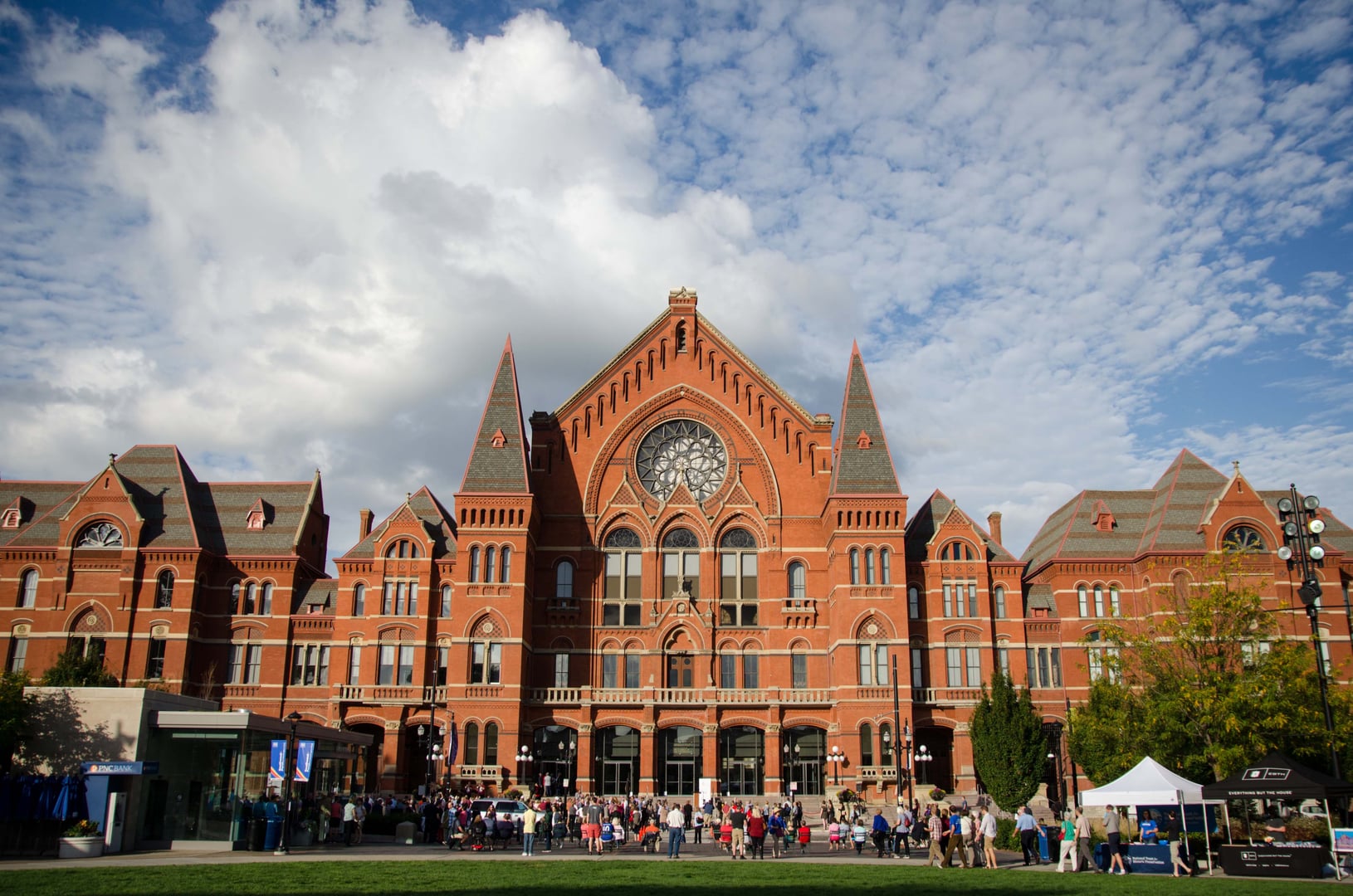
Cincinnati, OH
Cincinnati Music Hall at 1241 Elm Street opened in 1878, designed in the High Victorian Gothic style. It was built on land that had served as the city's potter's field — a burial ground for the indigent, disease victims, and unidentified dead — used from the 1820s until the cemetery closed around 1857. Bones have been discovered beneath the building in 1927, 1988, and again during the 2016-2017 renovation. The building was designated a National Historic Landmark in 1975.
Cripple Creek, CO
The Butte Theater on Bennett Avenue is a historic Cripple Creek opera house rebuilt after the April 1896 fires that devastated the city. Associated with the Imperial Casino, it has operated as a performance venue for more than a century and is reportedly haunted by a ghost named Jack, linked to the nearby fire department.
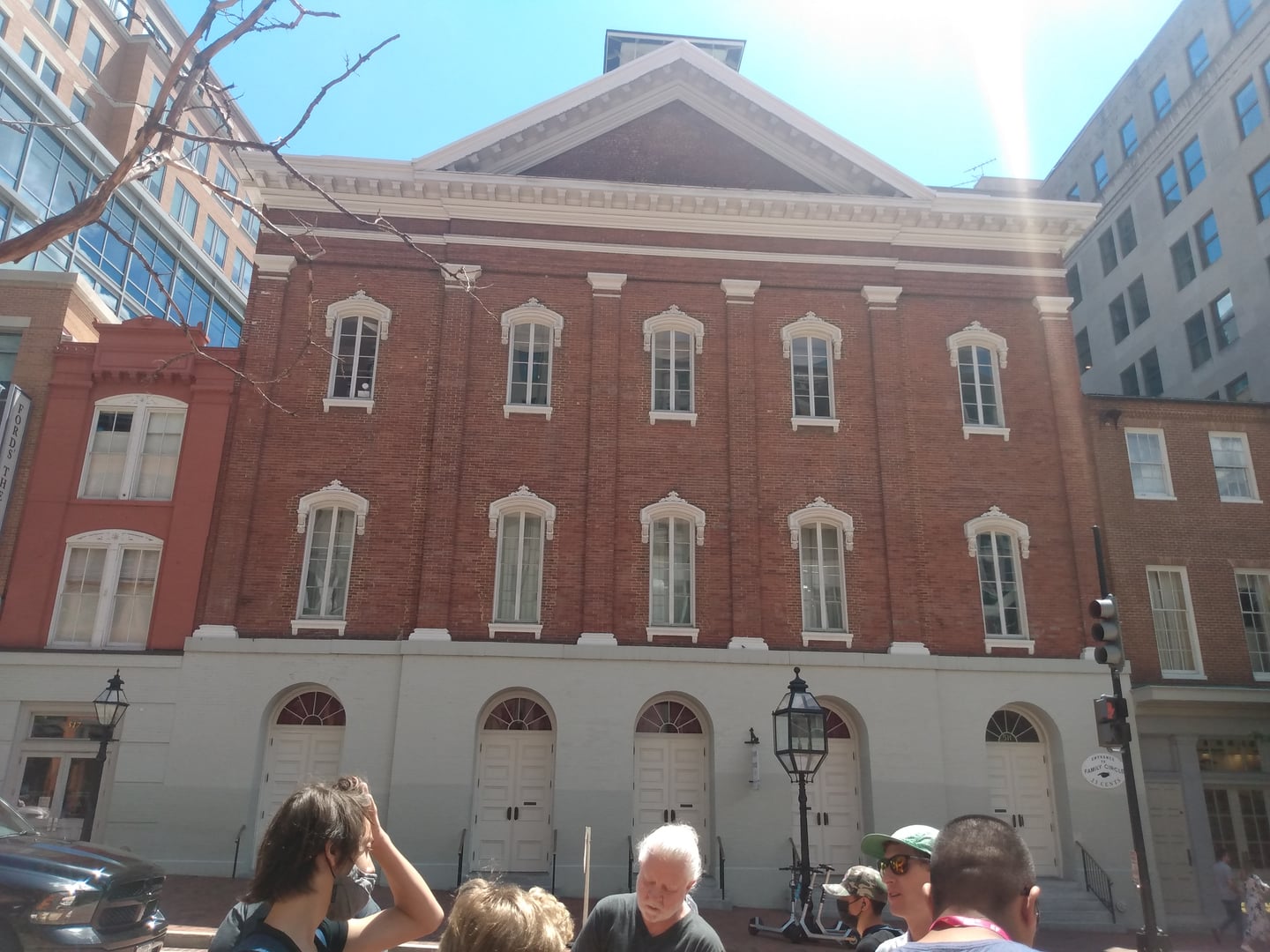
Washington, DC
Originally built in 1833 as the First Baptist Church of Washington, the building was converted to a theater by John T. Ford in 1861, destroyed by fire in 1862, and rebuilt as Ford's Theatre in 1863. On April 14, 1865, John Wilkes Booth shot President Abraham Lincoln in the State Box. The federal government seized the building shortly afterward and used it for War Department offices and storage. On June 9, 1893 a portion of the interior floors collapsed, killing 22 federal clerks. The building was restored as a working theater in 1968 and is operated jointly today by the National Park Service and the Ford's Theatre Society.