Est. 1885 · Built in 1885 on the site of a flour mill that burned that August · Financed with revenue from Sonora's Bonanza Gold Mine · Sonora's premier venue for balls, concerts, and rallies until 1896 · Acquired and restored by the City of Sonora beginning in December 1986
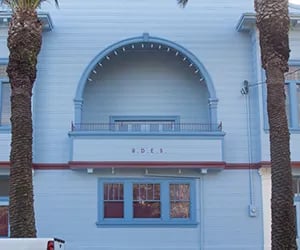
The Sonora Opera Hall opened in 1885, built on the site of a flour mill that had burned down in August of that year. Its construction was financed using revenue from Sonora's renowned Bonanza Gold Mine, one of the producers that made the town a Mother Lode center.
For roughly eleven years the hall was the heart of Sonora's social life. It hosted balls, skating parties, meetings, political rallies, plays, and concerts, the one building in town, as a local newspaper put it, that residents could point to with pride. That era ended quickly: by 1896 the same newspaper lamented that the hall was being converted into a carpenter shop.
Over the following eighty years the building deteriorated as it was adapted for one use after another. Private restoration efforts in the 1980s failed, prompting the city to step in. In December 1986 the City of Sonora acquired the structure and began a comprehensive restoration.
Today the Opera Hall has been returned to use as a civic and cultural landmark under City ownership, described locally as a jewel of downtown Sonora. It hosts community events in the same rooms that once held the town's 1880s balls and the 1890s burlesque performances that anchor its more colorful legends.
Sources
- https://sonoraca.com/opera-hall/history/
- https://www.uniondemocrat.com/news/article_c1bc68d4-5d92-11ee-ac9f-ffce6a46639b.html
Showgirl apparitionsCowboy apparitionsLore of a secret escape passage under the road
The Opera Hall's signature legend is the secret passage. According to the lore documented by the Union Democrat, one of the building's passages once led under Stockton Road and served as a hidden way for the showgirls of the 1885 Opera Hall to escape overly appreciative, gun-toting cowboys who came to watch their 1890s burlesque performances.
The story fixes the hall in its rowdiest chapter, when a Gold Country opera house doubled as a burlesque stage and its performers had practical reasons to plan an exit. The passage gives the legend a concrete, physical anchor, a route under the street rather than a vague claim of activity.
From that history grow the reported apparitions. Visitors associate the hall with figures from its burlesque era, showgirls and the cowboys who pursued them, glimpsed in a building that has stood since 1885. The legend is frontier-romantic rather than grim, and the City of Sonora's restored hall carries it as part of the storytelling around one of downtown Sonora's oldest surviving venues.
Notable Entities
1890s burlesque showgirlsGun-toting cowboys
Where this legend is told