Est. 1861 · Gold Rush Supply Hub · California State Historic Park · 1861 Courthouse with Functioning Gallows
In 1849, gold was found in the Trinity and Klamath drainages to the north and west of what would become Shasta City. Within two years, the town had grown into Northern California's primary supply and commercial hub — the place where pack trains loaded for the remote mines, where merchants banked the returns, and where men who had come apart in the hills came to reassemble or dissolve entirely.
At its early-1850s peak, Shasta was the largest settlement in Shasta County and arguably in Northern California outside Sacramento. Estimates put the population at roughly 20,000 during the boom years. The local economy ran on the extraction economy above it: the merchants, saloons, hotels, and lawyers grew wealthy off men who were mostly getting poor.
The county courthouse was built in 1861, a proper brick structure reflecting the county's ambitions. Justice in the Gold Rush era had a brisk character. When fugitives were captured, they were brought to Shasta, tried, and — if convicted of a hanging offense — executed on the gallows behind the courthouse within the same week. The gallows were erected for each execution and torn down afterward. The restored structure behind the current museum represents that system.
When Redding was established as a railroad town in 1872 and became the county seat in 1888, Shasta collapsed. Businesses followed the courthouse north, leaving behind brick facades, stone foundations, and the peculiar completeness of a town that simply stopped. California acquired the ruins and restored the courthouse as a museum. The park also preserves a historic cemetery, a church, and over a mile of original brick commercial storefronts in various states of ruin.
Sources
- https://www.parks.ca.gov/?page_id=456
- https://californiathroughmylens.com/shasta-state-park-ghost-town/
- https://www.roadsideamerica.com/tip/22294
Ambient unease (courthouse and jail)Holographic prisoner installation
The Shasta courthouse doesn't need much elaboration to register as dark. Men stood trial in this room and were dead behind the building within seven days. The gallows visible from the rear of the courthouse are a reconstruction, but the process they represent is historical: Gold Rush justice was swift because holding prisoners was expensive and dangerous, and the population that produced the cases was largely untethered from any family or community that might demand accountability.
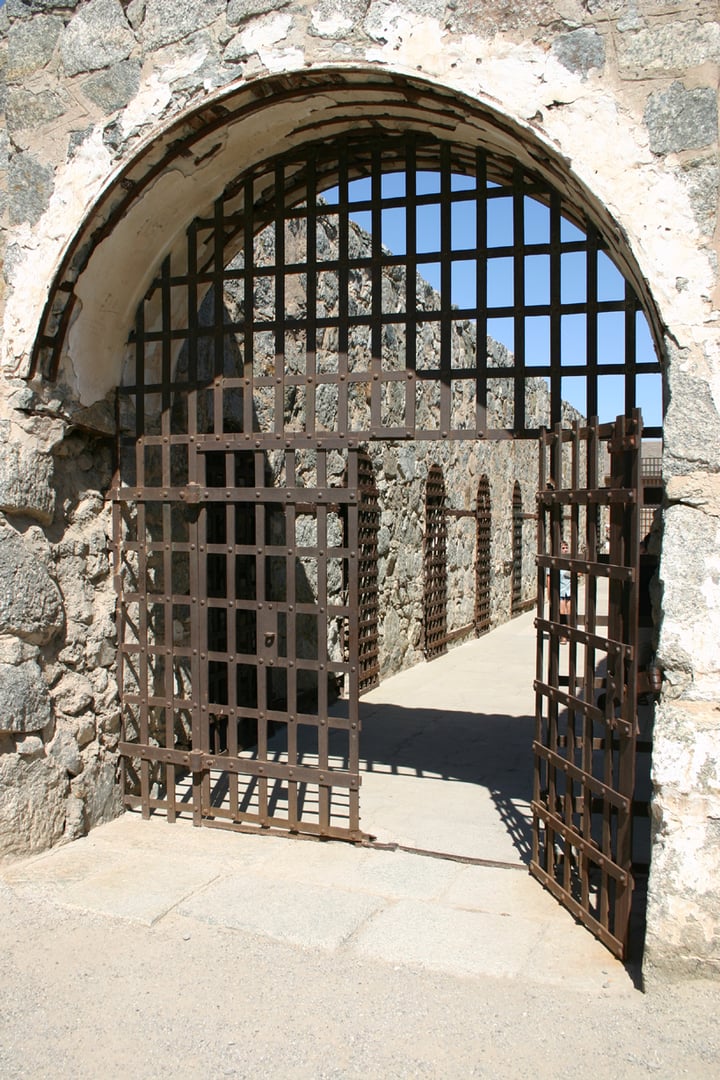
The California State Parks system has leaned into this atmosphere with a practical choice: the jail restoration features storytelling holograms of a prisoner who refuses to leave, a theatrical framing that visitor accounts consistently describe as effective and moderately unsettling.
Beyond the programmatic spookiness, the ruins themselves carry weight. The brick facades of Shasta's main commercial strip stand largely as they were abandoned in the 1880s and 1890s — walls open to the sky, floors gone, the occasional intact arch or lintel. Roadside America has catalogued visitor reports of an uneasy quality in the courthouse that predates the holograms and persists regardless of them. The site has not been the subject of a formal paranormal investigation that produced published findings, but its status as a state park limits that kind of access.
The cemetery on the grounds holds some of the men and women who built and lost Shasta City — most without elaborate markers, many without dates.
Where this legend is told