Est. 1872 · Named for the 1853 Wreck of the Clipper Ship Carrier Pigeon · One of the Tallest Lighthouses on the West Coast (115 feet) · National Register of Historic Places · Keeper's Quarters Operated as Hostel Since Mid-1960s · First-Order Fresnel Lens (1872)
The headland now called Pigeon Point was first named in 1853, when the clipper ship Carrier Pigeon — bound from Boston to San Francisco — ran aground on the rocks and was destroyed. The name stuck, and over the following decades additional major wrecks on the same stretch of coast gave the headland a documented record of maritime disaster.
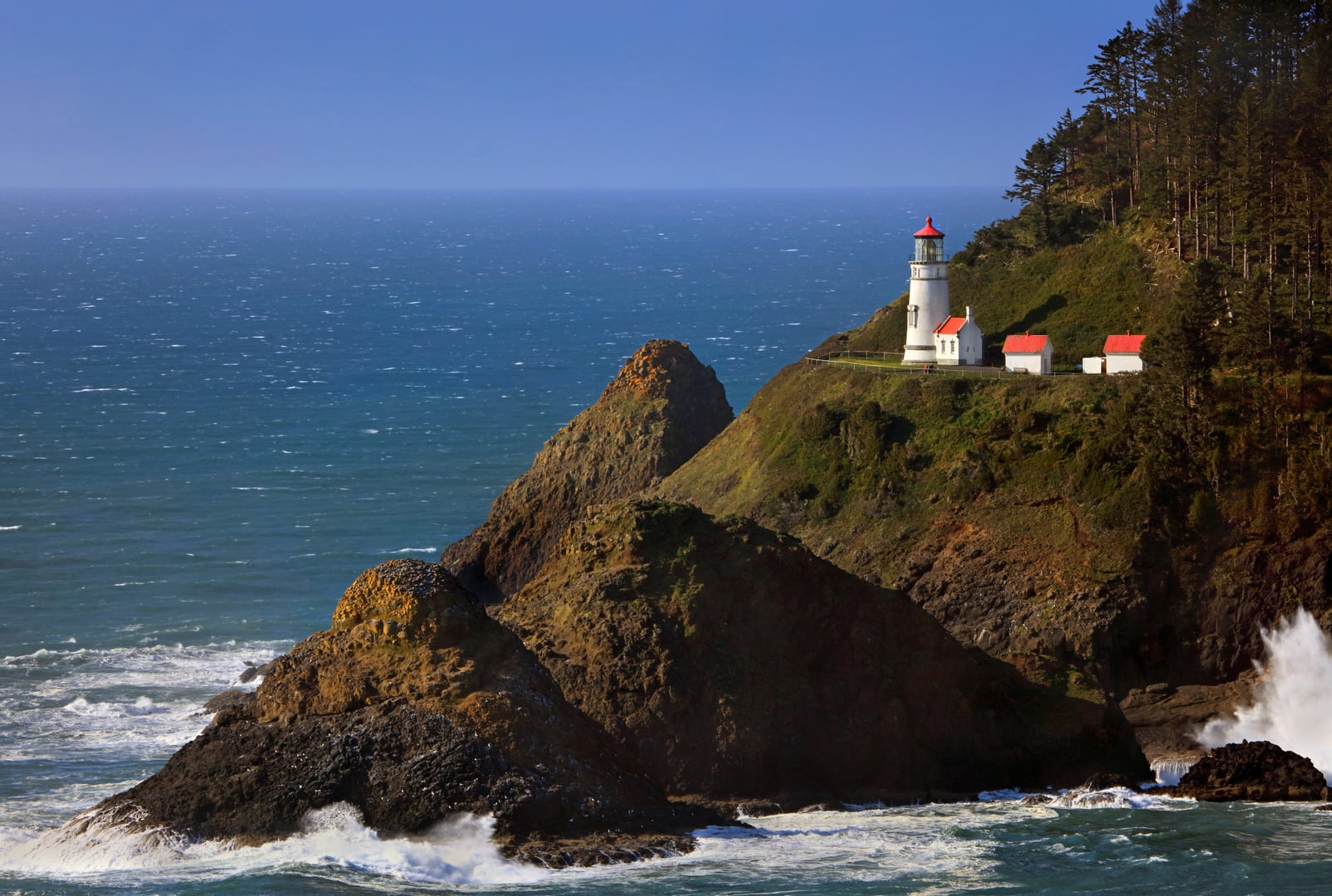
Pigeon Point Lighthouse was authorized by Congress and completed in 1872. At 115 feet, the brick tower ranks among the tallest on the Pacific Coast. The original first-order Fresnel lens — a large, multi-prism assembly — was lit on November 15, 1872, and served until it was damaged and decommissioned in 2001. A restoration project has worked toward returning it to service.
The lighthouse is listed on the National Register of Historic Places and is administered by California State Parks as part of the Pigeon Point Light Station State Historic Park. The keeper's quarters — a collection of Victorian-era residential buildings adjacent to the tower — have been operated as a Hostelling International youth hostel since the mid-1960s, making Pigeon Point one of the more unusual overnight destinations on the California coast.
The California Lighthouse Society documents the site's history and the hostel operation. The Coastside News, a local San Mateo County outlet, has covered the maritime tragedies associated with Pigeon Point in detail, including descendants of victims still connected to the location's history.
Sources
- https://en.wikipedia.org/wiki/Pigeon_Point_Lighthouse
- https://www.coastsidenews.com/community/ghosts-of-pigeon-points-past-still-haunt-the-living/article_36e984a4-477c-50cb-8da3-5922b744ebcc.html
- https://www.calighthousesociety.org/pigeon-point
Woman in whitish-blue attire on the cliff edge facing the oceanUnexplained voices late at night in hostel buildingsPhantom footsteps in empty rooms
Pigeon Point's paranormal accounts do not connect to a single named event or person — they draw instead on accumulated maritime tragedy. The 1853 wreck of the Carrier Pigeon was the first documented fatality event on these rocks, but it was not the last. Multiple wrecks over the decades following the lighthouse's construction contributed to a record of death in the immediate vicinity that has grounded the site's ghost lore in something more substantial than a single episode.
The most consistent report from visitors — particularly those staying overnight in the hostel — is a woman in whitish-blue attire seen on or near the cliff edge, facing the ocean. She does not interact with witnesses. The description does not match any documented decedent from the recorded wrecks, and the figure is folkloric rather than a documented historical identification.
Unexplained voices heard late at night in the hostel buildings and phantom footsteps in empty rooms are reported with regularity by overnight guests. These are the types of atmospheric phenomena that accumulate in historic residential buildings with long occupancy histories, and the hostel's decades of operation have generated a substantial body of informal accounts.
The Coastside News coverage of Pigeon Point documents maritime victims' family descendants who remain connected to the location's history, describing the site as a place where the losses are still felt generationally.
Where this legend is told