Est. 1911 · Alaska Mining History · Industrial Heritage · Abandoned Rail Corridor
Copper ore was discovered around 1900 along the northern edge of the Chitina River valley, touching off a rush of prospectors and homesteaders into the upper Copper River country. To move ore from the rich Kennecott deposits to tidewater, a J. P. Morgan- and Guggenheim-backed syndicate financed the Copper River & Northwestern Railway, a roughly 200-mile line completed in 1911 that ran from the mines past Chitina to the port of Cordova on Prince William Sound. Building it was a feat of cold-weather engineering, requiring scores of bridges and a crossing near a continuously shifting glacier.
Chitina grew into a thriving railroad town. By 1914 it had a general store, hotels, rooming houses, restaurants, bars, dance halls, and a movie theater serving the traffic that flowed through the junction. The railway was the artery of the entire district, and the community's fortunes were tied directly to the copper economy upstream.
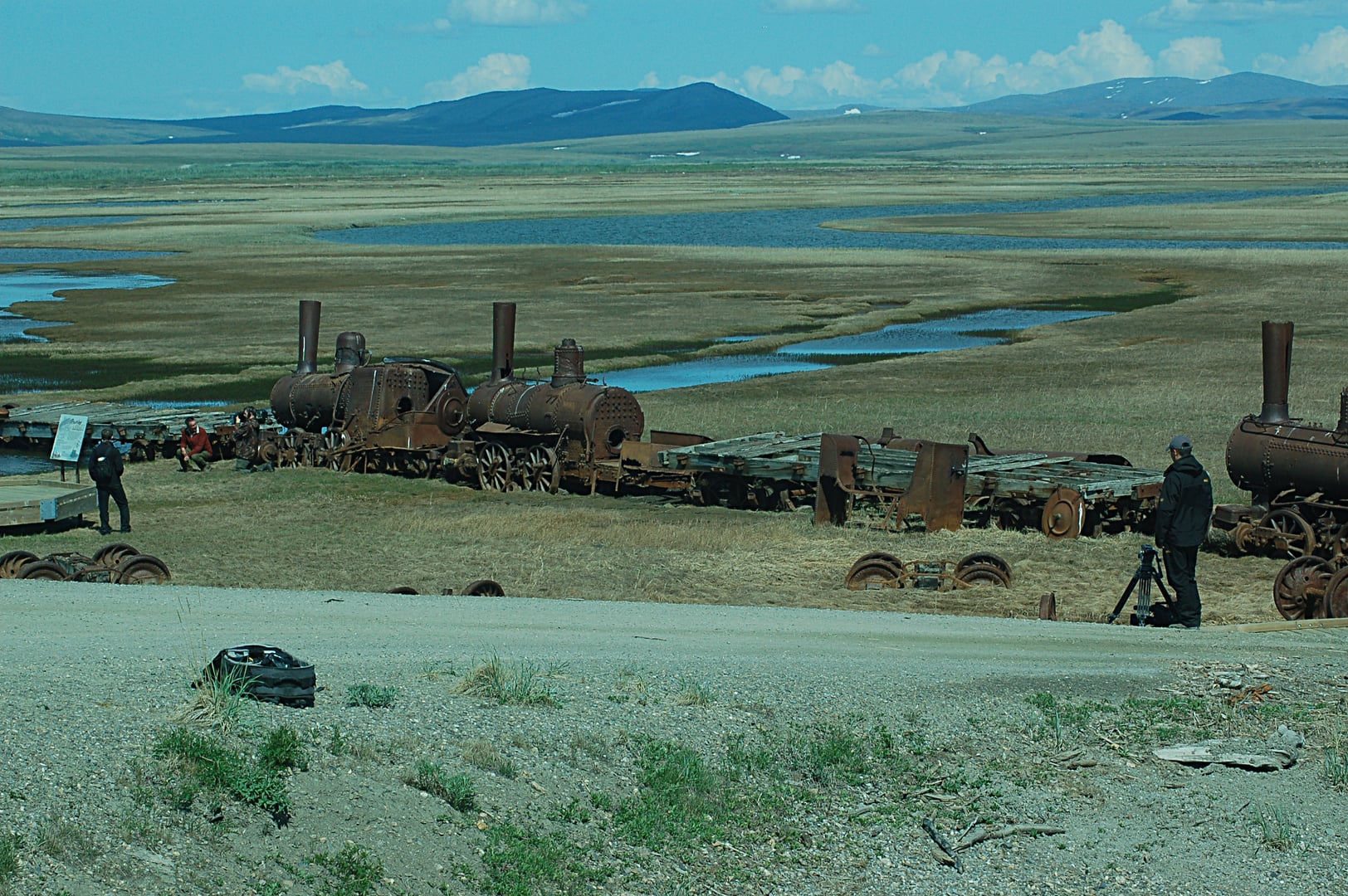
When the Kennecott ore bodies were depleted, the mines shut down in 1938. The railroad ceased operating, support businesses relocated toward what is now the Glennallen area, and Chitina collapsed toward ghost-town status; census counts fell from well over a hundred residents in the early decades to under a hundred by mid-century. As of the 2020 census the community numbered roughly 101 people.
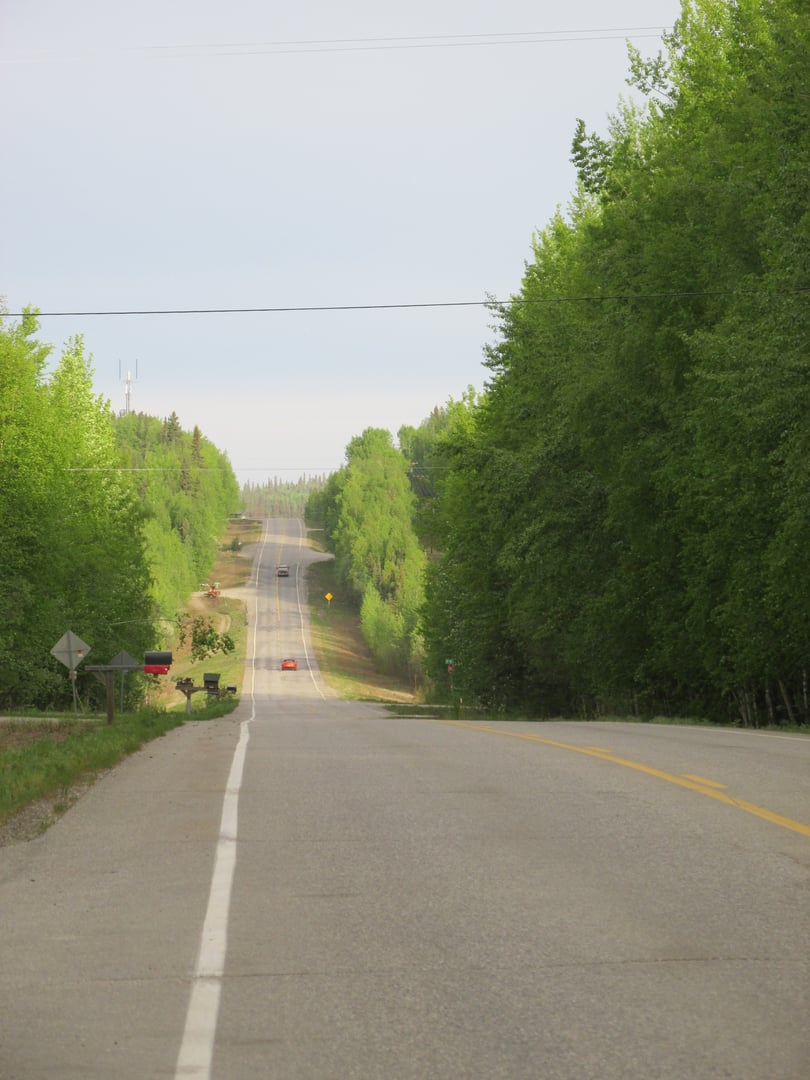
The rail line was dismantled, and over the following decades much of the grade between Chitina and the Kennecott area was reused as the gravel McCarthy Road. Today that road is the primary overland route toward the Kennecott Mines National Historic Landmark and Wrangell-St. Elias National Park, retracing the path the ore trains once ran.
Sources
- https://en.wikipedia.org/wiki/Chitina,_Alaska
- https://www.adn.com/features/article/teeth-chattering-tales-kennecott-copper-mines-keeps-government-officials-away/2013/10/31/
- https://www.seniorvoicealaska.com/story/2025/10/01/local/haunting-stories-swirl-around-kennecott-copper-mine/4082.html
- http://northwesternghostsandhauntings.blogspot.com/2011/05/old-kennecott-copper-railroad-chitina.html
Disappearing grave markersDisembodied voicesSounds of children laughingObjects going missing
The most repeated story along the Old Copper Railroad is that of the vanishing grave markers. According to the Anchorage Daily News, visitors driving the corridor have reported seeing tombstones just off the old path where it parallels the former tracks, only to find no trace of them on the return trip. The same accounts describe roadside markers that seem to appear and disappear depending on which direction one is traveling.
The best-documented episode is tied to a state government housing development attempted along the old railroad in the late 1990s. As reported by the Anchorage Daily News and by Senior Voice Alaska in an October 2025 piece by Laurel Downing Bill, construction workers reported hearing disembodied voices of both children and adults along the grade, and claimed that tools disappeared from their toolboxes and tool belts. The phenomena were unsettling enough that, according to these accounts, the state abandoned the project. The Shadowlands submission for the site dates the housing work to 1997-98 and adds reports of children laughing heard at night along the back stretch of road, details that go beyond what the newspaper coverage documents.
The lore is consistent with the region's history rather than with any single named individual: the upper Copper River saw heavy mining-era traffic and the hazards that came with it, and the surrounding wilderness holds scattered, often unmarked graves from that period. No specific person is reliably attached to the railroad hauntings in the published accounts, and the stories are best understood as the accumulated folklore of an abandoned industrial corridor.
Notable Entities
Voices of unidentified minersUnseen children